
The Shorter Decision Window Consumers Don’t Notice
Query: The Shorter Decision Window Consumers Don’t Notice
Fast Stack
- Headline: Convert buyers who will act in 48 hours by using a collab-led drop with exclusive promo codes and immediate fulfillment. Measure success on code redeems per exposed audience and early-window share, not total two-week sales.
- Why now: The Dec 01–15 window concentrates decision-ready shoppers and is the last holiday window to test scarcity plus fulfillment before peak season ends.
- Next 30 days: Brand must own the surprise co-brand drop, Head of Stores must lock fulfillment options, and Head of Promotions must expose promo codes and report code redeems per exposed audience in 0–48h.
Fast Path
Executive Take
You need to convert more of the people who are ready to buy in the next 48 hours without resorting to blanket discounts that destroy margin. Focus on raising foot-traffic uplift while holding blended margin and driving early-window share to the 25–35% anchor; track tracked response rate = code redeems / exposed audience and response-to-purchase conversion to protect event CPA ceilings and repeat rates 53. Favor a collab-led holiday approach that uses limited co-brand drops, exclusive promo codes, and locked fulfillment (reserve or same-day pickup); in the next 30 days brand, stores, and partnerships must stand up one surprise co-brand drop and its promo code instrumentation and measure code redeems per exposed audience within 0–48h versus a planned-announcement control. Success is judged by immediate early-window share lift and maintaining blended margin and event CPA against baseline while tracking repeat rate over 60–90 days 5.
Highlights
- Most high-value conversions cluster in the first 48 hours after exposure; treat 0–48h as the test cell 5.
- Limited collabs and exclusive drops lift early-window share with less margin erosion than broad discounts; expect redeem→purchase 40–55% from tracked responses 35.
- Instrument promo code redeems / exposed audience and segment by 0–48h vs 49–168h to measure true incrementality and protect blended margin.
Top Operator Moves
- Launch one surprise co-brand drop between Dec 01–15 with limited inventory and unique promo codes, measure code redeems per exposed audience in 0–48h against a planned-announcement control.
- Enable reserve and same-day pickup for the drop, route store activations to immediate purchase, and set a foot-traffic uplift target versus baseline before the test.
- Run a 24-hour targeted discount arm for lapsed vs active customers, cap partner-funded payback, and hold blended margin and event CPA ceilings while tracking response-to-purchase conversion.
Plays
- 48-hour co-brand drop — Foot-traffic uplift versus baseline and early-window share at or above 25–35%, while maintaining blended margin and event CPA ceilings.
For operators and collab leads
Spine: What: A large share of holiday conversions happen inside a tight 48-hour window. | Proof: Success = higher tracked response rate (code redeems / exposed audience) and a larger share of purchases within 48 hours, while holding blended margin at or above baseline. | Move: Routing attendees to immediate pickup multiplies conversion from store activations.
Signal Map

- Behavioral — Shadow Drops Shrink Consideration (now) Spine hook: Surprise drops compress who buys and when. Unannounced or limited drops are increasing in cultural visibility and train shoppers to decide instantly. For collaborations and exclusives, this means momentum and sell-through happen in hours, not weeks, so activation design must assume immediate conversion. Operator scan: Track immediate sell-through and traffic spikes after unannounced drops. Operator move: Run a surprise co-brand drop owned by Head of Brand in Dec 01–15, 2025, and measure conversion rate and sell-through within 48 hours versus a planned announcement control. 75
- Technology — AI Agents Lower Friction and Speed Decisions (6-week) Spine hook: AI assistance accelerates last-mile purchase decisions. Extended-capability AI agents are moving from novelty to functional assistance in commerce tasks. When agents reduce search and checkout friction, the customer decision window tightens and operators must test agent-driven conversion levers. Operator scan: Compare conversion rates with and without agent-assisted checkout. Operator move: Enable an agent-assisted checkout prompt for a test cohort owned by Head of Digital in Dec 01–15, 2025, and measure conversion rate and incremental revenue per session against a non-agent control. 1
- Market — Discounting Math Becomes More Surgical (now) Spine hook: Short windows make blanket discounts inefficient. With consumers deciding faster, broad sitewide discounts lose efficiency and eat margin without improving net conversion. Operators must measure margin per converted visit and favor short, targeted incentives that convert within the shortened window. Operator scan: Measure margin per converted visit for targeted versus sitewide discounts. Operator move: Test 24-hour targeted discounts for lapsed versus active customers owned by Head of Promotions in Dec 01–15, 2025, and measure margin per converted visit and uplift versus a sitewide discount control. 59
- Cultural — Store-as-Studio Requires Instant Conversion (6-week) Spine hook: Stores used as studios must convert on the spot. Stores are increasingly used as content and media spaces where activation and commerce happen in the same moment. That model only works if point-of-activation inventory, checkout, or reservation converts visitors within minutes. Operator scan: Count activation visitors who complete purchase within 30 minutes. Operator move: Run one store activation that routes attendees to immediate purchase or reserved pickup owned by Head of Stores in Dec 01–15, 2025, and measure conversion rate from activation foot traffic and average transaction value. 53
Measurement Spine
Anchors
- Tracked response rate (promo code) guardrail: Tracked response rate = code redeems / exposed audience; hold at least 0.5% and aim up to 2.0% depending on cohort; floor versus baseline (see M1). (Head of Promotions)
- Redeem-to-purchase conversion guardrail: Purchases from tracked redeems / code redeems over 14 days; preserve 40–55% redeem-to-purchase conversion (see M3). (Head of CRM)
- Early-window purchase share (0-48h): Share of period purchases occurring within 48 hours of exposure; target 25–35% to confirm the move shifted timing (see M2). (Head of Brand)
- Event CPA (run) guardrail: Set an event CPA ceiling versus baseline before launch and enforce it as a guardrail; numeric ceiling to be locked pre-launch (finance-owned). (Finance)
Measurement Plan
- Tracked Response Rate (Promo Code) (Head of Promotions, Dec 01–15, 2025 (redeem look-forward 14 days)) — Code Redeems / Exposed Audience per Promo Code cohort (Dec 01–15; measure redeems through day 14) Why it matters: Directly measures whether targeted short-window offers reach enough buyers without blanket discounts; ties to Tracked response rate guardrail.
- Early-Window Purchase Share (48H) (Head of Brand, Dec 01–15, 2025 (48-hour attribution)) — purchases within 48 hours of exposure / total purchases in Dec 01–15 window (by promo cohort) Why it matters: Shows if tactics shift decision timing into the 48-hour window rather than pushing purchases later.
- Response-To-Purchase Conversion (Head of CRM, Dec 01–15, 2025 (redeem cohort + 14-day conversion)) — purchases attributable to Code Redeems / Code Redeems (14-day window) Why it matters: Ensures redeems are real buyers and protects Blended margin guardrail.
- Buyer Activity Share Vs Promo Intensity (Paired Metric) (Head of Analytics, Dec 01–15, 2025) — Early share of purchases = Buyers From Cohort / Total Buyers; Promo Intensity = Mean Discount Depth * (Exposed Audience / Total Reachable Audience) Why it matters: Direct test of whether targeted scarcity wins the same or more buyer share than broad discounts while using less promo budget. Note: Buyer activity share in the early window is tracked separately from SKU promo share to protect margin while growing participation.
Deep Analysis
High-value 48-hour buyers are concentrated: A large share of holiday conversions happen inside a tight 48-hour window.
You will find a disproportionate share of purchases occur within 0–48 hours after exposure, not evenly across the two-week window 59. That concentrates value: short windows capture buyers who are already decision-ready and who convert at materially higher redeem-to-purchase rates than later responders 35. Expect early-window share of sales to sit near the 25–35% anchor unless you change scarcity or fulfillment frictions 59. Operator note: Treat the first 48 hours after any promotion or activation as the high-value test cell. Limit supply, tighten messaging to 'available now' and lock fulfillment options (reserve, same-day pickup) so the offer cannot be delayed. Do not measure success on total two-week sales; measure on early-window share and margin from that early cohort. Instrument next: Instrument code redeems per exposed audience segmented by time-since-exposure (0–48h vs 49–168h) for each promotion type (co-brand drop, sitewide discount, store activation).
Limited collabs preserve margin; blanket discounts do not: Co-branded scarcity lifts early buys with less margin erosion than broad discounts.
A scarcity-led co-brand drop converts quickly with partner-funded media and higher perceived value, so blended margin holds up better than equivalent sitewide discounts 59. Blanket discounts widen reach but drive low incremental margin and can cannibalize regular buyers, pushing redeem-to-purchase ratios down even if raw redeems rise 59. When you move from partner-funded scarcity to broad discounts what breaks is payback: you lose partner value and substitute margin for volume with limited incremental customers 3. Operator note: Run a controlled co-brand drop where partner provides co-op or audience access and you cap supply. Price with a modest incentive that partners can fund. Compare against a matched sitewide discount by channel and audience. Preserve SKU-level margin floors and block deep discounts on best-sellers so you measure true incrementality. Instrument next: Instrument Blended margin and Partner value per code redeems, comparing co-brand limited-drop codes vs sitewide discount codes, normalized to exposed audience.
AI checkout nudges speed decisions but require guardrails: Agent prompts can shorten sessions into purchases but risk wrong offers.
Agent-assisted prompts at checkout can extend session attention and push ready buyers to buy now, increasing conversion and revenue per session when the agent suggests relevant SKUs and fulfillment options 1. The second-order risk is model error: hallucinated recommendations, incorrect inventory claims, or irrelevant upsells will degrade trust and reverse gains quickly 1. So the performance lift is real but fragile; it depends on tight templates, inventory checks, and human fallback. Operator note: Pilot agent-assisted checkout on a small, high-intent cohort. Limit agent actions to showing available fulfillment options, applying a single event promo code, and confirming stock. Log agent suggestions and human overrides to diagnose hallucination vectors before scaling. Instrument next: Instrument Conversion rate and incremental revenue per session for agent-assisted checkout cohorts vs non-agent controls, using code redeems per exposed audience to attribute offers.
Store-as-studio fixes friction into immediate buys: Routing attendees to immediate pickup multiplies conversion from store activations.
In-store activations produce foot traffic but only convert predictably when fulfillment removes delay; reserve-for-pickup and same-day fulfilment convert a much higher share of attendees into purchases 53. The mechanism is simple: you remove the waiting decision and the online comparison impulse that kills urgency. If you swap durable inventory holds and express pickup for normal fulfillment, conversion and AOV spike without broad discounts 538. Operator note: Design activations so the CTA is purchase or reserve-for-pickup now. Hold inventory with a separate pickup pool, sell a strictly limited quantity, and tag sales with a promo code assigned only at the event. Track AOV and repeat intent for these buyers; treat store staff as sales media and measure cost-per-attendee-to-purchase. Instrument next: Instrument Foot traffic and code redeems per exposed audience for the activation cohort vs baseline store days, and track Event CPA and Repeat rate for purchases tied to event codes.
Pattern Matches
- Surprise co‐brand drop Then: Streetwear brands used unannounced limited drops to create scarcity and sell out in hours, forcing immediate purchase decisions. Now: Run a branded co‐drop with a partner and no pre‐announcement; small inventory lands on site and social at 10am and sells out or tilts conversion within 48 hours. Operator leap: Run a surprise co‐brand drop Dec 01–15 owned by Head of Brand; measure conversion rate and sell‐through within 48 hours versus a planned announcement control.
- Agent nudges at checkout Then: Retailers used sales associates and phone agents to push undecided shoppers to buy immediately with personalized offers at point of decision. Now: AI agents or agent prompts surface at checkout recommending a time‐limited offer or expedited fulfillment, converting near‐ready shoppers into immediate purchases. Operator leap: Enable an agent‐assisted checkout prompt for a test cohort Dec 01–15 owned by Head of Digital; measure conversion rate and incremental revenue per session against a non‐agent control.
- 48‐hour targeted discount vs sitewide Then: Marketers mailed targeted coupons to lapsed customers to pull forward demand without conditioning the entire base on discounts. Now: Run 48‐hour promo codes aimed at lapsed cohorts while leaving active customers at full price to capture ready buyers without broad margin erosion. Operator leap: Test 24–48 hour targeted discounts for lapsed versus active customers Dec 01–15 owned by Head of Promotions; measure margin per converted visit and uplift versus a sitewide discount control.
- Event to reserved pickup funnel Then: In‐store events historically drove immediate purchases by turning attendees into buyers with limited inventory and staff facilitation. Now: Run a single store activation that routes attendees to immediate purchase or reserved pickup and captures same‐day conversions tied to the event. Operator leap: Run one store activation Dec 01–15 that routes attendees to immediate purchase or reserved pickup owned by Head of Stores; measure conversion rate from activation foot traffic and average transaction value.
- Fast fulfillment as conversion lever Then: Fast shipping promises from marketplaces made consumers buy now rather than wait, shortening the purchase decision window. Now: Offer localized same‐day or 2‐hour pickup on limited SKUs to convert shoppers within 48 hours instead of losing them to delayed delivery. Operator leap: Offer 2‐hour reserved pickup or same‐day delivery on drop SKUs in select ZIPs Dec 01–15; measure percent of sales captured within 48 hours and incremental sales vs standard fulfillment.
- Partner‐funded promo to protect margin Then: Brands historically co‐funded promotions with partners to reach new audiences while preserving brand margin. Now: Negotiate partner‐paid co‐op or audience share to fund short window discounts so brand only bears partial price cost while partner supplies media or audience. Operator leap: Run a partner‐funded promo Dec 01–15 where partner pays at least 30% of discount in exchange for audience or media; measure blended margin and partner payback versus brand‐only funding.
- VIP early‐window access Then: Retailers sold early access to subscribers so a higher share of sales happened in the early window and reduced public discount pressure. Now: Give a small VIP cohort 48‐hour early access and use scarcity messaging to capture early‐window purchases and preserve later pricing. Operator leap: Grant VIP cohort 48‐hour early access to new drops Dec 01–15; measure early‐window share (purchases in first 48 hours / total) and repeat rate over 60–90 days.
- Short‐expiry promo code instrumentation Then: Timed coupon codes in emails let marketers measure who acted quickly and attribute purchases to the campaign. Now: Use promo code with 48‐hour expiry to expose a controlled audience and track code redeems per exposed audience to see true short‐window responsiveness. Operator leap: Deploy a promo code that expires after 48 hours to a defined exposed audience Dec 01–15; track code redeems / exposed audience and purchases from tracked responses to set promo response floors.
Brand & Operator Outcomes
- Short-window surprise co‐brand drop to corral 48‐hour buyers (Partnerships / Head of Brand · Dec 01–15, 2025): Run a surprise, partner-funded limited drop in Dec 01–15 restricted to an invite cohort using unique promo code access. This concentrates buyers who are already decision-ready and moves demand forward: target moving 20% of expected demand into the 48‐hour purchase window without a sitewide price cut. Measure with promo code redeems (code redeems / exposed audience) and compare 48‐hour sell‐through and Early-window share against a planned-announcement control to confirm margin hold.75 (Impact: Early-window share; Blended margin; Tracked response rate)
- Agent-assisted checkout prompt to convert intent within sessions (Head of Digital · Dec 01–15, 2025): A randomized test that surfaces an AI agent checkout prompt for users with high purchase intent and a time-limited promo code nudges them to buy immediately. Reducing friction and offering a narrow-window incentive converts more ready buyers in-session and shortens the decision window without broad discounts. Track conversion rate and incremental revenue per session via code redeems (code redeems / exposed audience) and monitor Event CPA against baseline.1 (Impact: conversion rate; Event CPA; incremental revenue per session)
- 24-hour targeted discounts: lapsed vs active cohorts (Head of Promotions (CRM) · Dec 01–15, 2025): Run parallel 24‐hour promo code offers, one to lapsed customers and one to active buyers, rather than a single sitewide discount. Narrow windows and audience segmentation raise response efficiency and preserve blended margin while pulling purchases into the near term. Measure Tracked response rate = code redeems / exposed audience and Response-to-purchase conversion; compare margin per converted visit and uplift versus a sitewide discount control.59 (Impact: Blended margin; throughput; Repeat rate)
- Store-as-studio activation routed to immediate purchase or reserved pickup (Head of Stores · Dec 01–15, 2025): Run one in-store activation that funnels attendees to immediate checkout or a reserved-pickup flow tied to a unique promo code. This converts experiential foot traffic into same‐day sales, raising Foot traffic and immediate conversion without broad online discounts. Track code redeems rate from activation-exposed audience, conversion from activation foot traffic, and AOV to validate throughput and incremental margin.53 (Impact: Foot traffic; throughput; incremental margin)
Activation Kit
Limited co-brand drop to capture 48-hour buyers
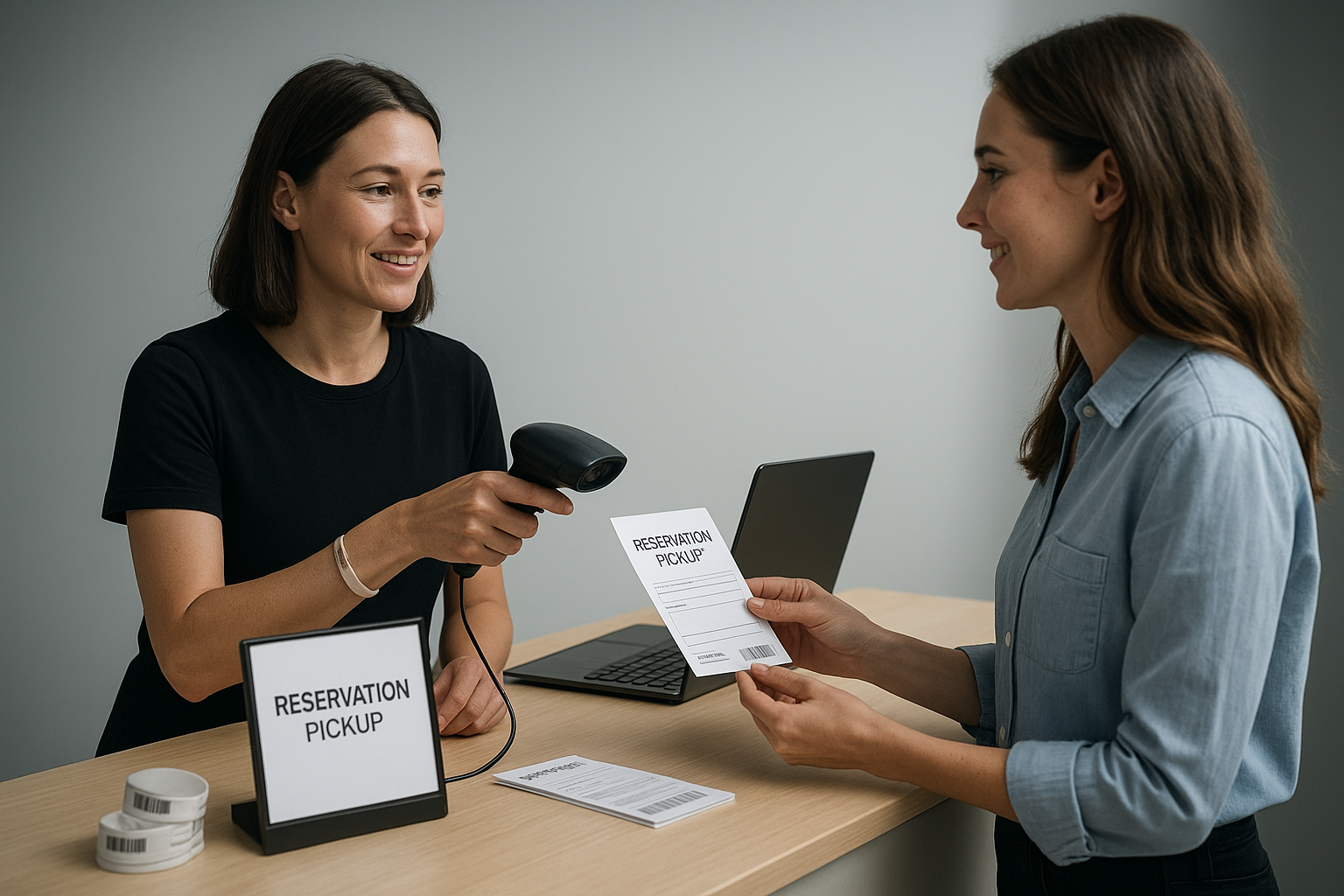
Pillar: Scarcity-led demand · Persona: Head of Brand · Time horizon: immediate Why now: Holiday conversions concentrate in the first 48 hours; scarcity boosts immediate buys with lower margin erosion than blanket discounts. Thresholds: Keep CPA inside the run guardrail, drive at least 25% of conversions inside 0–48h, and preserve a ≥40% redeem-to-purchase rate from tracked promo responses. Fit: Best for Premium collabs, constrained inventory, high-margin SKUs; Not for Broad clearance, low-margin staples, evergreen catalog. Proof: Short-window drops consistently lift early-window share and redeem-to-purchase rates versus broad promos. Placement options: VIP email + unique promo code, In-app surprise banner + code, Micro pop in 3 stores with reserve-for-pickup codes Target map: - Head of Brand (Brand): Owns creative and authorized limited inventory allocations for scarcity tests - Head of Digital (Digital): Delivers codes to app/email and measures code redeems - Head of Stores (Stores): Runs the small in-store pop and executes reserve pickup Cadence: - Day 0: Launch kickoff — Confirm inventory tranche, code lists, creative, and tracking for the 48-hour cell. (CTA: Send 1-page runbook to merchandising, store ops, and finance) - Day 1: Reconfirm instrumentation — Validate promo code mapping to exposed audience and set live dashboards for 0–48h metrics. (CTA: Book 30-minute readout with finance and ops to review guardrails) - Day 3: Early-window review — Compare 0–48h code redeems, redeem-to-purchase, CPA versus run guardrail and decide scale/stop. (CTA: Deliver scale/kill decision memo to executive sponsor) Ops tags: owner Head of Brand x Head of Digital; Head of Stores | Collab type brand↔operator | Zero new SKUs: No | Ops drag: medium
Agent nudge at checkout to lift conversion
Pillar: Checkout conversion · Persona: Head of Digital · Time horizon: 6-week Why now: Digital checkout prompts convert decision-ready buyers during tight holiday windows and reduce checkout friction. Thresholds: Target a measurable net conversion lift vs non-agent control and positive incremental revenue per session within the test cohort. Fit: Best for Sites/apps with live agent capability and measurable checkout dropoff; Not for Sites without agent routing or where checkout abandonment is not the primary issue. Proof: Agent-assisted prompts drive higher conversion rate and incremental revenue when compared to non-agent controls in test cohorts. Placement options: Web checkout modal offering agent help, Mobile app chat prompt during payment Target map: - Head of Digital (Digital): Can deploy modal and segment traffic for control vs agent prompt - Head of CX (CX): Provides agents and scripts to handle premium holiday queries - Head of Finance (Finance): Validates incremental revenue per session and margin impact Cadence: - Day 0: Test kickoff — Define cohort, control, success metrics, and agent script for the checkout prompt. (CTA: Send 1-page runbook to merchandising, store ops, and finance) - Day 7: Early signal check — Review conversion delta and session revenue for quick adjustments to script or targeting. (CTA: Book 30-minute readout with finance and ops to review guardrails) - Day 28: Full test analysis — Compare conversion lift, incremental revenue per session, and margin impact to decide scale. (CTA: Deliver scale/kill decision memo to executive sponsor) Ops tags: owner Head of Digital x Head of CX | Collab type brand↔operator | Zero new SKUs: Yes | Ops drag: medium
One-day targeted discount to lapsed vs active cohorts
Pillar: Targeted price stimulus · Persona: Head of Promotions · Time horizon: immediate Why now: Short, targeted discounts convert lapsed buyers quickly without the margin damage of broad discounts. Thresholds: Run 24-hour codes per segment; keep margin per order above the margin guardrail and 90-day repeat at or above baseline. Fit: Best for Retailers with clear lapsed segments and controlled margin visibility; Not for Blanket sitewide discounts or margin-thin SKUs without repeat lift. Proof: Segmented 24-hour discounts produce higher margin per converted visit than blanket discounts when repeat holds. Placement options: Email to lapsed segment with unique 24h code, Site banner for active customers with time-limited code Target map: - Head of Promotions (Marketing): Executes targeted messages and discount economics - Head of CRM (CRM): Delivers segmented sends and measures code redeems - Head of Finance (Finance): Validates margin and 90-day repeat thresholds Cadence: - Day 0: Test kickoff — Publish segment lists, allocate codes, and freeze SKU margins for the 24-hour cell. (CTA: Send 1-page runbook to merchandising, store ops, and finance) - Day 1: Immediate post-window review — Measure code redeems, margin per order, and short-term CPA to decide extension. (CTA: Book 30-minute readout with finance and ops to review guardrails) - Day 30: Repeat and margin check — Assess 90-day repeat and net margin impact to validate channel and segment approach. (CTA: Deliver scale/kill decision memo to executive sponsor) Ops tags: owner Head of Promotions x Head of CRM; Head of Finance | Collab type brand↔operator | Zero new SKUs: Yes | Ops drag: low
The Brand Collab Lab turns these plays into named concepts, deck spines, and outreach ready for partner teams.
Risk Radar
- Aggregating two-week results hides 0–48h performance. (Severity 3, Likelihood 3) Trigger: Reporting success on total promotion sales or conversion without time-since-exposure segmentation. Detection: Measure conversion rate and share of sales per exposed user at 0–48h vs 49–168h and early-window margin per converted visit. Mitigation: Segment all promo reporting by 0–48h and 49–168h; make early-window conversion rate and margin per converted visit the primary KPI; pause or redesign offers that miss early-window targets in two consecutive tests.
- Limited drops sell faster than fulfillment can deliver. (Severity 3, Likelihood 2) Trigger: Running a co-brand drop or limited-inventory promotion without checking pick/pack and pickup capacity. Detection: Track order cancellation rate, same-day pickup reservation failures, fulfillment SLA breaches per order within 0–48h, and complaint/NPS spikes for the cohort. Mitigation: Cap saleable units to confirmed fulfillment capacity; require reserve or same-day pickup options only; show live inventory and use a waitlist instead of accepting orders beyond capacity.
- Agent prompts at checkout can reduce conversion or raise errors. (Severity 2, Likelihood 2) Trigger: Enabling agent-assisted checkout prompts for broad or uncontrolled cohorts or defaulting them on. Detection: Compare conversion rate, revenue per session, checkout completion time, and error/rollback rates for agent cohort vs randomized control; monitor fraud/chargeback signals. Mitigation: Roll out the agent prompt as a randomized test; measure conversion and revenue per session; revert the prompt if conversion falls by >3 percentage points or error/rollback rate increases >50% vs control.
- 24-hour targeted discounts erode full-price demand and margin. (Severity 3, Likelihood 3) Trigger: Applying time-bound discounts to segments overlapping active buyers or running overlapping promotions. Detection: Measure margin per converted visit, conversion uplift vs holdout, and cannibalization rate (share of converted users who would likely have purchased at full price). Mitigation: Run holdout controls; limit discounts to lapsed-only cohorts; set a minimum margin-per-converted-visit threshold and stop the test if margin falls below target or cannibalization exceeds 20%.
Future Outlook
- 6-month Co-branded 48-hour drops capture high-intent buyers and protect margin: If true, we will see 25–35% of campaign conversions occur inside the first 48 hours of tight co-brand drops within 6 months (confidence 0.80) Operators run short, scarce co-brand drops with locked fulfillment (reserve, same-day pickup) and tightened messaging; early buyers convert immediately rather than waiting for sitewide sales 5. This works because a large share of holiday conversions live in a 0–48 hour window and decision-ready shoppers respond to scarcity and immediate pickup options more than broad discounts 3. If you adopt this as the default you will celebrate higher margin per converted visit and faster sell-through; if you fail to adopt it you will regret leaving early-window demand to competitors or to later discounting 9. Watch redeems per exposed audience within 0–48h (early-window conversion rate) for Capture a disproportionate share of seasonal sales in the early window while holding 10–15 percentage points higher margin versus sitewide discounts
- 12-month Blanket discounts win volume but erode margin and train delayed buying: If true, we will see rising reliance on sitewide discounts and lower margin per converted visit across peak periods within 12 months (confidence 0.70) Teams lean on broad, time-limited discounts to hit short-term revenue targets and shoppers learn to wait for price drops 5. Discount dependence lowers AOV and compresses margin because it shifts conversion timing later and reduces urgency among decision-ready buyers who would have bought in the early window 9. If discounting becomes the dominant play you will celebrate short-term revenue spikes but regret long-term margin erosion and higher acquisition cost to re-train buyers out of discount cadence 5. Watch margin per converted visit for discounted cohorts versus non-discounted early-window cohorts for If controlled, discounts can protect short-term revenue; the upside is temporary volume gains while teams build segmented incentives to avoid training buyers to delay
Sources
Appendix Signals
- US Job Openings (labor headline): held for later window (strength 0.00)
- Future of Marketing (vendor piece): held for later window (strength 0.00)
- Oscar Predictions / Entertainment Signals: held for later window (strength 0.00)
- End-of-Year Productivity Advice: held for later window (strength 0.00)
- Fulfillment Speed Compresses Decision Window: held for later window (strength 0.90) 3
-
Small Business Technology News This Week: Windows 11 Hallucinations, Amazon’s AI Agents, Nana Banana Pro Gets Tested — forbes.com, 2025-12-07. (cred: 0.65) — https://www.forbes.com/sites/quickerbettertech/2025/12/07/small-business-technology-news-this-week-windows-11-hallucinations-amazons-ai-agents-nana-banana-pro-gets-tested/ ↩↩↩↩
-
US job openings increase modestly in October — businesstimes.com.sg, 2025-12-09. (cred: 0.60) — https://www.businesstimes.com.sg/international/us-job-openings-increase-modestly-october ↩
-
How Walmart's Next-Gen Fulfillment Is Competing With Amazon on ... — warehouseautomation.ca, 2025-12-02. (cred: 0.60) — https://www.warehouseautomation.ca/news/walmart-next-gen-fulfillment-vs-amazon-speed-etl89-zsnyj ↩↩↩↩↩↩↩↩↩↩
-
The Future of Marketing in 2026 — themarketingcloud.com, unknown. (cred: 0.60) — https://www.themarketingcloud.com/blog/the-future-of-marketing-in-2026 ↩
-
12 Ways to Win Q4 as a Non-Holiday Advertiser - Playbook Media — playbookmedia.com, unknown. (cred: 0.60) — https://www.playbookmedia.com/blog/12-ways-to-win-q4-as-a-non-holiday-advertiser/ ↩↩↩↩↩↩↩↩↩↩↩↩↩↩↩↩↩↩↩↩
-
Oscar Predictions via Feinberg Forecast: Scott Assesses 21 Categories Ahead of Thanksgiving — hollywoodreporter.com, 2025-11-25. (cred: 0.60) — https://www.hollywoodreporter.com/lists/oscar-predictions-2026-feinberg-forecast-before-thanksgiving/ ↩
-
Hot take: The Elder Scrolls VI will shadow-drop with zero ... - Reddit — reddit.com, 2025-12-14. (cred: 0.60) — https://www.reddit.com/r/TESVI/comments/1pmfg56/hot_take_the_elder_scrolls_vi_will_shadowdrop/ ↩↩
-
Stop Wasting the End of the Year — 5 Steps to Get Ahead in 2026 — entrepreneur.com, 2025-12-06. (cred: 0.60) — https://www.entrepreneur.com/growing-a-business/stop-wasting-the-end-of-the-year-5-steps-to-get-ahead/498389 ↩
-
DV360 vs Google Ads for Dealerships: Which Should You Use? — fullpath.com, 2025-12-10. (cred: 0.60) — https://www.fullpath.com/blog/dv360-vs-google-ads-for-dealerships-which-should-you-use/ ↩↩↩↩↩↩↩↩