The Strategy Gap: Why Stores Aren't Strategies and AI Won't Save You
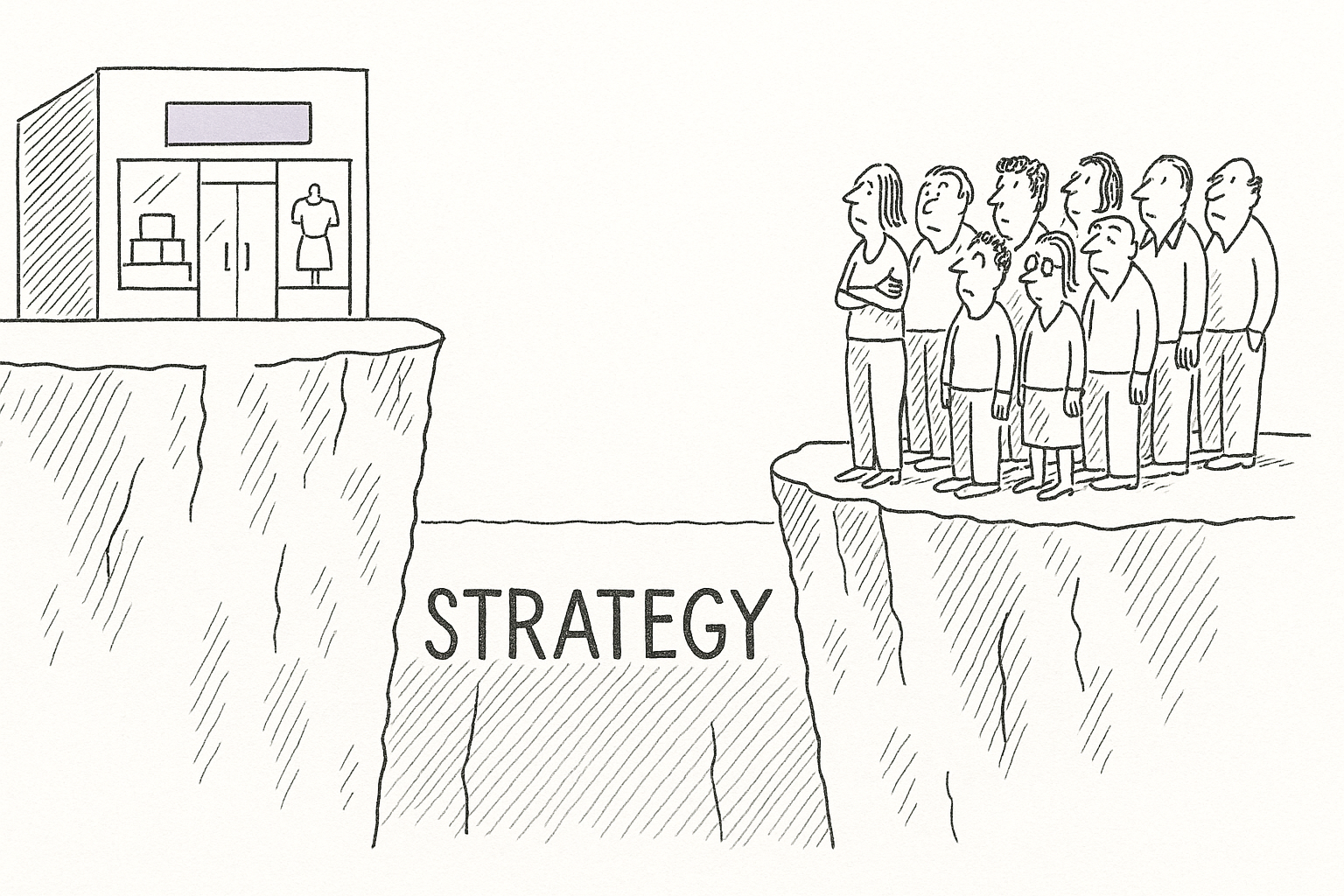
Physical retail accounts for roughly 80% of all retail sales. You would think that after decades of running stores, retailers would have figured out how to make them work.
They haven't.
The Experience Gap
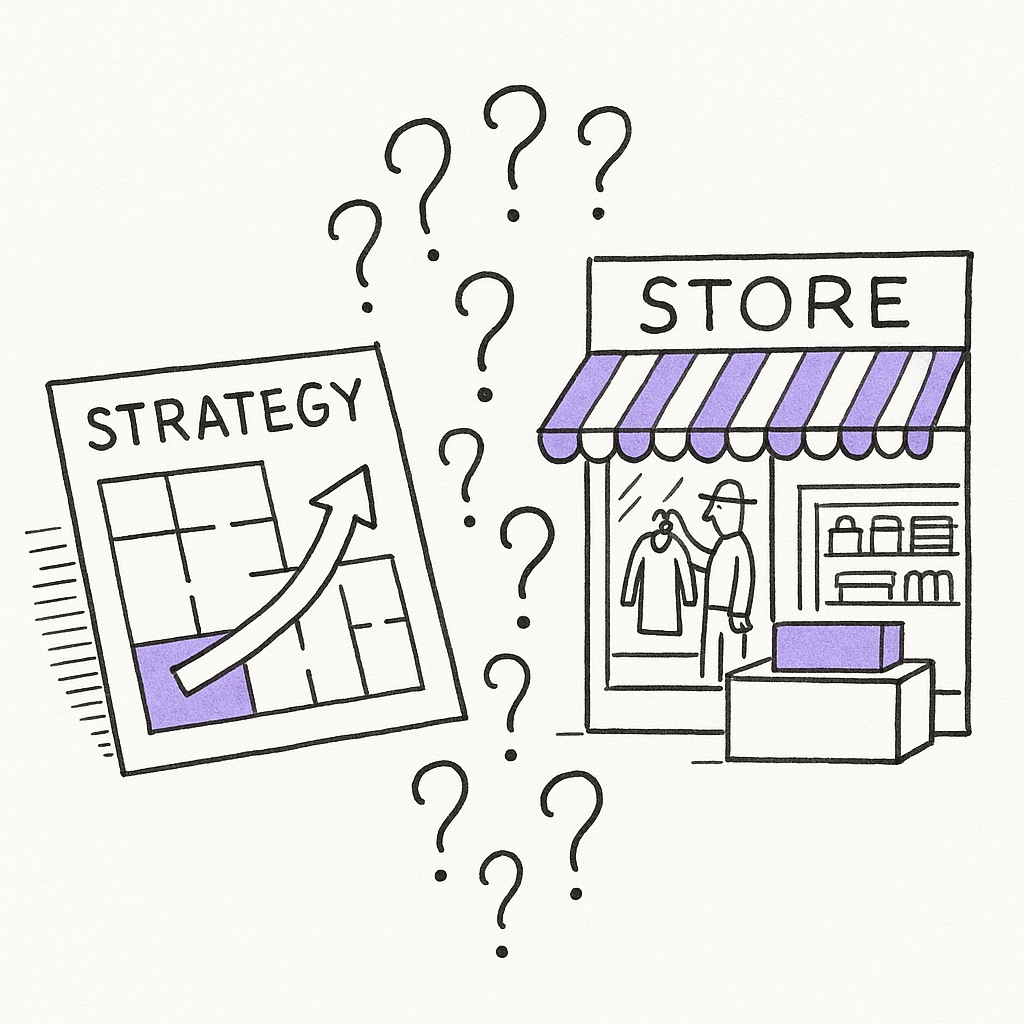
The Robin Report published a piece this week with a title that deserves more attention than it's getting: "A Store Is Not a Strategy." The core argument is straightforward - retailers need to bridge brand concept to physical experience, and most are failing.
This isn't new information, but the timing matters. We're watching retailers pour money into experiential investments while simultaneously struggling to convert that spending into measurable outcomes. 51% of marketers are increasing experiential budgets through 2026, with most allocating between $500,000 and $1 million annually. That's a lot of money chasing a problem that hasn't been solved.
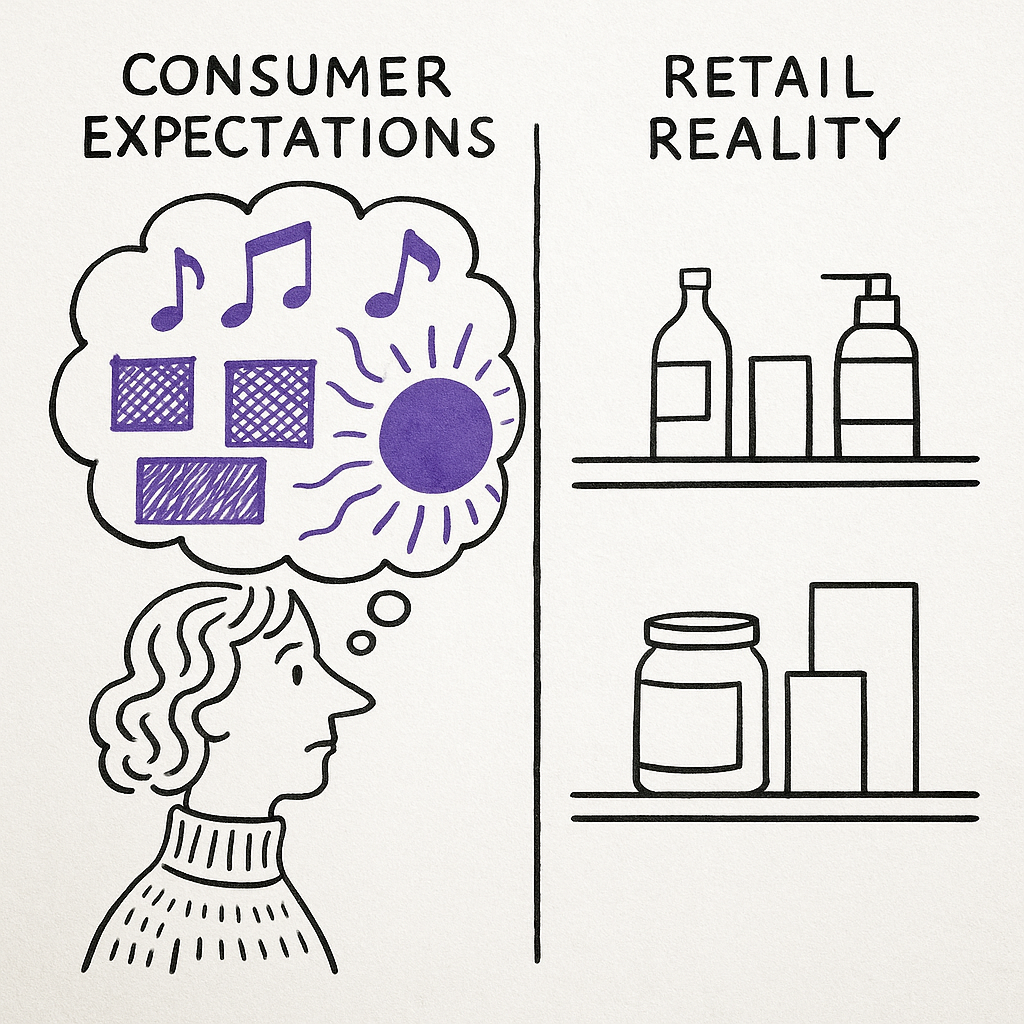
The disconnect shows up in the data. 72% of consumers say they value sensory elements like lighting, music, and tactile interaction. 60% of Gen Z expects retail spaces to be fun and experiential. Yet when you walk into most stores, you encounter... shelves. Maybe some upgraded fixtures if they've recently remodeled.
Walmart's Interesting Bet
Walmart offers a useful case study because they're actually moving numbers. Their fashion business grew over 5% monthly in Q3, and here's the detail that matters: 40% of Walmart Fashion customers now come from households earning $100K or more.
That's significant because it contradicts the assumption that Walmart's customer base is fixed. They discovered a gap in their own data - customers were spending 60% at low price points in-store but 80% on higher-priced items elsewhere. The demand existed. Walmart just wasn't capturing it.
Their response was multi-layered: new private brands positioned at the $15-$40 range (Scoop, Free Assembly, Avia), a partnership with luxury resale platform Rebag, and creative leadership from people like Brandon Maxwell and Denise Incandela who came from Saks Fifth Avenue.
The skeptic's question: will this last? Fashion is notoriously difficult to sustain, and Walmart's core identity as a value retailer creates tension with premium positioning. Six of their private brands now generate over $1 billion each, but that metric doesn't tell us whether the affluent customers are sticking around or just sampling.

The AI Question
Meanwhile, Avocados From Mexico is running an interesting experiment. For the third consecutive year, they're skipping traditional Super Bowl advertising - an $8 million commitment - in favor of AI-powered digital activations.
This year's version is called "Prediction Pit," featuring actor Rob Riggle as an AI avatar offering real-time football predictions and personalized guacamole recipes. The technical implementation is more sophisticated than most brand activations - a dynamic predictive system where outcomes shift based on variables like player injuries and weather conditions.
Their metrics look promising on the surface: time spent on their website increased over 30% year-over-year, web views rose 12%. But here's what they're not saying: how does that translate to actual avocado sales? The brand says they're targeting increased product volume rather than traditional awareness metrics. Whether the AI engagement creates purchase behavior remains unproven.
The guardrails they built are instructive. They had to pre-approve every possible prediction because the AI is using Riggle's voice and face. As their team noted, they couldn't let the system generate content that might damage the brand. This is the quiet reality of AI marketing in 2026 - the technology is powerful, but the risk management requirements are substantial.

The Emotional Equation
What connects all of this is a fundamental question that most retailers still can't answer: what's the emotional value of your physical presence?
72% of consumers value sensory elements. Sensory experiences bypass rational evaluation and trigger emotional responses that influence purchase decisions. This is basic neuroscience - the amygdala processes emotional stimuli faster than the prefrontal cortex can evaluate them logically.
But knowing this and acting on it are different things. Suzy Davidkhanian put it bluntly: "If you don't bolster your store and turn it into a community hub, you will lose."
The stores that are working - Netflix House's 100,000 square foot experiential environment, Ralph Lauren's coffee pop-ups, the better-executed brand partnerships at local shops - all share a common characteristic. They're not trying to be stores. They're trying to be places where something happens that couldn't happen online.
This is harder than it sounds. Most retailers are still organized around moving product efficiently, not creating emotional experiences. Their metrics, their staff training, their store layouts - all optimized for transaction volume, not connection depth.
What This Means
The pattern emerging from this week's news isn't about any single brand or technology. It's about a widening gap between what consumers say they want and what most retailers are actually building.
Physical stores remain dominant. AI activations are getting more sophisticated. Experiential budgets are growing. But the fundamental question remains unanswered: how do you convert presence into emotional connection at scale?
The retailers who figure this out will capture disproportionate value. The rest will keep building stores and wondering why they're not strategies.
Sources
- A Store Is Not a Strategy - The Robin Report
- Walmart's fashion push is resonating with more six-figure households - Modern Retail
- Avocados From Mexico turns to AI to advertise around the Super Bowl instead of a TV buy - Modern Retail
- IHG to Bring the Vignette Collection to India: Exclusive - Skift
- 2026 Retail Trends - Mood Media