The Brand Proof Era: Why Amazon's Shopping Cart Matters More Than Its Ads

Amazon just announced it's rolling out redesigned Dash Carts to 25+ Whole Foods locations. The carts are 25% lighter, have 40% more capacity, include a produce scale, and show real-time savings on screen. Most coverage focused on the technology. But here's what actually matters: Amazon is building proof of its value proposition directly into the shopping experience.
This is the pattern defining brand competition in 2026.

The Shift from Promise to Proof
Adrian Barrow at Branding Strategy Insider made a striking observation this week: when Omnicom merged with IPG and eliminated 4,000 jobs - including hundreds of brand strategists - it wasn't a cyclical downturn. It was structural obsolescence.
The advertising apparatus that powered brand-building for decades relied on promises. Aspirational messaging. Cultural positioning. But three things changed.
First, brands can now deliver contextual utility at scale. Nike's Training Club provides adaptive coaching. Capital One offers instant spending insights. These aren't campaigns - they're capabilities.
Second, consumer expectations shifted. According to Barrow's analysis, 67% of consumers now define brand trust primarily through "helping me solve problems" rather than "sharing my values." That's an inversion from a decade ago.
Third, social media and review platforms expose gaps between promises and delivery instantly. Aspirational messaging unsupported by operational capability creates vulnerability, not value.
The result: brands don't build service capabilities to support their cultural positioning anymore. They earn cultural positioning by building service capabilities.

Where Loyalty Actually Lives Now
If you want evidence of this shift, look at Skift's recent research on loyalty programs. In the US, 34% of surveyed travelers now identify credit card programs as offering the most rewarding benefits - compared to 22% for hotels and 21% for airlines.
Credit card companies won this battle not through better branding but through better infrastructure. Real-time rewards visibility. Instant redemption. Points that work everywhere instead of one airline's network.
Even more telling: 53% of American respondents said they'd abandon their preferred brands if AI tools found them better deals. Loyalty built on messaging evaporates when technology makes comparison effortless. Loyalty built on genuine service advantage persists.
The confidence gap across markets reinforces this. India leads Skift's Travel Confidence Index at 79, with elevated optimism and stronger spending. The UK scores 64. The US registers 61, marked by greater hesitation. The common thread in high-confidence markets: consumers feel they're getting real utility, not just promises.

The Simplification Pattern
This infrastructure-first model is reshaping wellness too. On the Modern Retail Podcast this week, Rachel Hirsch of Wellness Growth Ventures described what's "in" and "out" for 2026.
What's out: multi-step routines and elaborate protocols.
What's in: hero products - single standout items that deliver clear, measurable results.
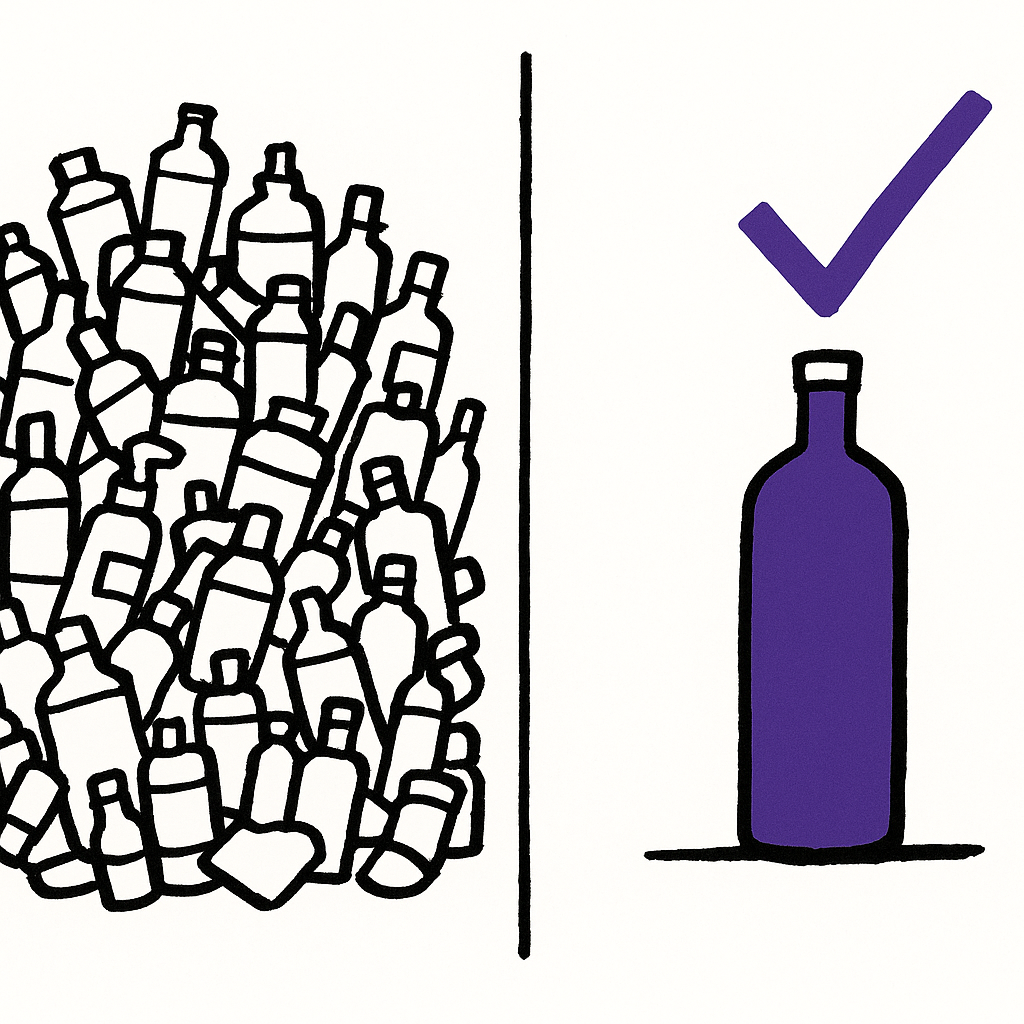
The parallel to brand strategy is exact. Consumers are rejecting complexity in favor of demonstrated utility. They don't want a 12-step skincare routine with promises about each product. They want one product that visibly works.
Strength training remains popular not because of great marketing but because results are measurable. High-protein diets persist because the feedback loop is immediate. GLP-1 medications maintain momentum because outcomes are undeniable.
The brands winning in wellness aren't the ones with the best storytelling. They're the ones with the most provable results.
The Infrastructure Gap
Here's where it gets interesting for brand operators.
The Kayak story this week illustrates what happens when proof-building gets blocked. Kayak's CEO tried to take the company private about two years ago with PE backing. Booking Holdings vetoed it.
An independent Kayak, Skift noted, "could have benefited from focused investment and attention." Instead, it remains part of a conglomerate that took a $457 million impairment charge on metasearch value last year - partly due to generative AI disrupting how people find travel deals.
The strategic tension: Kayak needs to build new service infrastructure to compete with AI-first discovery tools. But as part of Booking Holdings, investment decisions get filtered through parent company priorities.
This is the infrastructure gap many legacy brands face. Their decision-making tools - focus groups, tracking studies, pre-testing - evolved for the promise era. They're designed for reversible, contained-cost decisions about messaging. Service platform investments require multi-year engineering commitments where launch failures create lasting damage.
The organizations structured to make great promises often struggle to build great proof.
What Actually Works
The case studies emerging from this shift follow a consistent pattern.
Warby Parker competed against brands with 50+ years of cultural equity and vastly larger budgets. They won through Home Try-On, Virtual Try-On, and accessible design - service infrastructure that delivered the "personalized, convenient, socially conscious" experience that culture demanded.
Sephora established beauty authority not through decades of messaging but through virtual try-on, skin analysis AI, and community features that proved inclusive beauty commitment operationally.
Tesla achieves EV dominance without traditional advertising through Supercharger networks, over-the-air updates, and autopilot - service delivery creating what Barrow calls "situational presence that pure messaging can't replicate."
Amazon's Dash Cart follows the same logic. A real-time savings tracker doesn't just save customers money - it proves Amazon saves them money, at the moment of experience. Store navigation maps don't just help find products - they prove Whole Foods understands how customers actually shop. Alexa integration doesn't just add convenience - it proves the Amazon ecosystem works seamlessly.
Every feature is proof.
The Measurement Shift
McKinsey's analysis suggests capital misallocation toward awareness-building produces 0.3x ROI, while investment in experiential utilities generates 3.2x returns.
This isn't surprising when you understand the mechanism. Nike Training Club transforms brand presence from 2-3 purchase occasions annually to 15-20 behavioral integration moments. That's habit formation competitors can't easily disrupt.
Service platforms generate continuous behavioral data, enabling improvement at speeds research-dependent competitors can't match. Spotify processes 500+ million listening sessions daily. Legacy competitors run quarterly research cycles.
And service infrastructure validates cultural positioning through operational commitment. Patagonia's Worn Wear repair platform provides environmental credibility that messaging alone cannot establish.
The brands that win from here are the ones building proof into every interaction. Not because it sounds good in a strategy deck, but because it's what actually drives compounding advantage.
Sources
- Amazon to roll out updated Dash Carts to more Whole Foods stores - Retail Dive
- Why Experience Innovation Is The New Brand Moat - Branding Strategy Insider
- Credit-Card Rewards Now Rival Airline and Hotel Loyalty Programs - Skift
- Modern Retail Podcast: What's in and out in wellness for 2026 - Modern Retail
- Kayak CEO Tried to Take the Company Private: Scoop - Skift