Growth Without the Growth
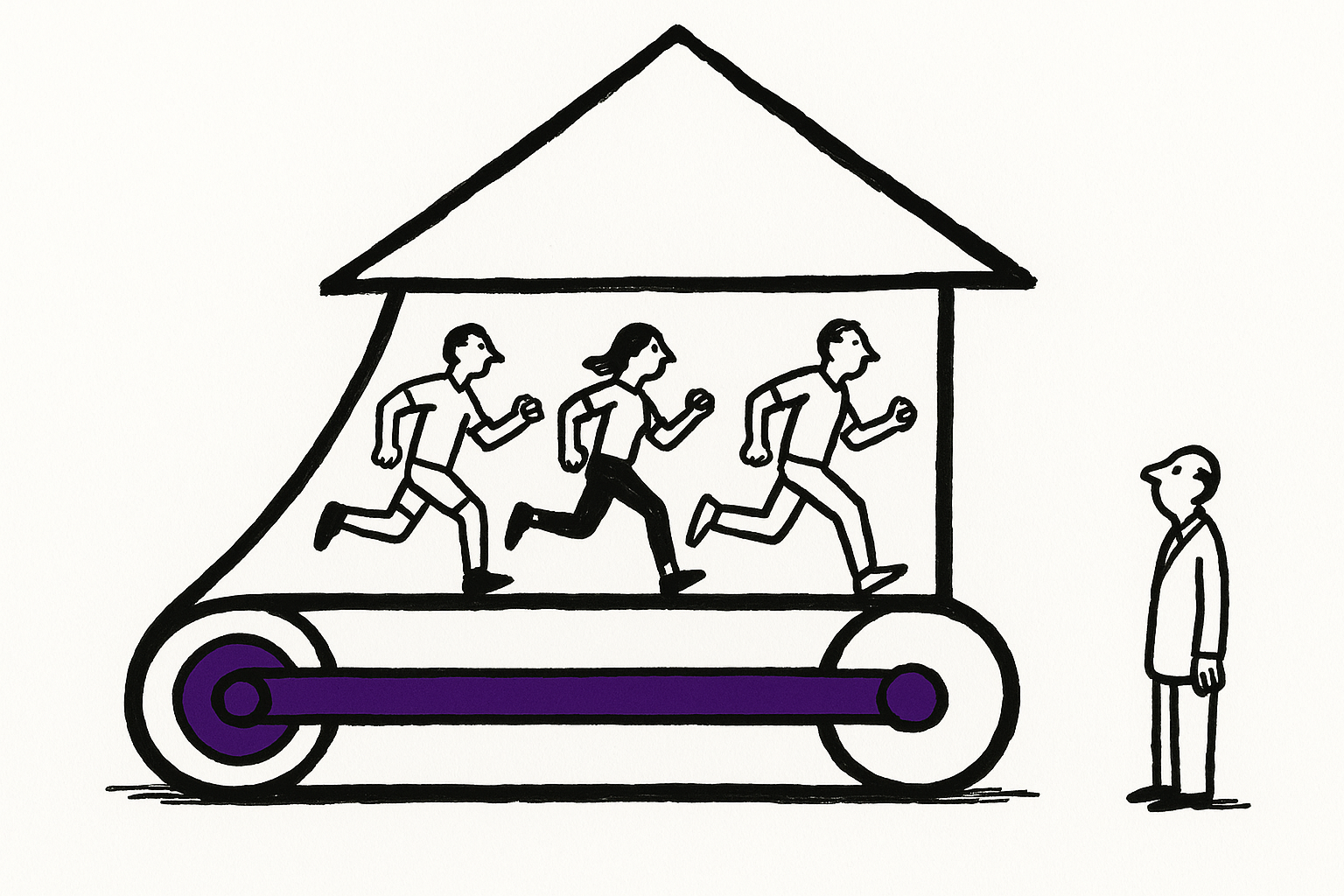
Chipotle just posted its first same-store sales decline in over twenty years. Their response: a five-pillar "Recipe for Growth" plan involving more limited-time offers, a rewards relaunch, and expansion into Saudi Arabia, Mexico, Singapore, and South Korea.
In the same week, Goodwill announced plans for 100 new stores after hitting $7 billion in record revenue. And NBCU started testing agentic AI to automate premium TV ad sales.
Three very different companies. Three growth strategies. But reading them together reveals a pattern that brand leaders should pay attention to: the gap between companies growing because customers want more of what they offer and companies growing because the board needs a bigger number.
The Expansion Reflex

Chipotle's numbers tell a story their growth plan doesn't fully address. Same-store sales fell 2.5% in Q4 2025. Transactions dropped 3.2%. The average check rose 0.7% - meaning fewer people came, and the ones who did spent slightly more, probably because of price increases.
Their response leans heavily on expansion: 334 new restaurants opened in 2025, a long-term target of 7,000 across North America, and international debuts in four new countries. They're also investing in technology that reduces prep time by 2-3 hours per restaurant and plan to equip 2,000 units with this equipment by year-end.
These aren't bad moves. But they're answers to the question "how do we grow revenue?" rather than "why are fewer people walking through the door?"
The limited-time offer strategy is telling. Increasing LTO cadence is a classic traffic driver, and it works - briefly. But it's a sign that the core menu isn't pulling hard enough on its own. When your growth plan's first pillar is "more menu innovation," the real question is what happened to the menu that made Chipotle a phenomenon in the first place.
Compare this to Goodwill. Their record $7 billion revenue didn't come from a strategic pivot. It came from a macro shift they were already positioned to capture: secondhand shopping going mainstream. Over 67% of Gen Z and millennials now buy secondhand apparel annually. Goodwill's COO David Eagles noted that "value matters more than ever" and that "secondhand is one of the fastest-growing places consumers are going."
Their 100 new stores aren't a bet on growth. They're a response to demand they can barely keep up with.
The Premium Automation Paradox
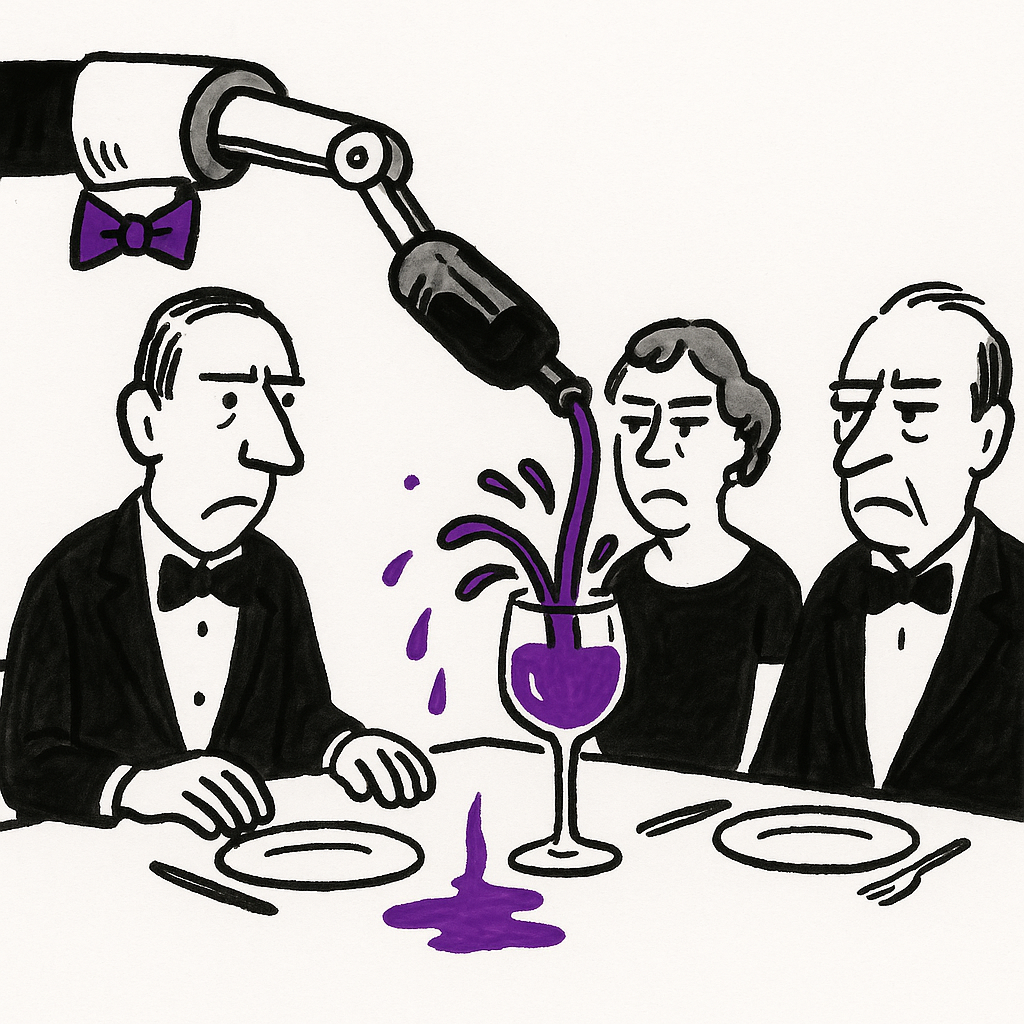
Meanwhile, NBCU is running a different experiment entirely. They're using agentic AI to automate the sale of premium TV advertising packages - the complex bundles of placements, formats, and sponsorship integrations that have historically required extensive human negotiation.
Ryan McConville, NBCU's Chief Product Officer, called it "premium automation" - a term worth examining. The premise is that AI agents can handle the back-and-forth of assembling multi-placement ad deals while preserving the customization that makes TV advertising valuable.
The IAB Tech Lab is even developing an "Agentic Direct" specification for the industry.
This is genuinely interesting, but it raises a question nobody in the room seems to be asking: does automating premium sales eventually make them not premium?
Premium pricing in TV advertising has always rested partly on scarcity and partly on the complexity of the deal itself. When buying requires navigating relationships, understanding context, and negotiating creative integrations, the friction is the feature. It signals investment and intentionality from the advertiser.
Automate that process and you remove the friction - which is the point. But you might also remove the signal. If any brand can assemble a premium package through an AI agent in minutes, the "premium" label starts doing less work. The ad placements are the same, but the perceived exclusivity shifts.
Frans Vermeulen of Swivel argues that automation "lets TV companies offer things that make them different from other media channels" through linked ad experiences. That may be true. But it also means the differentiation increasingly lives in the format, not the buying process - and formats are easier to replicate than relationships.
The Secondhand Signal
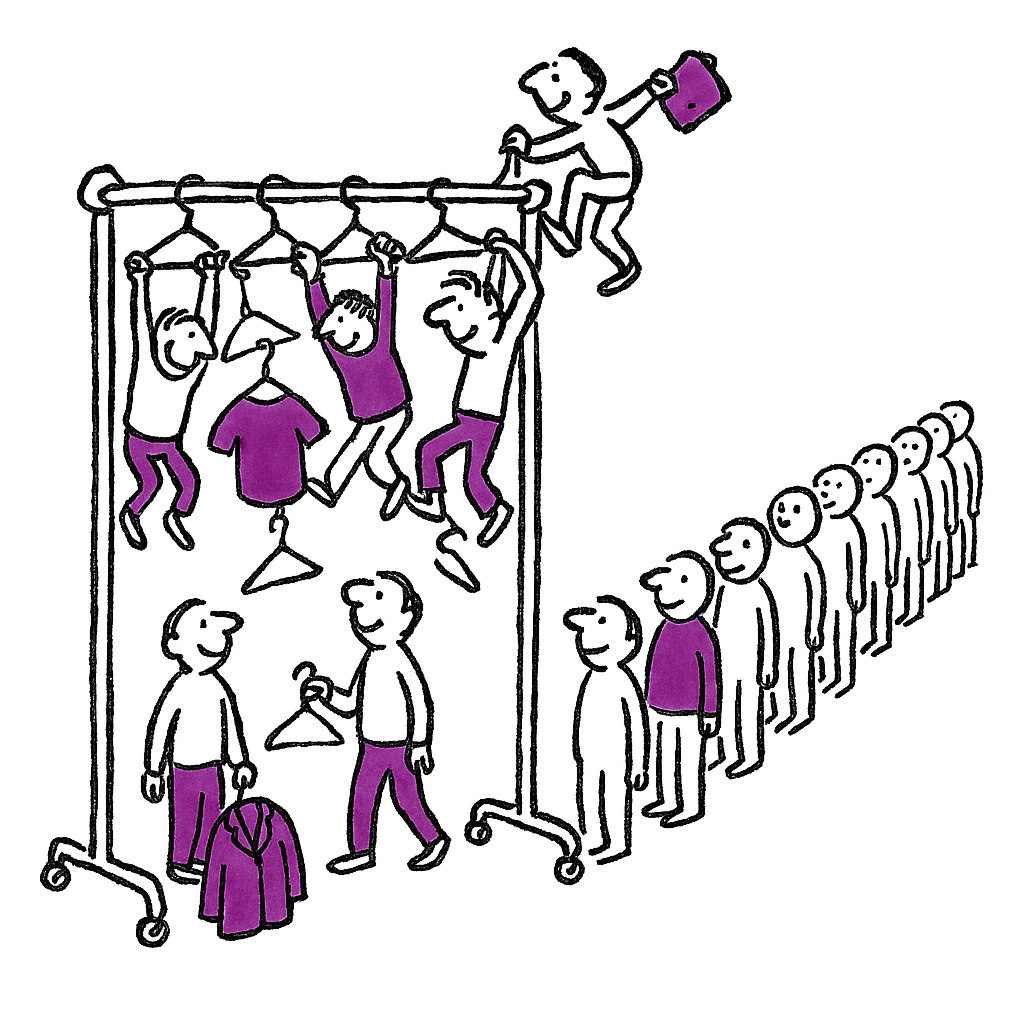
Goodwill's position is instructive because their growth comes from alignment, not strategy.
They didn't convince Gen Z that secondhand was cool. They were already there when the cultural shift happened. Their 3,400 locations cover 85% of the U.S. population within 10 miles. Their $450 million ShopGoodwill.com marketplace extends reach beyond physical stores. They're now developing corporate partnerships to handle the nearly $1 trillion in annual U.S. returns - about 3% of GDP - that retailers struggle to manage.
This is what real demand looks like. Not manufactured through LTOs or automated through AI agents, but emerging from a genuine change in consumer behavior that the organization was positioned to capture.
The contrast with Chipotle's approach is sharp. Chipotle is trying to engineer demand through tactical maneuvers - rewards relaunches, menu novelty, international expansion. Goodwill is simply opening more doors because people keep showing up.
There's a behavioral economics insight here worth noting. Research on cognitive biases suggests that organizations, like individuals, tend to rationalize their existing strategies rather than question them. When sales decline, the instinct is to do more of what worked before, faster. More locations. More menu items. More markets. The harder move is asking whether the underlying value proposition has shifted.
What Brand Leaders Should Take From This
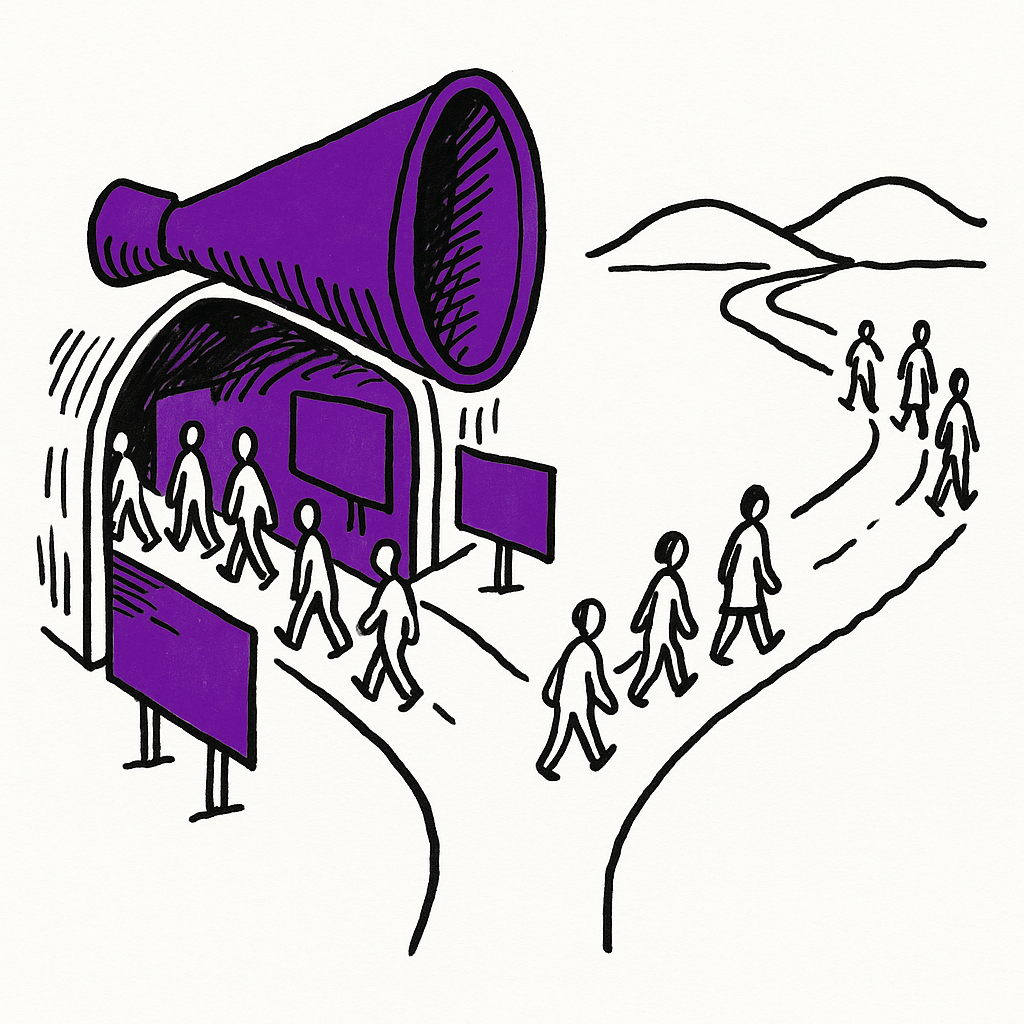
Three lessons emerge from this week's news:
First, expansion is not the same as demand. Opening more locations only works if each location can pull sufficient traffic. Chipotle's 334 new restaurants in 2025 happened alongside declining same-store transactions. That math gets uncomfortable quickly. Goodwill's 100 new stores, by contrast, follow a year of record revenue per location.
Second, automating premium is risky. NBCU's AI-powered ad sales could genuinely improve efficiency. But "premium automation" only works if you're very clear about what makes the product premium in the first place. If it's the deal complexity, automation undermines it. If it's the audience and format, automation might enhance it. Most companies don't make this distinction clearly enough.
Third, the best growth strategies are the ones you don't have to force. Goodwill's record year wasn't the result of a five-pillar plan. It was the result of being in the right place when consumer behavior shifted. The lesson isn't "be lucky" - it's that growth strategies anchored to genuine demand are fundamentally different from growth strategies designed to manufacture it.
Chipotle's internal promotion numbers are actually their most compelling data point: 23,000 internal promotions, 90% of management filled from within, 100% of regional VP roles promoted internally. That kind of operational culture is hard to replicate and genuinely valuable. But it's buried under a growth plan focused on LTOs and international expansion - the metrics that impress analysts rather than the advantages that build lasting businesses.
The companies worth watching aren't the ones with the most ambitious growth plans. They're the ones where growth is a consequence rather than a goal.
Sources
- Chipotle adopts new growth plan as sales slide - Restaurant Dive
- Goodwill plans 100 new stores for 2026 after hitting record revenue in 2025 - Modern Retail
- Future of TV Briefing: How AI agents prime TV advertising for 'premium automation' - Digiday
- Chalet Doubles Down on Premium Hospitality With Athiva Expansion - Skift
- New Worlds, Old Biases: Psychology and AI - BehavioralEconomics.com
Hass Dhia is Chief Strategy Officer at Smart Technology Investments, where he helps brands find authentic local activation partnerships powered by neuroscience and AI. He holds an MS in Biomedical Sciences from Wayne State University School of Medicine, with thesis research in neuroscience.