When the Interface Stops Mattering
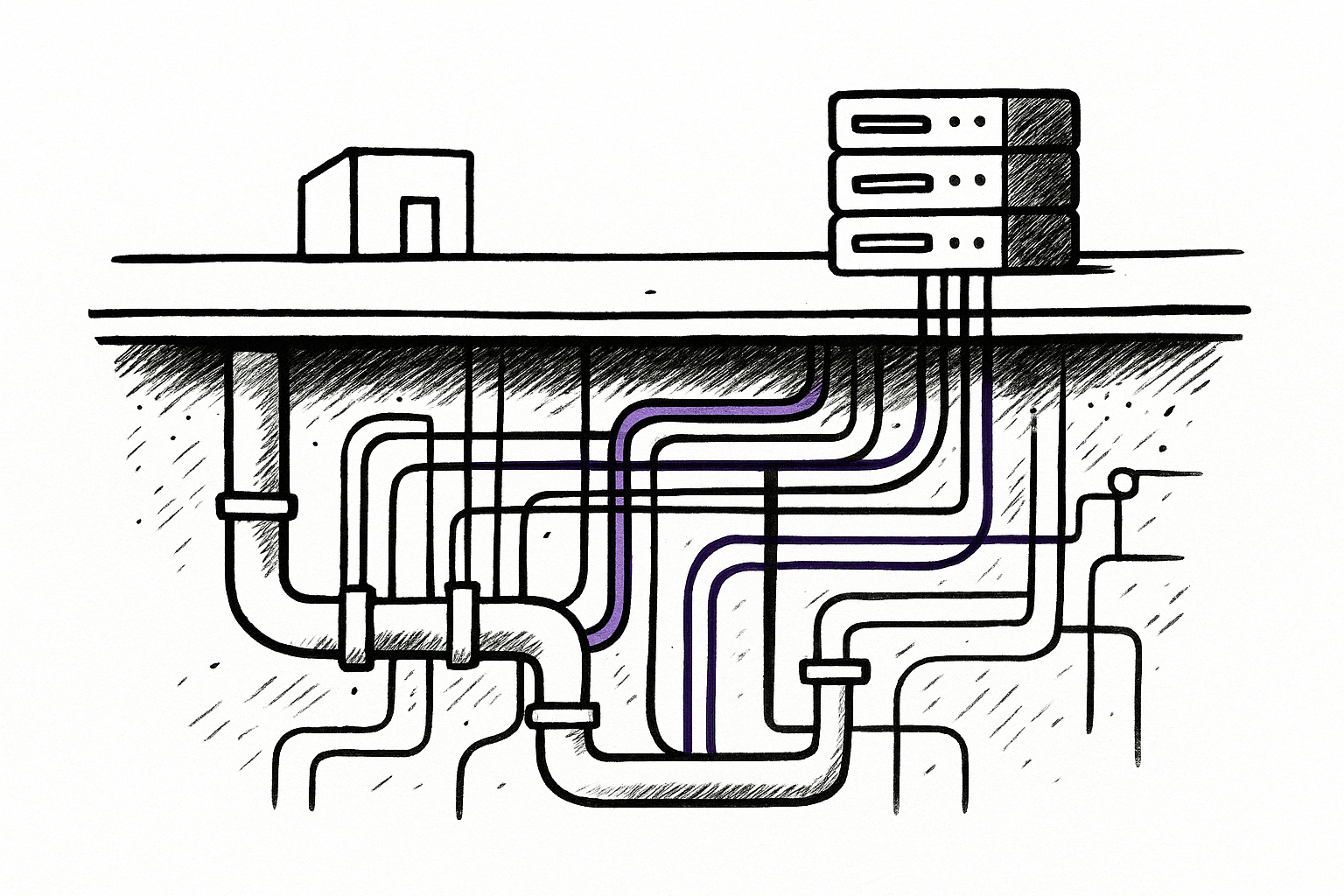
There's a pattern emerging across industries that feels important, though it's easy to miss because it contradicts how we usually think about competitive advantage. Companies are deliberately making their front-ends less sticky. They're lowering switching costs. They're building for invisibility rather than lock-in.
This isn't desperation. It's strategy.
The Yahoo DSP Revelation
Yahoo's ad tech team said something remarkable: "We don't care if you don't use our UX anymore." For a demand-side platform, that's like a restaurant saying they don't care if you eat in their dining room.
But they're not abandoning the business. They're repositioning it. As Adam Roodman, GM of Yahoo DSP, explained, the real value isn't in the dashboard marketers click through. It's in the identity infrastructure underneath—the authenticated user data from 230 million Americans using Yahoo Mail, Finance, and Sports.
The thesis: In an "agentic world" where AI systems and internal tools communicate directly with advertising platforms, the interface becomes irrelevant. What matters is the plumbing. Yahoo wants to be the data backbone, not the workflow software.
The evidence this works: Georgia-Pacific, a major packaging manufacturer, calls Yahoo DSP their primary platform because it's the "lowest cost provider" with better responsiveness than Amazon or Google. In connected TV benchmarking, Yahoo demonstrates measurably lower cost-per-unique-household metrics because they know actual authenticated households, not IP-address guesses.
Yahoo's betting that infrastructure beats interface when customers can build their own front-ends.

ButcherBox Goes Wholesale
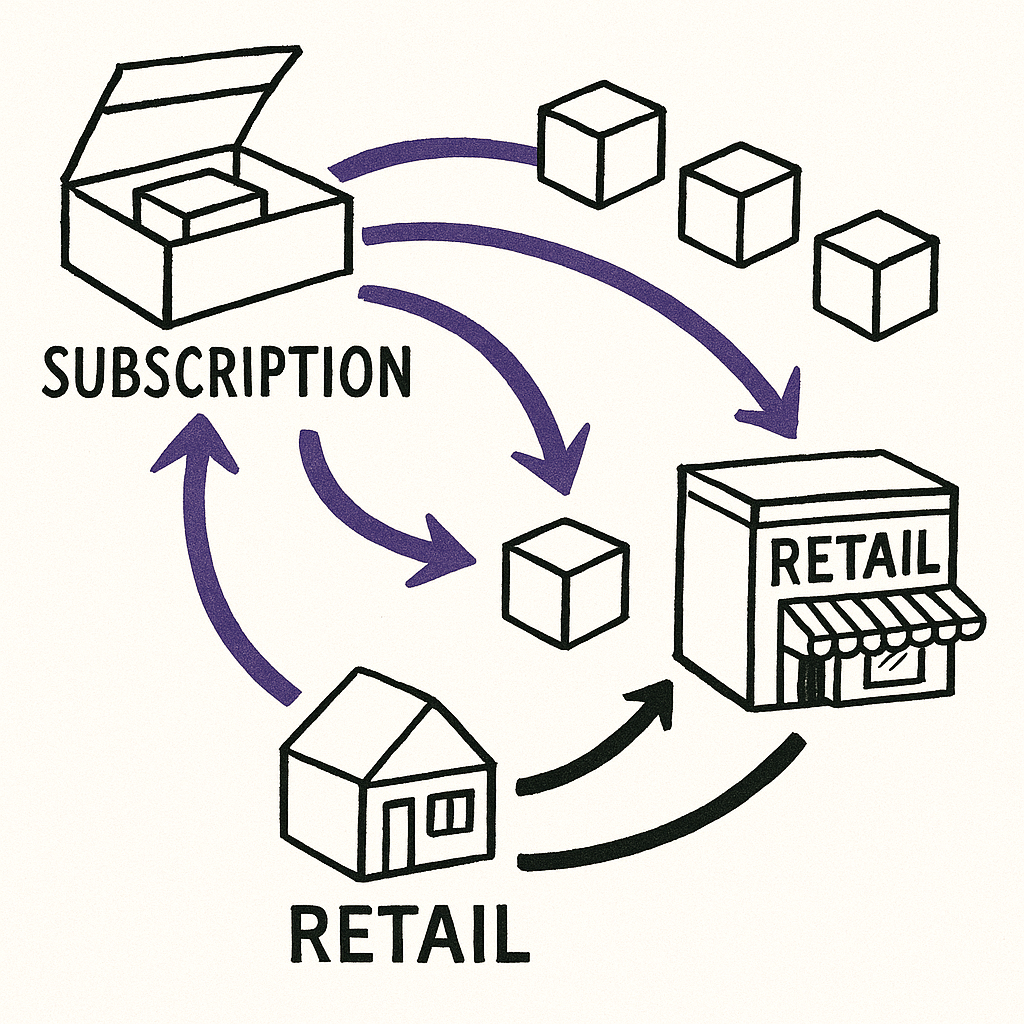
ButcherBox spent a decade building a $570 million subscription business selling grass-fed beef direct to consumers. Now they're in 1,463 Target stores.
This looks like classic DTC-to-retail evolution, and in some ways it is. But the strategic logic reveals something about distribution as infrastructure. Approximately one-third of ButcherBox's existing subscribers live within three miles of a Target. The retail presence doesn't compete with the subscription—it reinforces brand visibility for the core business.
Reba Hatcher, Chief Commercial Officer, noted that the Target partnership "helped reduce" a subscription price increase from $169 to $179. Wholesale volume creates cost advantages that benefit the entire operation. The retail channel isn't diluting the brand; it's subsidizing the subscription model.
The interface—whether you order online or buy in-store—matters less than the underlying distribution infrastructure. Target provides reach, merchandising, and cost leverage. The subscription provides predictability, higher margins, and customer data. Both feed the same system.
India's Tourism Revenue Problem
India's domestic tourism is booming. Hotels are 70% occupied. Average nightly rates climbed from INR 7,800 to INR 8,200 ($90-91). But foreign visitor revenue collapsed from $7.6 billion to $6.8 billion, creating a $2.6 billion travel trade deficit.
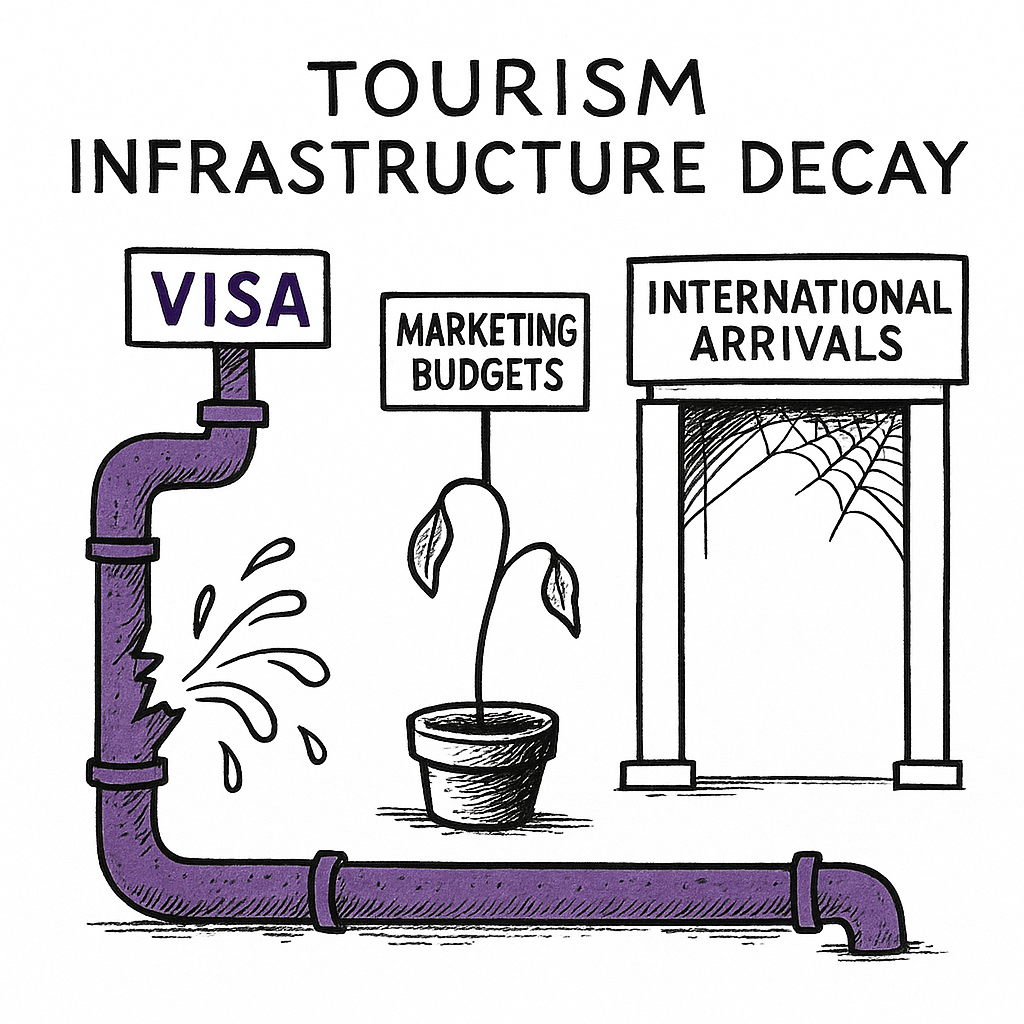
The government slashed overseas tourism marketing by 97%—from meaningful investment to $350,000 annually. Visa processes remain cumbersome. High-spending markets like China, South Korea, Spain, UAE, and Netherlands stay underrepresented among visitors.
The problem isn't brand awareness. Everyone knows about India. The problem is infrastructure: visa systems, marketing spend, strategic partnerships with source markets. When you have strong domestic demand, it's tempting to ignore the operational foundations that drive international revenue. But rhetoric about tourism importance doesn't replace functional infrastructure.
The pattern: A visible success (domestic tourism) masks invisible infrastructure decay (foreign visitor systems). The interface looks fine; the plumbing is broken.
Greenland's Unwanted Spotlight
Greenland faced the opposite problem: too much visibility for the wrong reasons. President Trump's rhetoric about acquiring the territory thrust the destination into geopolitical controversy, triggering a "small number of cancellations" from travelers suddenly uncertain about safety despite no objective risk.
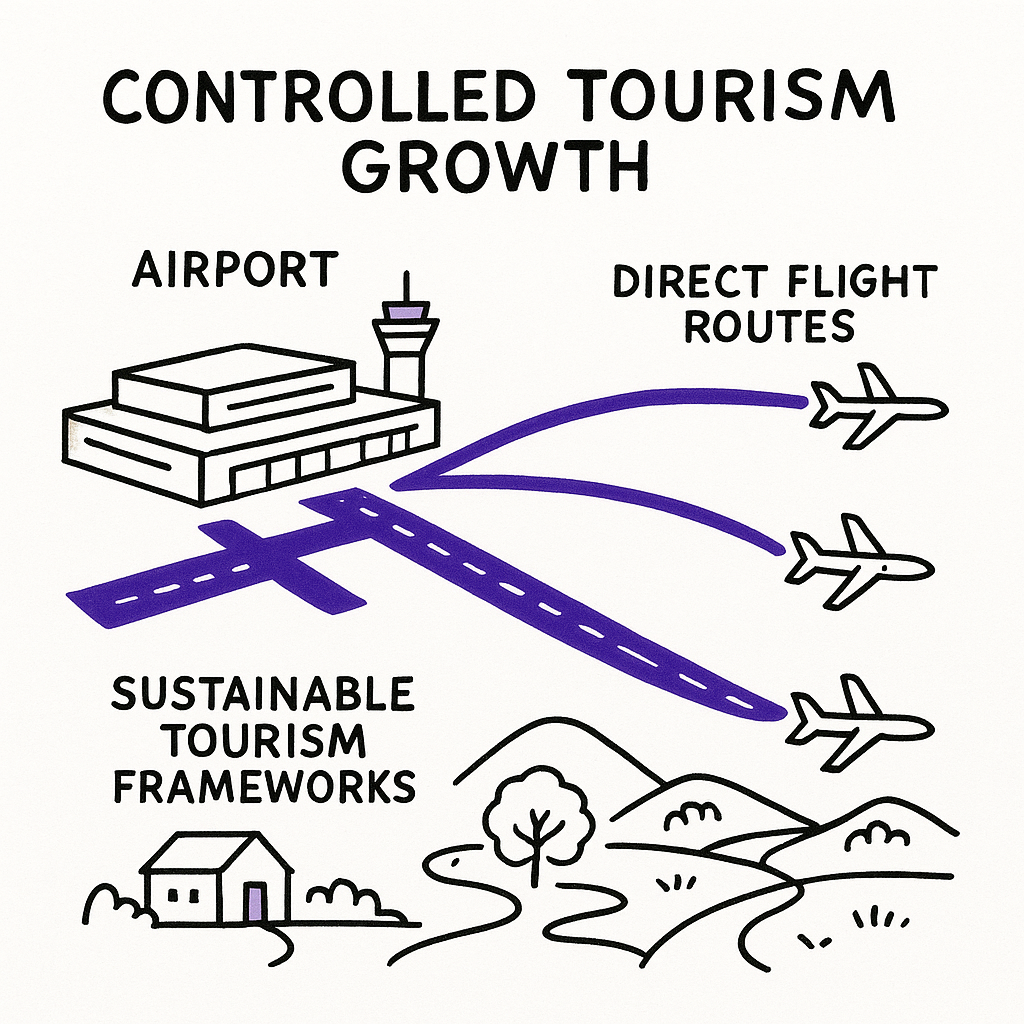
Anne Nivíka Grødem, CEO of Visit Greenland, responded by emphasizing infrastructure over attention. The destination experienced record growth after expanding airports and adding direct routes from North America and Europe. Now they're running two campaigns—"SHHH" and "We Are Kalaallit Nunaat"—that position the island as a sanctuary of silence and everyday culture, not geopolitical drama.
The strategy: Let the infrastructure (flights, airports, local partnerships) drive growth, not viral attention. Control the narrative by building systems for gradual, sustainable tourism rather than chasing headlines.
When everyone's looking at you for the wrong reasons, the solution isn't better marketing. It's better infrastructure that attracts the right visitors regardless of news cycles.
The Common Thread
Four unrelated industries—ad tech, meat delivery, international tourism, destination marketing—all converging on the same realization: The interface matters less than you think. Infrastructure matters more.
Yahoo stops caring about dashboard stickiness because identity data is defensible; UX isn't. ButcherBox enters retail because distribution infrastructure strengthens the subscription core. India loses tourism revenue despite domestic success because marketing infrastructure collapsed. Greenland responds to geopolitical noise by doubling down on airport infrastructure and authentic positioning.
The lesson isn't that interfaces don't matter at all. It's that when interfaces become commoditized or buildable by customers, competitive advantage migrates to the layer underneath. The systems. The relationships. The authenticated data. The airport routes. The cost structures.
The thing about infrastructure is that it's invisible until it's not. Yahoo's customers don't see the identity graph. ButcherBox subscribers don't think about wholesale cost leverage. Tourists don't notice visa processing systems until they hit friction. Greenland's visitors don't appreciate airport expansion unless flights actually exist.
But the companies that win are the ones building infrastructure while competitors optimize interfaces.
The interface is what customers see. Infrastructure is what makes everything work. And increasingly, building the latter matters more than perfecting the former.
Sources
- Greenland Tourism's Trump Problem: Surviving the Unwanted Spotlight - Skift
- India Is Losing Tourism Dollars, Even as Domestic Travel Is Booming - Skift
- Butcher Box's grass-fed beef lands in Target stores - Modern Retail
- 'We don't care if you don't use our UX anymore': Yahoo recasts its DSP as a data backbone for the agentic world - Digiday