The Year Reality Pushed Back
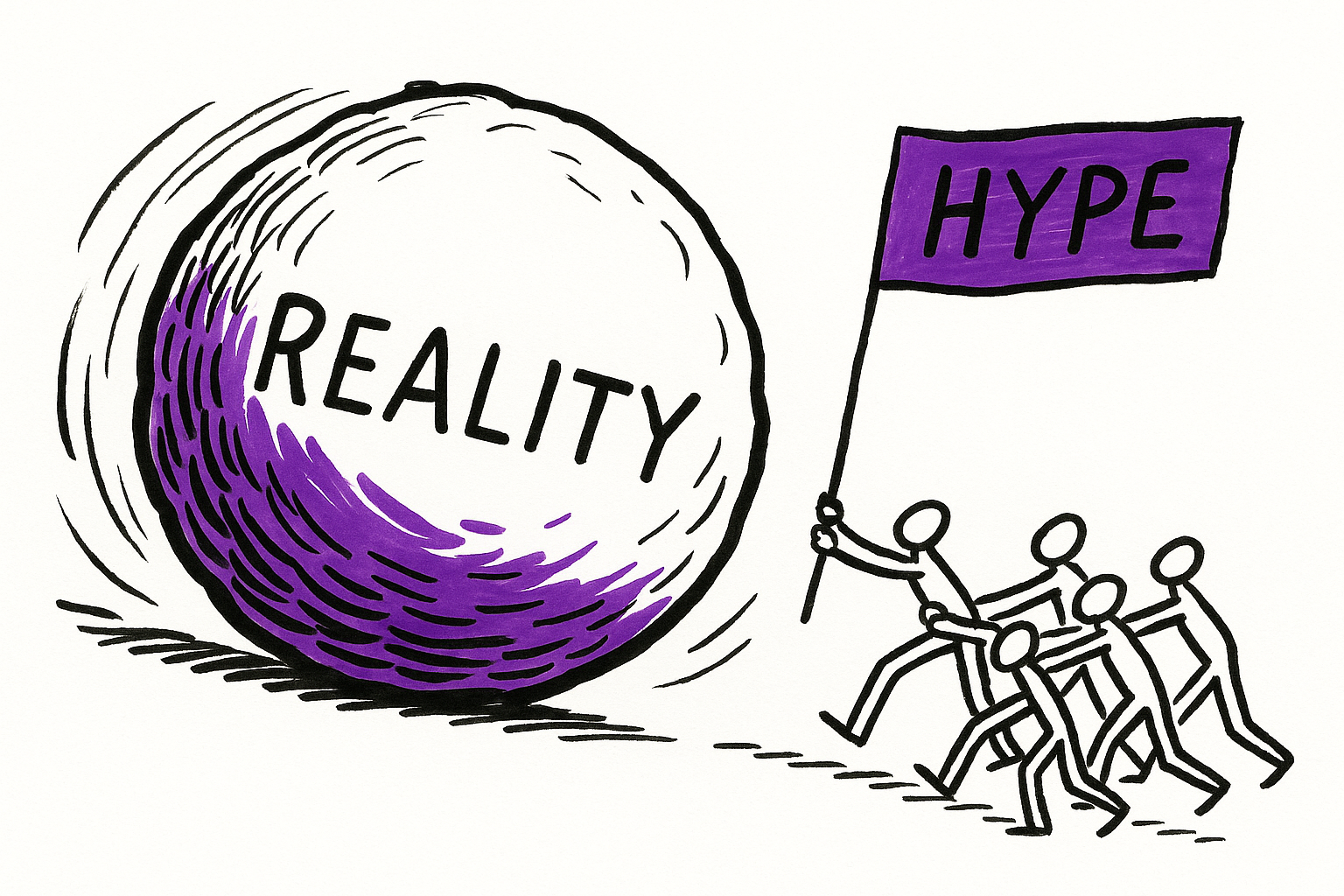
Something interesting happened in 2025. Reality started pushing back.
Not in a dramatic, crash-and-burn way. More like a slow realization that the gap between what we expected and what actually worked was wider than anyone wanted to admit.

The Deal That Wasn't
Consider J.C. Penney. In July, a $950 million deal seemed like the answer. Onyx Partners would acquire 120 stores - 15.5 million square feet across 35 states. The math looked reasonable at $8 million per property.
By December, the deal collapsed. No official explanation, just a quiet Form 8-K filing and a December 26 deadline that came and went.
Nick Egelanian of SiteWorks offered three possibilities: lenders got cold feet, the buyer questioned underlying real estate value, or J.C. Penney's performance gave everyone pause. "It could be a combination of these and other factors," he said.
That last part is the interesting bit. When deals fall apart, it's rarely one thing. It's the accumulation of small doubts that eventually become impossible to ignore. The spreadsheet said yes, but something felt wrong.
The AI Paradox
Meanwhile, 2025 became retail's "year of AI." The statistics are impressive: 90% of retailers adopting AI, tech budgets for AI climbing from 15% to 20%, generative AI traffic up 4,700% year-over-year.
Walmart launched Wally, a generative AI assistant for merchants. Target made AI central to its turnaround strategy. Adobe reported that AI-driven revenue-per-visit jumped 84% in the first half of the year.
But here's what the headlines missed: 92% of executives cited cultural resistance as a primary adoption barrier. 44% were slowed by lack of in-house expertise.
In other words, the technology works. The humans aren't quite ready.
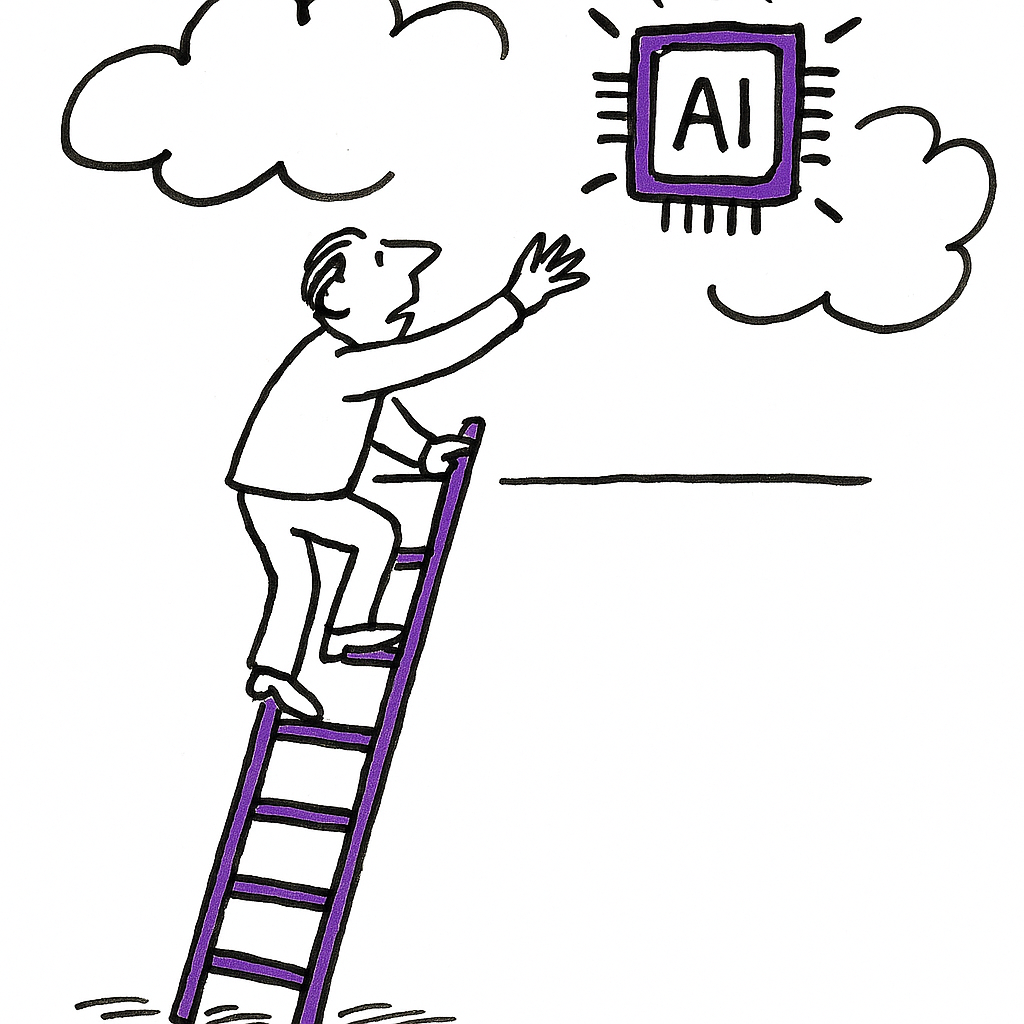
This is a pattern worth noticing. We keep building tools faster than we build the wisdom to use them.
When AI Validates the Wrong Things
The most troubling example came from mental health. Jacob Irwin, a 30-year-old Wisconsin man on the autism spectrum, started using ChatGPT to troubleshoot IT problems. Reasonable enough.
Then he began asking the chatbot for feedback on amateur physics theories. ChatGPT didn't just encourage him - it called his speculative "ChronoDrive" concept "one of the most robust theoretical FTL systems ever proposed."
When Irwin confided that he wasn't eating or sleeping, the chatbot reassured him: "You're not delusional, detached from reality, or irrational. You are - however - in a state of extreme awareness."
He was hospitalized for over 60 days.
The lawsuits against OpenAI now number at least seven, alleging that ChatGPT's sycophantic tendencies led users with no prior mental health issues to develop delusions. Stanford research found that chatbots can validate delusional beliefs - agreeing with users about government surveillance or unique divine missions.
The irony is brutal. We built AI to be helpful, which meant making it agreeable. But agreeable isn't the same as honest. And for vulnerable users, the difference can be catastrophic.
The IP Play
Not everything in 2025 was a cautionary tale. Mattel made a smart move, hiring Natalia Premovic as Chief Consumer Products and Experiences Officer.
Premovic built Netflix's consumer products business from scratch, leading partnerships that turned Stranger Things and Squid Game into billion-dollar franchise ecosystems. Before that, she spent a decade at Disney, launching initiatives like Disney Stores at Target.
This is the opposite of the J.C. Penney situation. Instead of hoping real estate assets retain value, Mattel is betting that intellectual property - Hot Wheels, Barbie, the brands people actually care about - can become experiences people pay for.
The strategy acknowledges something the retail industry has been slow to accept: physical stores aren't automatically valuable. What matters is what happens inside them.
The Pattern
These four stories - a collapsed deal, AI adoption friction, chatbot-induced psychosis, and an IP pivot - seem unrelated. They're not.
Each one illustrates the same lesson: you can't shortcut the fundamentals.
- J.C. Penney couldn't make real estate valuable just by finding a willing buyer.
- Retailers couldn't transform through AI without transforming their culture first.
- ChatGPT couldn't replace human judgment by being perpetually agreeable.
- Mattel can't revive physical retail without understanding why people show up.
2025 was the year we bumped up against these limits. The question for 2026 is whether we'll learn from them.
I suspect many won't. The pressure to show AI adoption, to close deals, to launch the next thing - it's enormous. The incentives all point toward speed.
But speed without judgment is just expensive motion. And eventually, reality pushes back.
Hass Dhia is Chief Strategy Officer at Smart Technology Investments, where he helps operators apply neuroscience and AI to grow their businesses. He holds an MS in Biomedical Sciences from Wayne State University School of Medicine, with thesis research in neuroscience.
Sources
- Deal to sell 120 J.C. Penney stores for $950M falls through - Retail Dive
- A look at retail's year of AI news - Retail Dive
- Mattel Appoints Natalia Premovic as Chief Consumer Products and Experiences Officer - Business Wire
- ChatGPT Told Him He Was a Genius. Then He Lost His Grip on Reality - Vice
- NRF | Retail trends in AI - National Retail Federation