Stop Delegating the Core
Four pieces of research landed this week from opposite corners of business and finance. They seem unrelated. They aren't.
A data analyst proves that business ownership creates more wealth than any career strategy. Adweek covers a $20.5M raise for a startup building native ads inside AI chatbots, betting that the platforms with the most attention will stop sending revenue to Google. A branding publication argues that the CMO role is structurally broken and CEOs need to own brand themselves. And Harvard Business Review examines why leaders systematically misread their teams - and why charitable interpretation is a learnable, compounding skill.
Read any one of these in isolation, you file it under your relevant category and move on. Read them together, and a pattern becomes hard to ignore: the most important assets keep escaping the people who hired someone else to manage them.
The Wealth Data Nobody Discusses
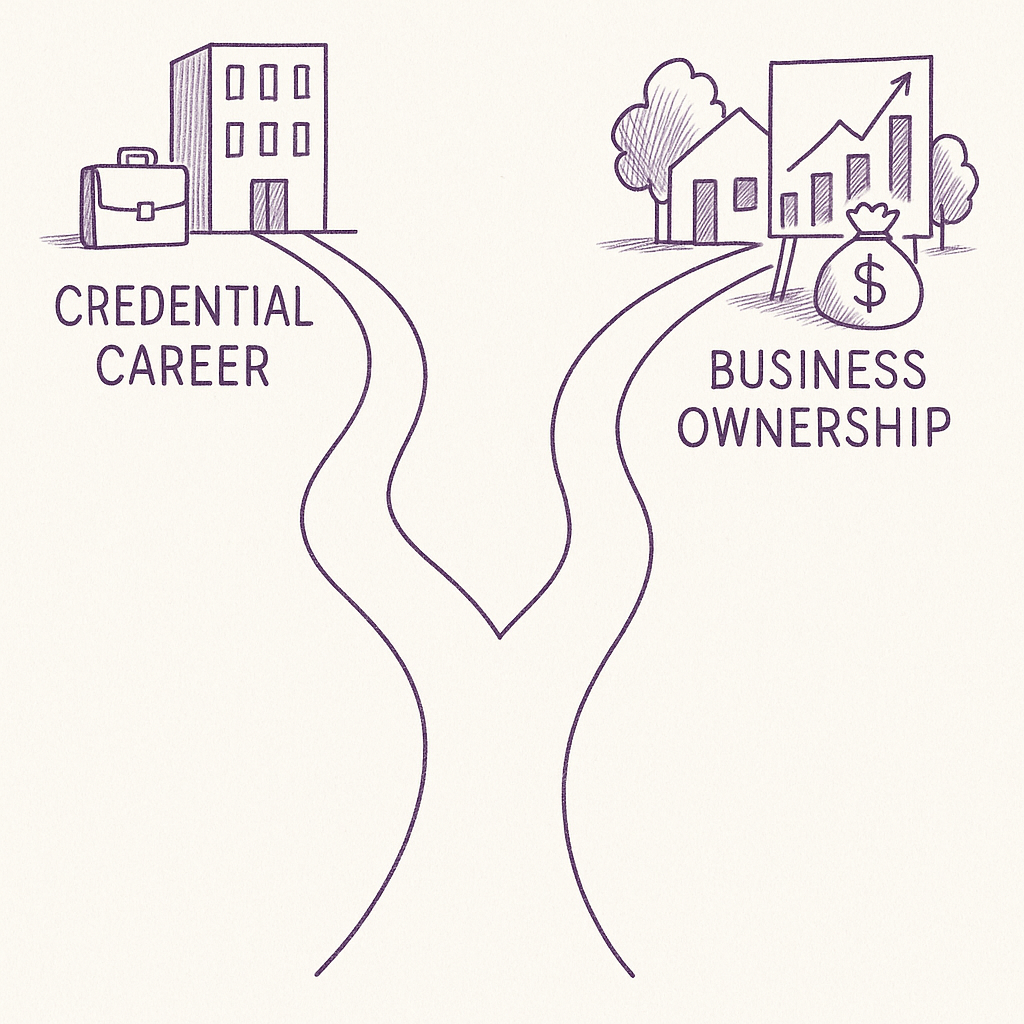
Nick Maggiulli at Of Dollars and Data published findings this week that the financial planning industry would rather you not sit with too long. The data shows that single business owners are wealthier than most married couples who don't own businesses. More striking still: a college degree provides no long-term wealth benefit unless the degree-holder also gets married.
The instinct is to argue with the statistics. But Maggiulli isn't making a values argument about marriage or education - he's pointing at a structural reality. Business ownership is the mechanism. Everything else most people spend their careers optimizing for - credentials, salary negotiations, portfolio allocation - operates in a lower gear than equity ownership.
The professional class has been slow to internalize this because the professional class built its identity around credentials. Credentials justify fees, signal competence, gate entry. They do real work in the world. They just don't compound the same way.
What makes this uncomfortable is that it's not hidden information. It's in the Survey of Consumer Finances. It's been in the data for decades. The delegation was always visible - people handed their wealth-building to the credential system, to employers, to the myth of the long career - and the data reflects the outcome.
AI Platforms Are Ending the Advertising Middleman
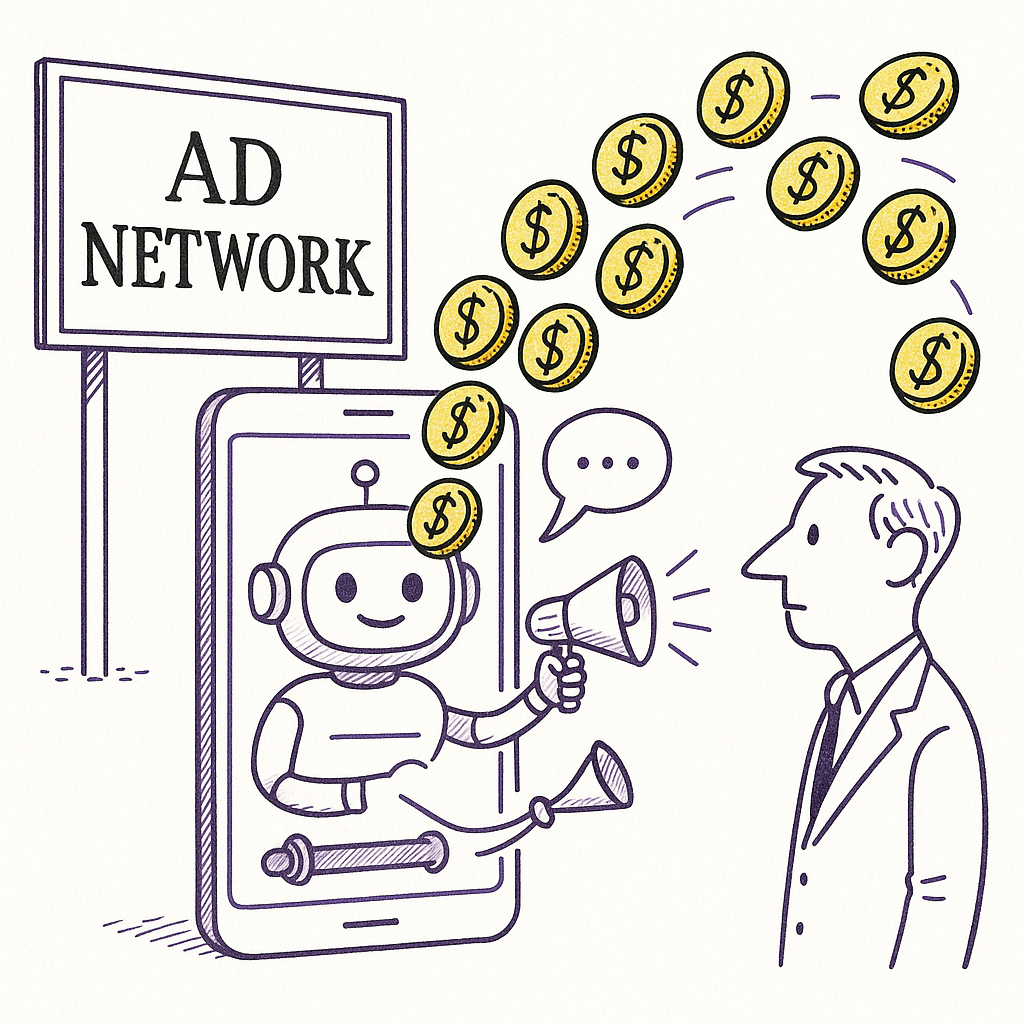
Koah raised $20.5M to build what Adweek calls "AdSense for AI." The pitch is straightforward: AI chatbots have replaced search for a growing segment of internet users, and the advertising revenue that follows attention should flow to the platforms holding that attention - not to Google.
The framing is smart but the underlying dynamic is more significant than a funding round. What Koah is betting on is that AI apps will not permanently accept being on the wrong side of the revenue split. Google became valuable by sitting between publishers and advertisers. If AI interfaces become the new publishers, the rational move is to build the ad stack themselves.
Whether Koah specifically succeeds matters less than the direction of travel. The companies that built audiences inside rented platforms have repeatedly discovered the cost of that decision. The companies building AI products are facing an analogous choice earlier in the cycle. Native monetization - owning the relationship between attention and revenue - is the version of the business that doesn't depend on someone else's continued goodwill.
The brands that should be paying attention are the ones whose media strategy currently runs through intermediaries. If your customer's attention is moving to AI interfaces, the question isn't whether to advertise there. It's whether you're building direct relationships with those interfaces or waiting for someone else to manage the layer between you.
The Brand Belongs to the CEO
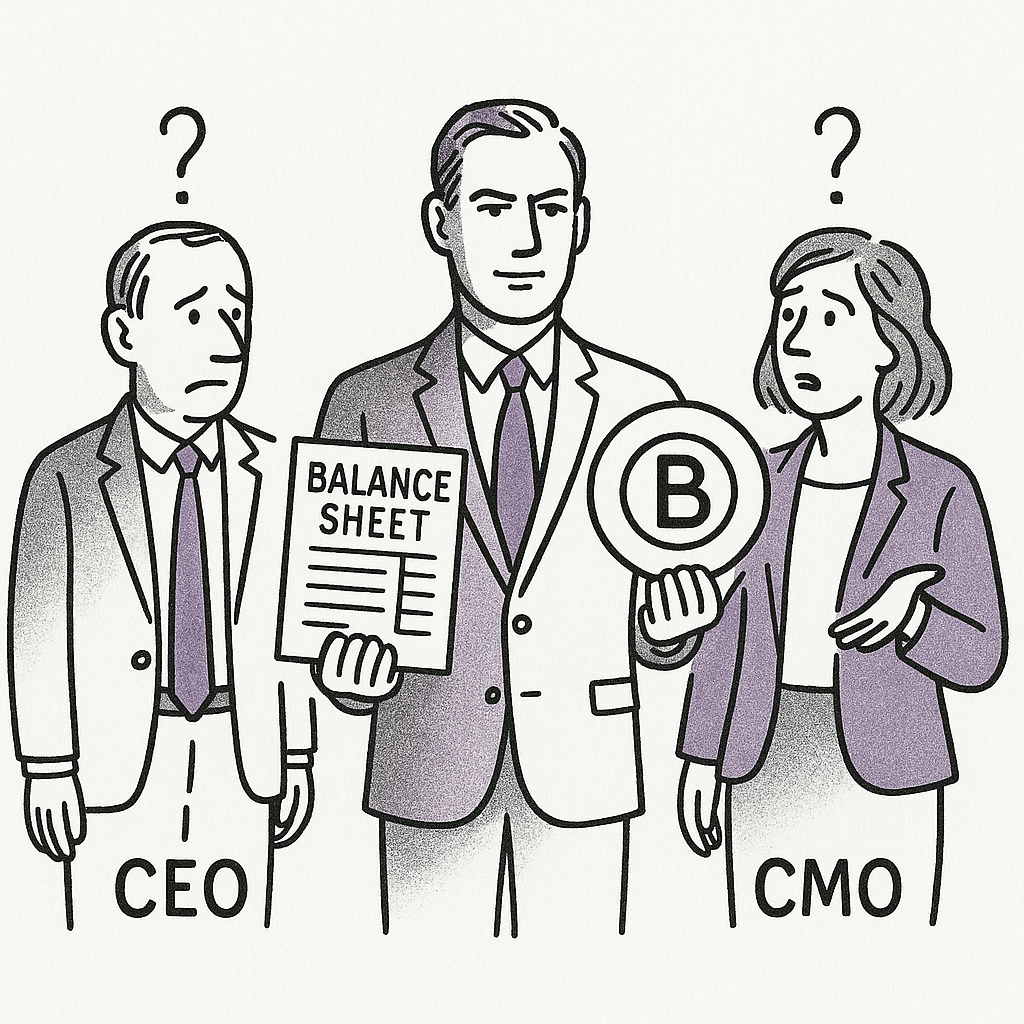
Branding Strategy Insider made an argument this week that will read as provocative in marketing circles and obvious to anyone who has watched a CMO tenure clock: the CEO must function as the CMO.
The evidence for the structural problem is well-documented. CMO tenure is short. Marketing is underrepresented on boards. Organizations that depend on demand generation to survive have simultaneously quarantined the people responsible for it from strategic power.
The argument isn't that CMOs are incompetent. It's that brand is not a functional delegation. Brand is the operating thesis of the organization - what it believes, what it stands for, who it's for, what it refuses to be. When a CEO delegates that entirely, they're not delegating a department. They're delegating their ability to make coherent strategic decisions, because every significant decision a CEO makes either reinforces or contradicts the brand.
The CEO-as-CMO model doesn't mean the CEO runs every campaign. It means the CEO cannot be neutral on what the company means. The brands people actually trust are led by people who treat the meaning of the organization as their personal responsibility.
The Trust Premium That Leaders Keep Leaving on the Table

Harvard Business Review's research this week addresses something that sounds softer than the other three signals but is arguably more expensive when it's absent. The finding: assuming the best about others is hard, systematic, and learnable - and organizations where leaders do it well outperform those where they don't.
The behavioral science here has a longer history than most executives realize. The fundamental attribution error is well-documented: people explain their own behavior through circumstances while explaining others' behavior through character. A good employee's late delivery is because of external constraints. A less-favored employee's identical late delivery is because they're unreliable.
What the HBR research points to is that this isn't just a fairness issue. It's a performance issue. When leaders systematically misread their teams - attributing friction to character rather than circumstances - they generate exactly the defensive behaviors they were afraid of. The trust gap becomes self-fulfilling.
The reason this connects to the other three signals is that it's another version of the same failure: delegating the relationship. You can hire an HR department to run engagement surveys. You can implement performance management software. Or you can do the less scalable, higher-return thing, which is to personally model the charitable interpretation that signals to an organization that it's safe to try.
Delegated trust is not trust. It's a facsimile that fools nobody who needs to be fooled.
The Pattern
Four different categories of research. One observation.
The things that actually compound - ownership, brand identity, direct monetization, organizational trust - resist professional intermediation. Not because intermediaries are bad at their jobs, but because the value of these things comes specifically from the principal's direct engagement.
The wealth data doesn't care about your financial advisor's credentials. The AI ad stack doesn't care about your agency relationships. Brand doesn't care about your marketing department's headcount. Trust doesn't survive the journey through HR policy intact.
None of this means you fire everyone and do everything yourself. It means you look carefully at what you've been delegating and ask whether the thing you're paying someone else to manage is actually delegatable - or whether you've been buying the comfortable feeling of having handled it without doing the thing that would make it work.
Sources
- Wanna Get Rich? Marry a College Grad or Start a Business - Of Dollars and Data
- Koah Raises $20.5M to Build AdSense for AI as Chatbots Scutter for Revenue - Adweek
- The CEO Must Be The CMO - Branding Strategy Insider
- Assuming the Best About Others is Hard - But Necessary - Harvard Business Review