When Brands Stop Believing and Start Testing
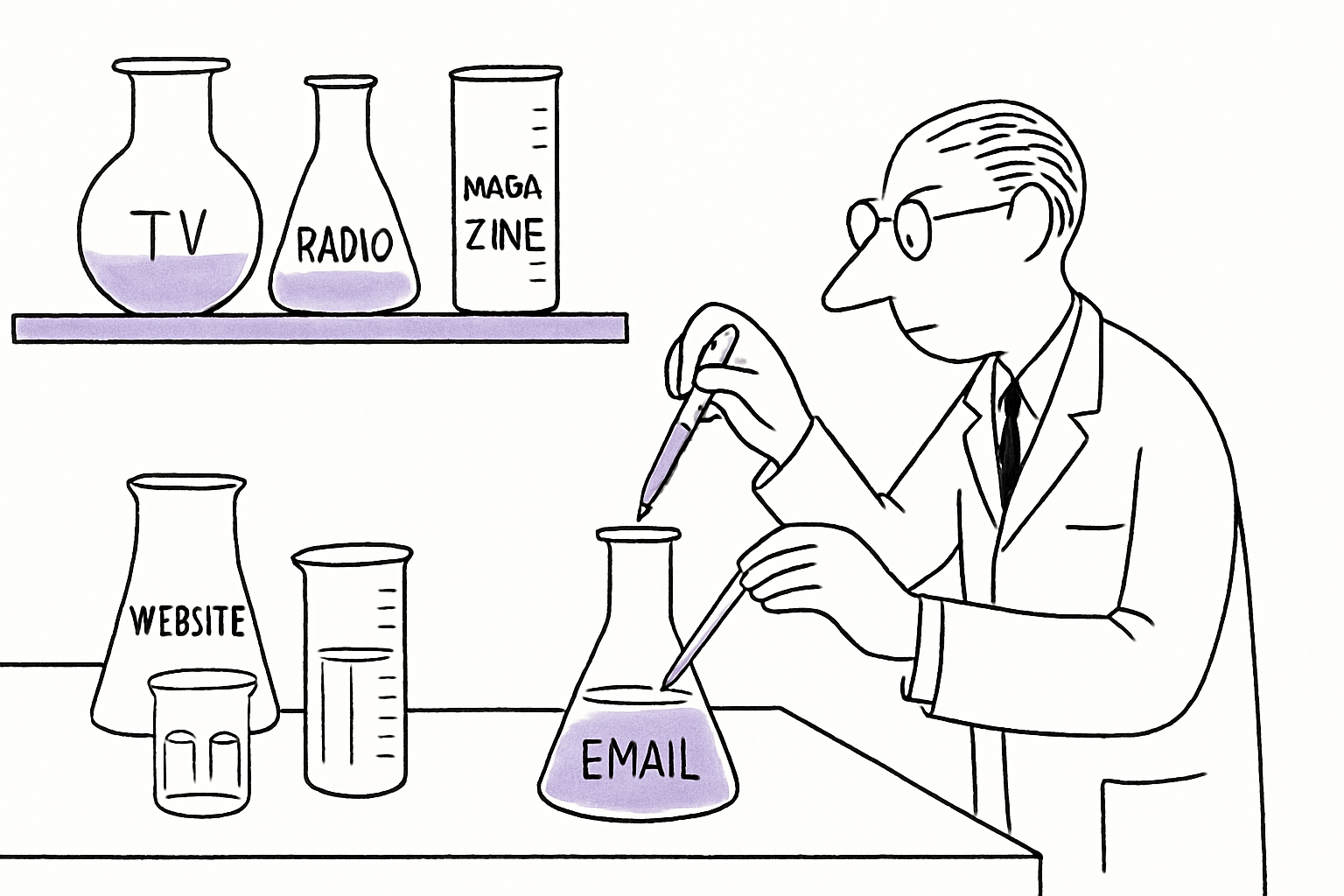
There's a tension running through every marketing budget conversation that almost nobody acknowledges: we don't actually know what's working.
We have attribution models. We have dashboards. We have last-click, multi-touch, and MMM. But attribution models are approximations built on assumptions, and most brand leaders quietly know this. The dashboards tell stories we want to hear. The budgets persist year over year not because we proved causality but because nobody wanted to be the person who turned off the tap and found out the numbers held anyway.
A CMO in New Zealand just decided to do exactly that.
The Warehouse Experiment
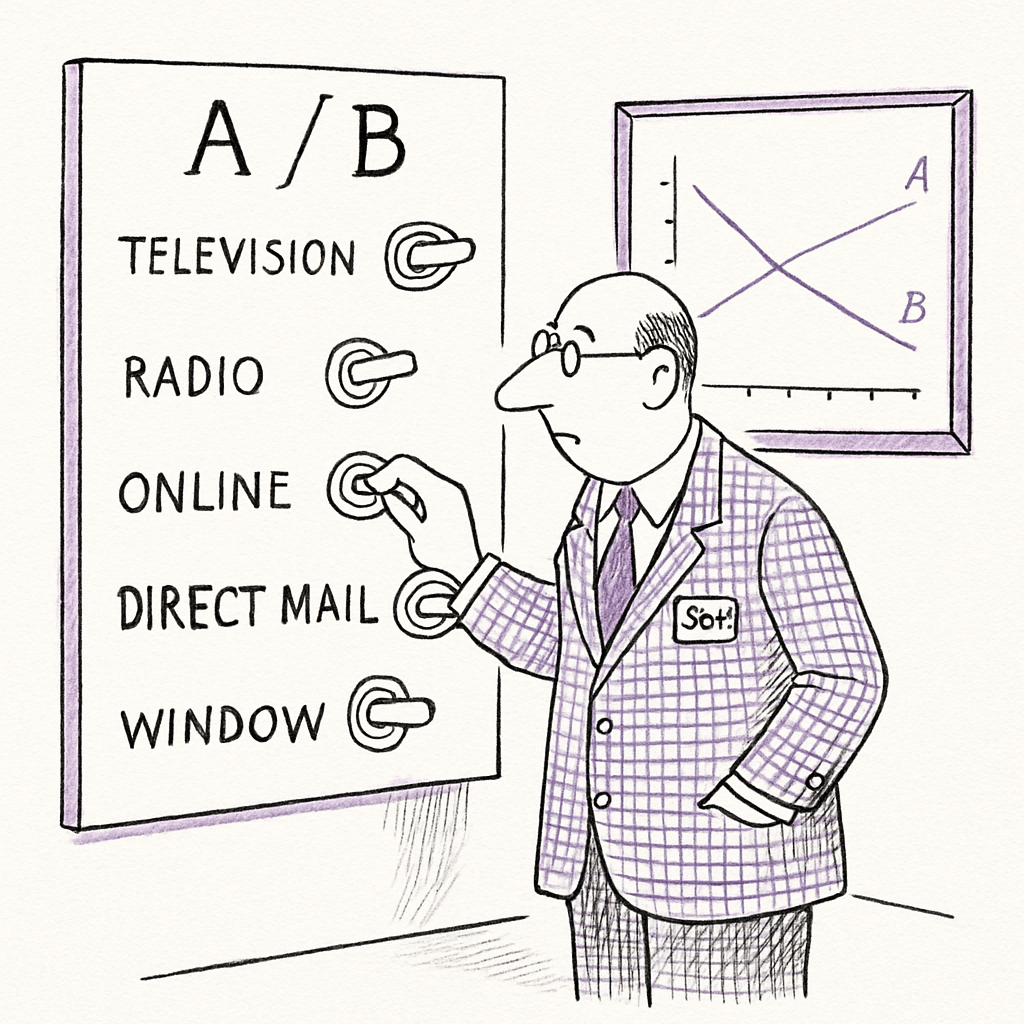
Frankie Coulter, CMO of The Warehouse - New Zealand's largest retailer - paused all external advertising for eight weeks. Search, social, television: all off. Only in-store media continued. The goal wasn't cost-cutting theater or a budget freeze forced by leadership. It was a deliberate A/B test.
The idea is almost embarrassingly straightforward. Run without external channels, measure footfall and revenue, then reintroduce channels one at a time and measure again. What you get at the end is something most brand leaders never actually have: evidence.
As marketing commentator Thomas Barta noted, P&G ran a similar experiment years ago - cutting $200 million in digital spend and observing minimal sales effects. The lesson wasn't that digital doesn't work. The lesson was that you can only find out by testing rather than assuming.
The Warehouse CMO's bet is that marketing isn't a belief system. The implications for the rest of us are uncomfortable. If you wouldn't accept "we've always done it this way" as an answer in operations, product, or finance, why do we accept it for brand spend?
The Brand Decay Problem Nobody Spots Until It's Late
Meanwhile, a different kind of problem is accumulating at iconic brands everywhere - one that's even harder to test for.
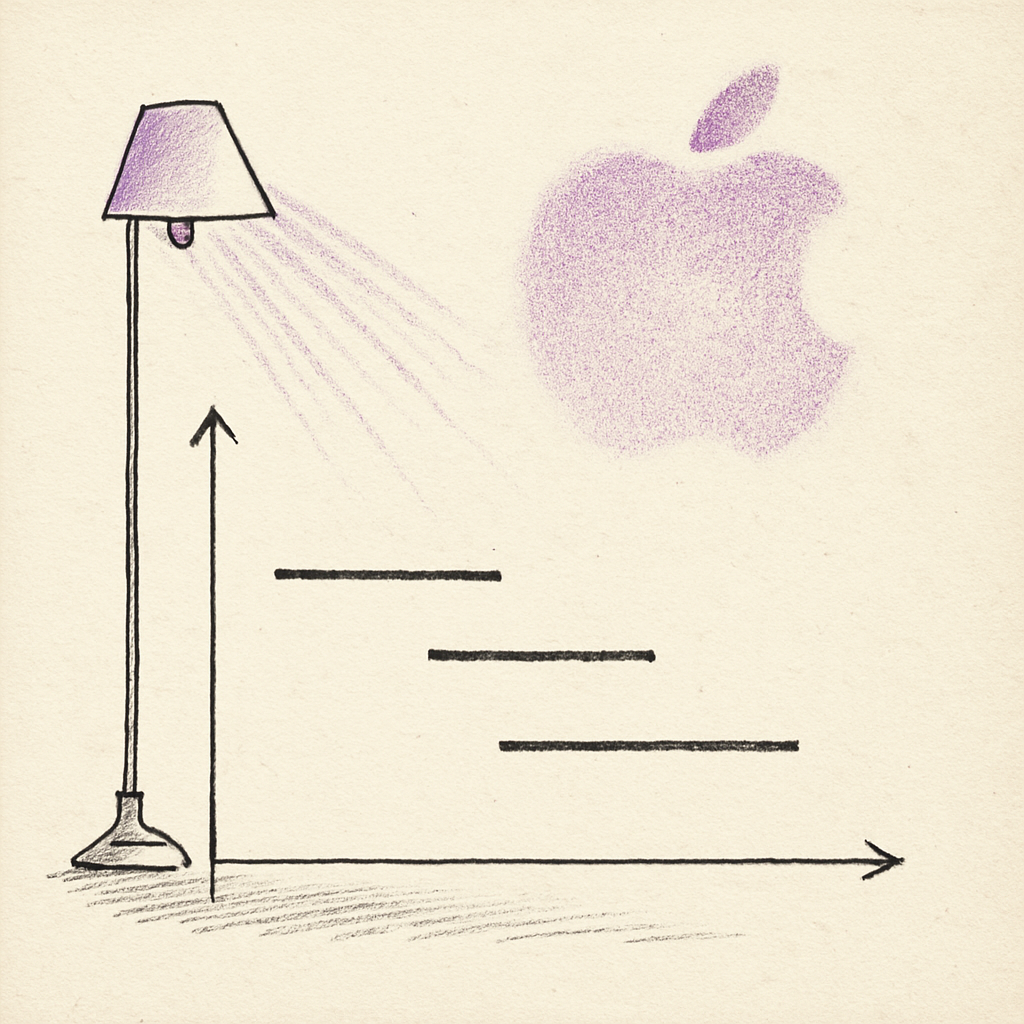
Branding Strategy Insider's analysis of brand restoration lays out a pattern that repeats with quiet consistency: revenue holds steady, market share appears stable, awareness remains high - and then suddenly the brand is defending yesterday's meaning against competitors who are shaping tomorrow's. The financial decline always lags the cultural one.
The framework matters here. Iconic brands - Coca-Cola, Harley-Davidson, Apple in its early phases - don't just occupy market positions. They resolve cultural tensions. BMW is about engineering mastery as a response to complexity. Apple's original positioning was design autonomy in a world of beige boxes. These aren't taglines. They're answers to real anxieties that their customers carry.
The problem comes when the underlying tension shifts and the brand doesn't. The audience's anxieties evolve - new sources of complexity, new sources of constraint - but the brand keeps re-broadcasting the same resolution. It still "works" in the narrow sense that awareness tracks fine and the research says people still associate the brand with quality. But the connection is losing its charge.
Restoration, when it finally happens, is a strategic exercise: rediscover which fundamental tension the brand can credibly address now, and rebuild the narrative from that foundation. It's not a rebrand. It's a re-grounding.
The question worth asking before decay sets in: what tension are we actually resolving for people today?
How AI Is Rewiring Commercial Decisions
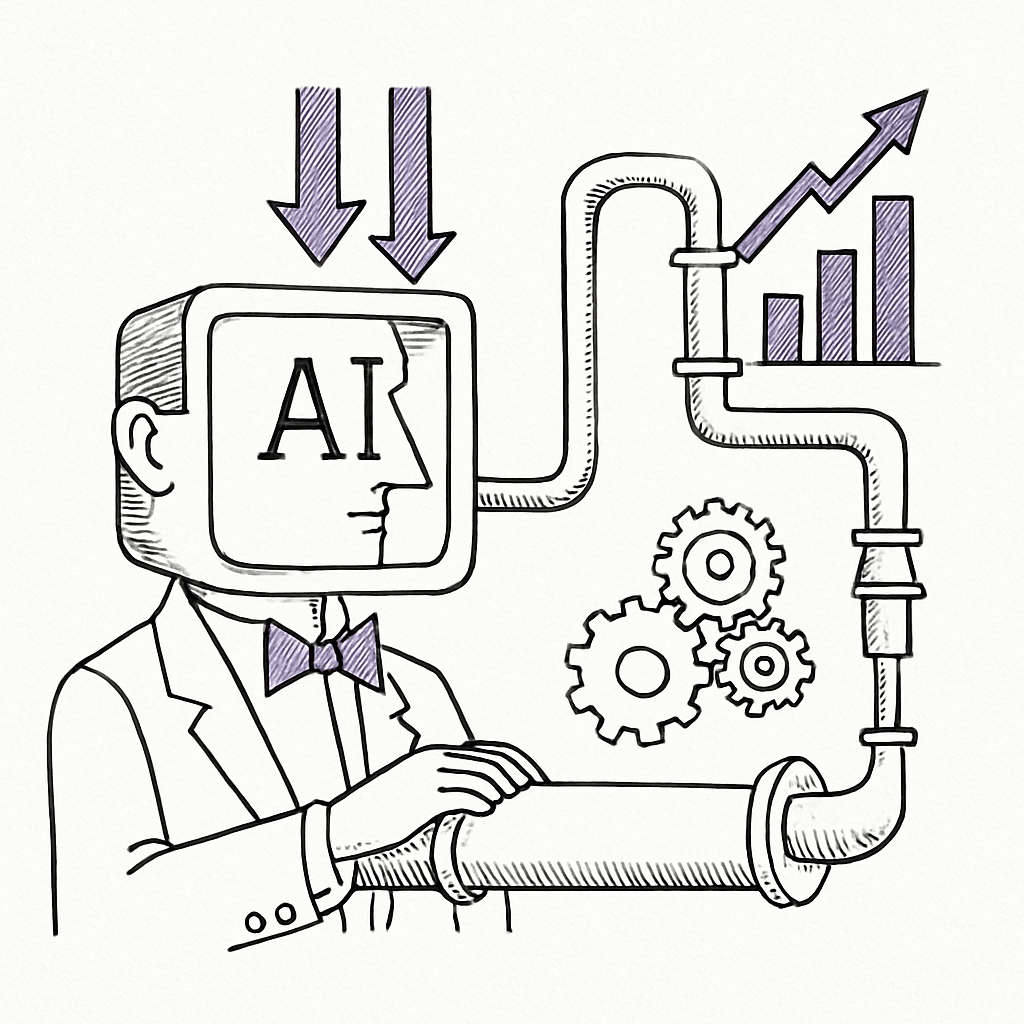
While brand leaders debate measurement and meaning, McKinsey's latest analysis on the packaging industry offers a concrete preview of how AI is changing the commercial side of brand relationships.
Packaging isn't fashion or tech - it's one of the more conservative, relationship-driven B2B sectors. Which is exactly why the findings are instructive. McKinsey found that gen AI is being deployed to improve pipeline confidence, enhance conversion rates, and sustain growth in commercial operations that previously ran almost entirely on relationship intuition and historical pattern-matching.
The specific applications are less important than the structural shift they represent. When AI can analyze historical purchase patterns, predict which prospects are most likely to convert, and surface the right intervention at the right moment, the commercial motion stops being art and starts being something closer to engineering.
For brand leaders, this has a direct implication. The brands that build AI-assisted commercial infrastructure now will have systematic advantages in market development that compound over time. The ones that don't will increasingly be competing on relationship quality alone - which is a harder game to win as procurement becomes more data-driven and less personality-driven.
The Hidden Cost of Making Paying Painless
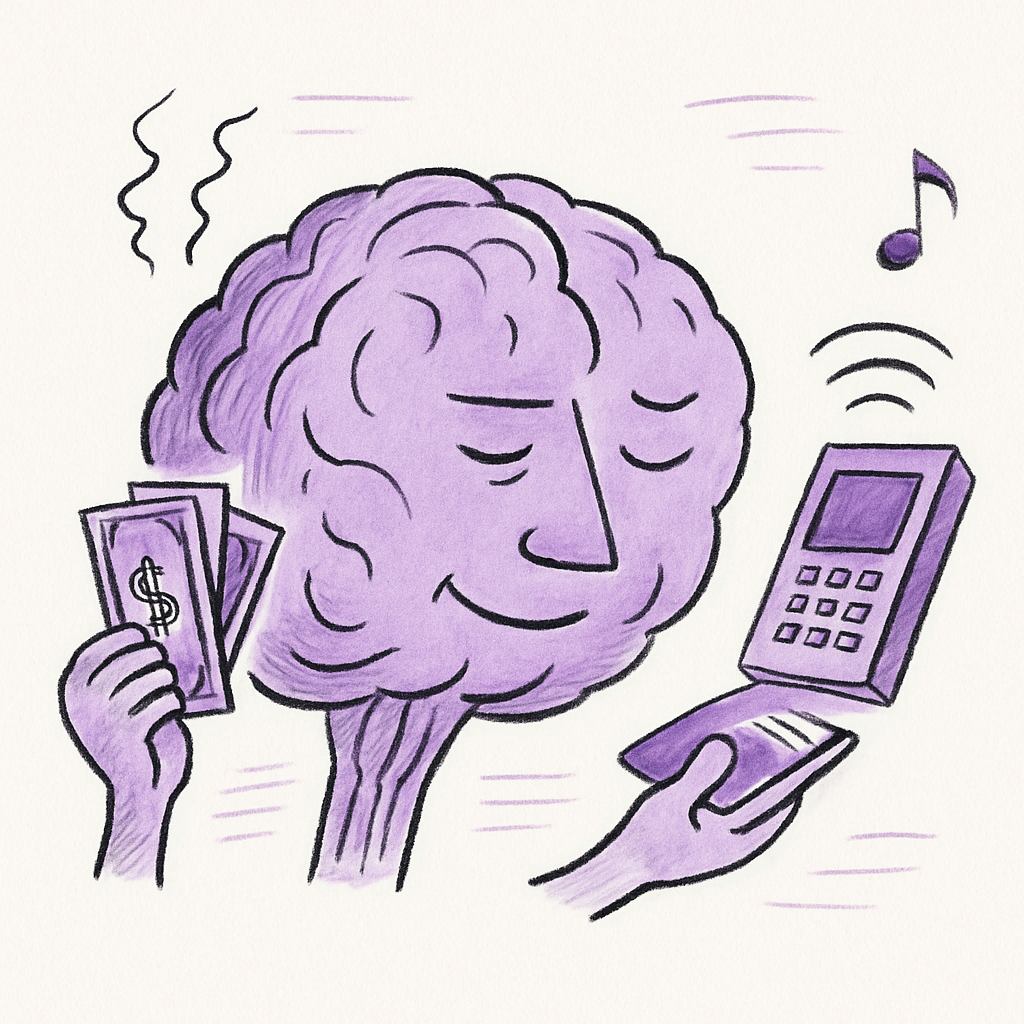
There's a fourth dimension to this conversation that doesn't get nearly enough attention in brand strategy discussions: the neuroscience of how customers actually experience transactions.
Research from Knutson, Loewenstein, and others has established that spending money activates the anterior insula - the same brain region that processes physical pain. Cash hurts most. Credit cards hurt less. Contactless taps barely register. One-click purchases approach zero friction almost entirely.
For businesses, this is generally understood as good news: reduce payment friction, increase conversion. Amazon's one-click feature reportedly boosted conversions by 5-10%. The entire trajectory of fintech and e-commerce has been to engineer the pain of paying out of the transaction.
But there's a less comfortable implication for brand strategy. The pain of paying was also, historically, a moment of conscious choice - a small forcing function that made customers think "is this actually worth it?" When that friction disappears, something else disappears with it: the deliberate act of valuing the brand.
Brands that rely on frictionless purchasing may be winning transactions while quietly eroding the deliberate relationship. With U.S. credit card debt exceeding $1.2 trillion and 40% of Americans having abandoned cash almost entirely, the brands that thrive long-term may be those that give customers reasons to choose consciously rather than simply optimizing away the moment of choice.
The question isn't whether to reduce friction. It's whether the relationship you're building can survive the absence of intentionality that frictionless purchasing produces.
What ties these four threads together is a common discomfort with assumption. The best brand moves right now share a structure: test what you've been taking on faith, understand the mechanism beneath the behavior, and build systems that scale insight rather than just intuition.
The brands that will matter in ten years are probably already doing this. The ones that won't are still running the same model they used before digital attribution, before AI commercial tools, and before anyone knew what the anterior insula did.
Sources
- The Warehouse CMO's pause on ad spend isn't reckless, it's marketing leadership - MarketingWeek
- How To Restore An Iconic Brand - Branding Strategy Insider
- Rewiring the packaging industry: Gen AI and commercial excellence - McKinsey Insights
- The Pain of Paying: Why Spending Money Literally Hurts - Roger Dooley's Neuromarketing