The Confidence Trap
Going into 2025, the consensus view on markets was that U.S. stocks were the only game in town, rates were heading down, and inflation was finished. All three turned out to be wrong. International equities outperformed the S&P 500 for the first time since 2012.
Meanwhile, boards at Target, Walmart, Disney, and Kroger all promoted insider CEOs because insiders feel like the safe bet. Marketers keep choosing rational ad copy because it seems more "serious." And Airbnb just announced that AI chatbot traffic converts at a higher rate than Google search.
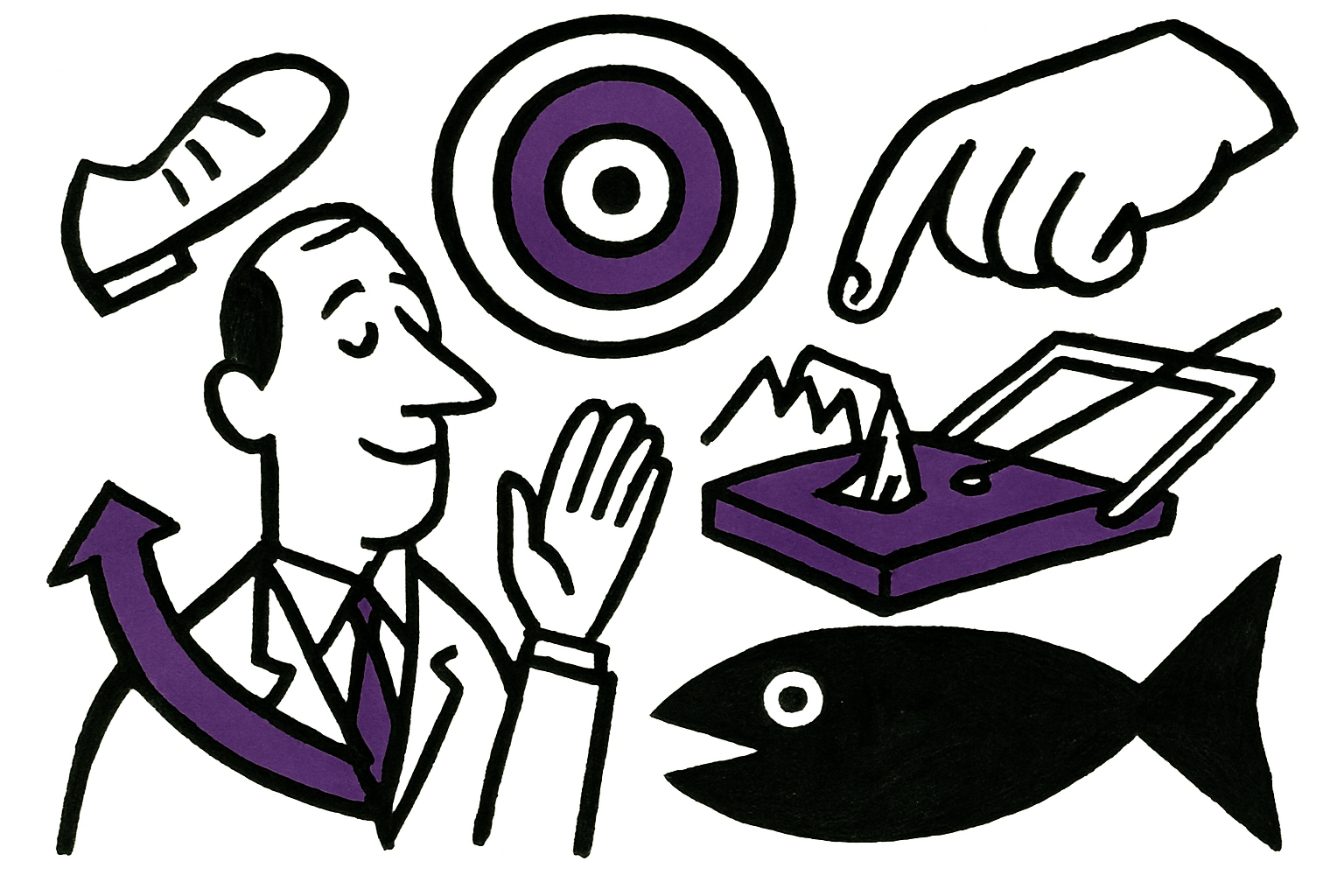
Four stories. One pattern. The decisions that feel most certain are often the most expensive.
The Recency Trap
Nick Maggiulli at Of Dollars and Data dissects why consensus market views fail so reliably. The first culprit is recency bias: we assume recent patterns will continue indefinitely. U.S. stocks dominated in 2024, so investors overweighted them going into 2025, creating the exact overpricing that punished them when expectations shifted.
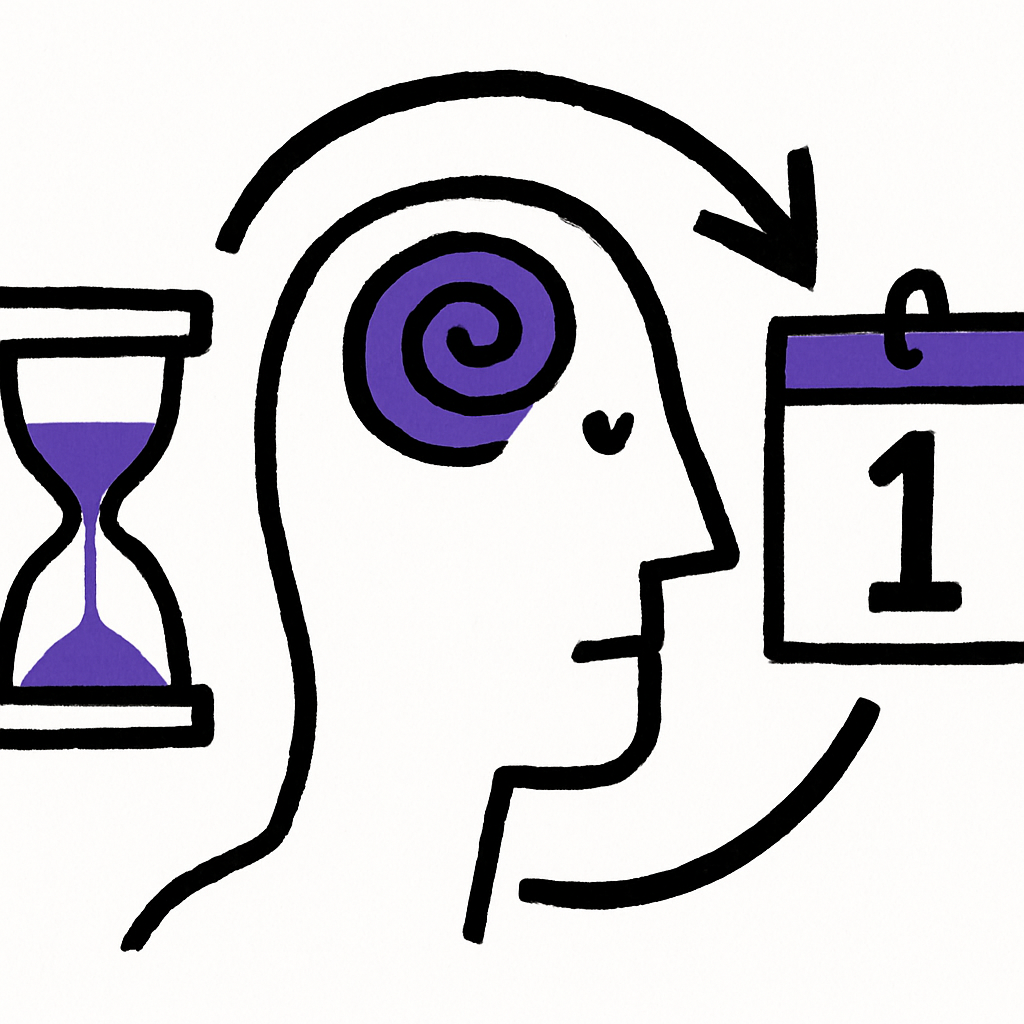
But the deeper problem is what he calls the "stability illusion." The world usually changes gradually, so betting on "nothing happens" is profitable most of the time. This creates a dangerous feedback loop: the longer stability holds, the more confident we get, and the more exposed we become when things finally move. Lenin had it right: there are decades where nothing happens, and weeks where decades happen.
The neuroscience here is well-documented. Our prefrontal cortex is wired to seek patterns and extrapolate, which works beautifully for routine decisions and fails catastrophically for discontinuities. The same mechanism that helps you navigate a familiar commute makes you terrible at predicting regime changes in markets.
The Familiarity Premium
The Harvard Business Review reports that three of the four recent CEO successions at major retailers were internal promotions. Research supports the instinct: insiders outperform outsiders at stable companies. They know the culture, have the relationships, and boards already know their strengths.

But the data hides a trap. Insider CEOs are measurably worse at three things: removing underperforming long-term colleagues, reallocating investment away from their former division, and recognizing when the strategy that got them promoted is the strategy that needs to change. These aren't random weaknesses. They're direct consequences of the same familiarity that made the appointment feel safe.
Here's what's interesting from a decision science perspective: outsiders comprised 44% of CEO successions at S&P 1500 companies in 2024. That's wildly higher than the research-backed optimal rate. Boards are swinging between two biases, familiarity preference and novelty-seeking, without a disciplined framework to distinguish when each is warranted.
The parallel to investing is exact. Consensus is the familiarity premium applied to markets. It feels safe because everyone agrees. And that agreement is precisely what creates the crowded trade.
The Rationality Illusion
Here's where it gets personal for anyone in marketing or brand strategy.

The IPA dataBANK analyzed over 1,400 advertising campaigns and found that purely emotional campaigns generated 31% profitability increases versus 16% for rational ones. Emotional content bypasses cognitive processing and encodes roughly twice as powerfully in memory. In one study, 81% of subjects recalled brands from emotional ads versus 69% from rational ones.
Yet marketing directors still default to rational arguments, especially in B2B. The reasoning sounds impeccable: "Our buyers are sophisticated. They make decisions based on data and logic." The neuroscience says otherwise. Emotional processing operates below conscious awareness. Even the most analytical buyer is being moved by feelings they don't recognize, then backfilling rational justifications after the fact.
This is the confidence trap in its purest form. The more sophisticated you believe your decision-making process is, the less likely you are to notice the emotional substrate driving it.
When AI Breaks the Pattern
Airbnb's Brian Chesky claims AI chatbot traffic converts at higher rates than Google. His theory: AI handles ambiguity better. Instead of requiring the right keywords, it understands what you actually want.

This is worth paying attention to, though with a caveat. Chesky has every incentive to frame AI as a beneficial discovery channel rather than a disintermediating threat. The "AI search converts better" claim could also mean that AI users are further along in their purchase journey when they arrive, not that AI is inherently better at matching.
Still, the structural point is valid. Traditional search rewards precision: you need to know exactly what to type. AI search rewards expression: you describe what you want and the system figures out the mapping. If that holds, it means the competitive advantage shifts from whoever ranks highest in keyword search to whoever the AI recommends when someone says "find me a place that feels like home in a city I've never visited."
That's a fundamentally different game. And most brands aren't ready for it.
The confidence trap operates at every level. Investors extrapolate recent returns. Boards pick the candidate who feels safe. Marketers choose the argument that sounds logical. And search engines reward the query that's most precise rather than the intention that's most honest.
In each case, the correction is the same: treat your certainty as a signal to stress-test, not a signal to commit. The best investors diversify when they're most confident. The best boards evaluate insider CEOs against specific disruption scenarios. The best marketers test emotional creative even when their instincts say rational.
Uncertainty isn't the enemy. Premature certainty is.
Sources
- Why Consensus Fails - Of Dollars and Data
- The Benefits and Challenges of an Insider CEO - Harvard Business Review
- Emotional Ads Work Best - Neuromarketing
- Airbnb claims AI search drives higher conversion than Google - MarketingWeek
Hass Dhia is the Founder of Smart Technology Investments, where he builds AI-powered decision intelligence tools at the intersection of neuroscience and strategy. He holds an MS in Biomedical Sciences from Wayne State University School of Medicine, with thesis research in neuroscience.