The Gap Between AI Adoption and AI Thinking
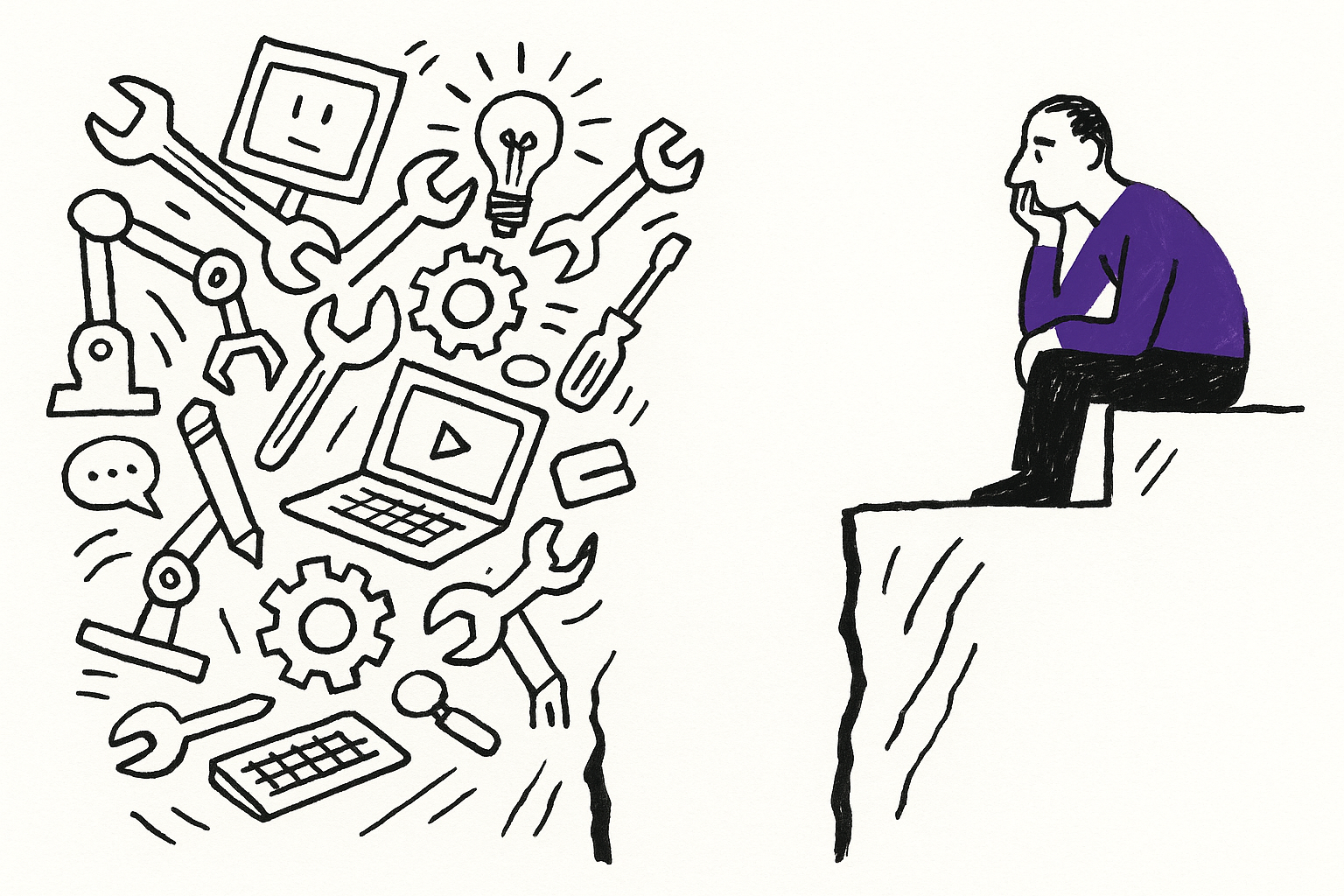
Something strange is happening in marketing.
Modern Retail's latest research shows AI adoption among marketers has nearly doubled in three years - from 44% in 2022 to 86% today. Yet most organizations are struggling to integrate these tools into workflows that actually matter. The gap between "we use AI" and "AI makes us better" keeps widening.
This is not a technology problem. It is a thinking problem.

The Copy Machine Trap
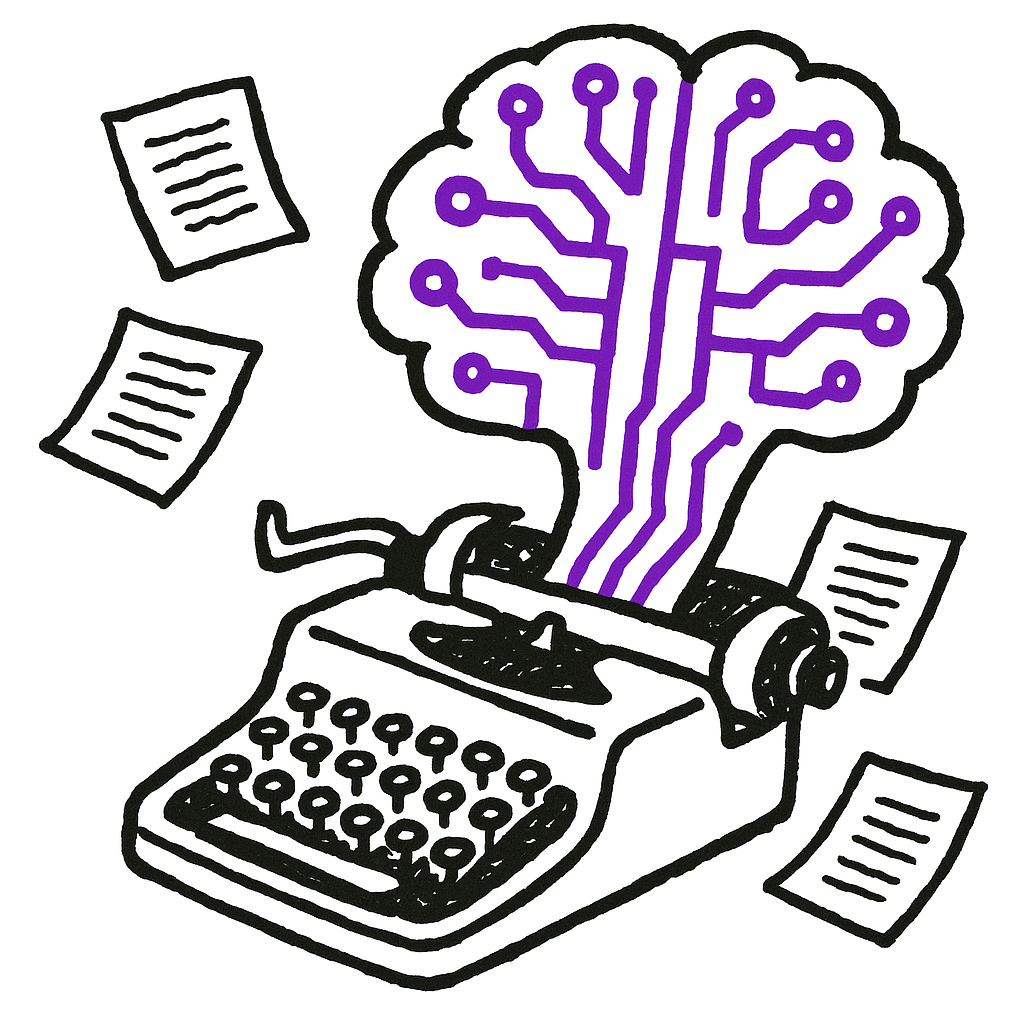
The most popular AI use case? Copy generation, at 72% adoption. Multimedia generation comes second at 64%. These numbers tell you everything you need to know about how marketers think about AI.
They see it as a faster typewriter.
L'Oreal uses Google's Imagen 3 to generate localized assets. Unilever's AI beauty studio produces 400 assets per product compared to the 20 they could create manually before. These are impressive efficiency gains. But efficiency is not strategy.
Marc Maleh, Global CTO at Huge, points to the real constraint: infrastructure costs for GPUs and TPUs require clear ROI justification. When your AI investment needs to show returns, you default to the obvious applications - making more stuff faster.
The deeper applications - the ones that require rethinking how work actually flows - get pushed to "later."
The Agentic Breakthrough
Meanwhile, something genuinely new is emerging. NBCU just announced that AI agents are now executing live sports ad buys across both linear television and streaming. Not suggesting buys. Executing them.
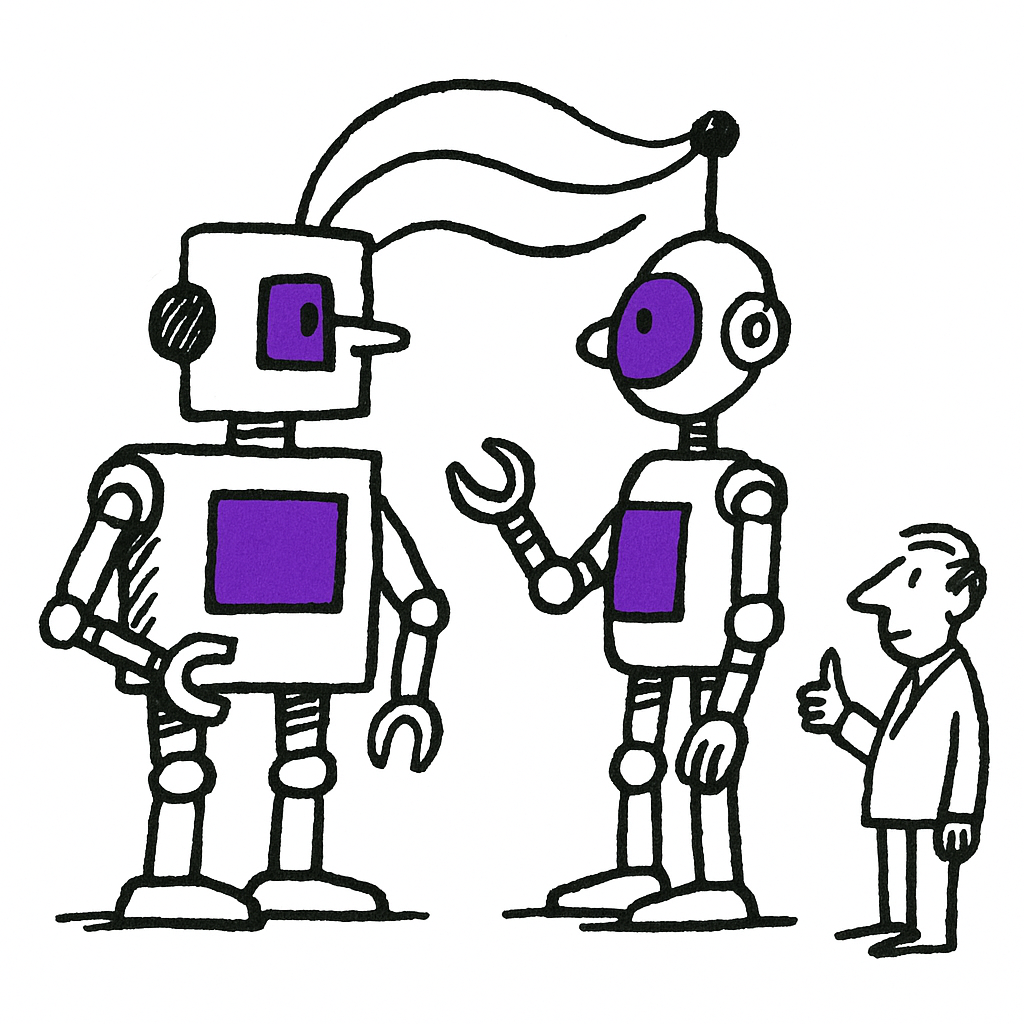
The partnership with RPA, FreeWheel, and Newton Research marks the first time AI agents have automated live sports inventory on linear TV. The buy-side agent shares campaign details with the sell-side agent. They refine proposals through automated feedback loops. Humans sign off. The campaign runs.
Mark McKee at FreeWheel put it bluntly: "Something that seemed unimaginable just a short time ago is real."
The implications go beyond efficiency. These agent-to-agent communications could theoretically bypass DSPs and SSPs entirely. Campaign activation happens within the ad server. The traditional programmatic stack becomes optional.
Lisa Herdman at RPA clarified the objective is productivity, not headcount reduction. Agentic AI handles the "email-and-spreadsheet-based grunt work of campaign setup" so agencies can focus on planning. But that is exactly the point - when machines handle execution, humans must justify their existence through strategy.
The Data Partnership Play
The NBCU deal is not an isolated experiment. At CES, Omnicom Media revealed a partnership connecting Walmart's purchase data with Meta's influencer network. Instead of choosing influencers based on follower counts, Creo can now answer a different question: "What do an influencer's followers actually buy?"
Bimbo Bakeries is already using this approach. Creator selection based on actual purchase history turns social engagement into measurable results. The old influencer model - big following equals good partner - starts looking primitive.
This is the pattern emerging across retail and media: the winners are not the companies with the best AI tools. They are the companies building the best data pipes between systems that used to be siloed.

The Legacy System Problem
Not everyone is ready for agentic futures. Claire's, the mall jewelry chain that emerged from acquisition by Ames Watson, just announced plans to modernize its point-of-sale systems and legacy infrastructure in 2026.
Malcolm Lamboy, the company's chief enterprise architecture executive, called these initiatives "the next wave of Claire's transformation, where technology becomes not just an enabler, but a growth engine." The company already cut its Azure cloud spend by 48% through right-sizing workloads.
But here is the uncomfortable truth: Claire's previous turnaround efforts "created new sources of revenue, but they didn't change the core of Claire's offering," according to industry analysts. They "failed to overhaul the in-store experience and adapt fully to e-commerce."
Modern POS systems are table stakes. The question is whether new technology enables new thinking or just makes old thinking faster.
The Zero-Click Threat
While marketers obsess over generative AI, a quieter shift is reshaping how customers find them. AI search platforms - Google AI Overviews, ChatGPT search, Perplexity, Claude - are providing answers directly instead of sending users to websites.
Modern Retail's research shows 37% of marketers report decreased upper-funnel search traffic. A Bain/Dynata survey found 80% of users rely on AI summaries at least 40% of the time, potentially reducing organic traffic by 15-25%.
The SEO playbook is being rewritten. Suave updated its entire website for "generative engine optimization," ensuring product benefits are what they call "AI-friendly." Target focused on making five elements machine-readable: pricing, products, promotions, availability, and policies.
Jen Cornwell at Tinuiti recommends focusing on formats that LLMs prefer: FAQs, bullet lists, HTML tables. She also predicts increased reliance on earned media - particularly Reddit's 22 billion human-created posts that AI systems use as authority sources.
The Honest Assessment
Over half of the marketers in Modern Retail's survey - 54% - do not use agentic AI at all. Sarah Mehler, CEO of Left Field Labs, explains why: "Agentic AI is really hard to do, and not everybody can. There are very few examples of it actually working well in the world."
Eric Lee from the same firm recommends starting with "micromanaged agents" for smaller tasks first. The risk with agentic systems is compounded errors - when hallucinations occur in sequential tasks, they cascade.
This is healthy skepticism. The hype around AI has outpaced the reality in most organizations. But the NBCU deal suggests the gap is closing faster than expected - at least for companies willing to rethink workflows from first principles rather than adding AI to existing processes.
Matt Maher from M7 Innovations offers the best advice: "Look in the mirror and say, 'What are the problems we are trying to solve?'" Starting with solutions and searching for problems is how you end up with expensive copy machines.
The question for 2026 is not whether your organization uses AI. It is whether AI is changing how you think - or just making you faster at thinking the same way.
Sources
- Modern Retail+ Research: The marketer's guide to AI applications, agentic AI, AI search and GEO/AEO in 2026
- AI Agents Are Taking Over NBCU's Linear TV Buys
- NBCUniversal, RPA, FreeWheel, and Newton Research Introduce Agentic AI Buying
- At CES, Omnicom Media says Walmart purchase insights help it make better use of Meta's influencer followers
- Claire's plans tech upgrades despite past financial setbacks
- Claire's executive Malcolm Lamboy hails transformational year
Hass Dhia is Chief Strategy Officer at Smart Technology Investments, where he helps brands find authentic local activation partnerships powered by neuroscience and AI. He holds an MS in Biomedical Sciences from Wayne State University School of Medicine, with thesis research in neuroscience.