The Agents-Partnerships Paradox
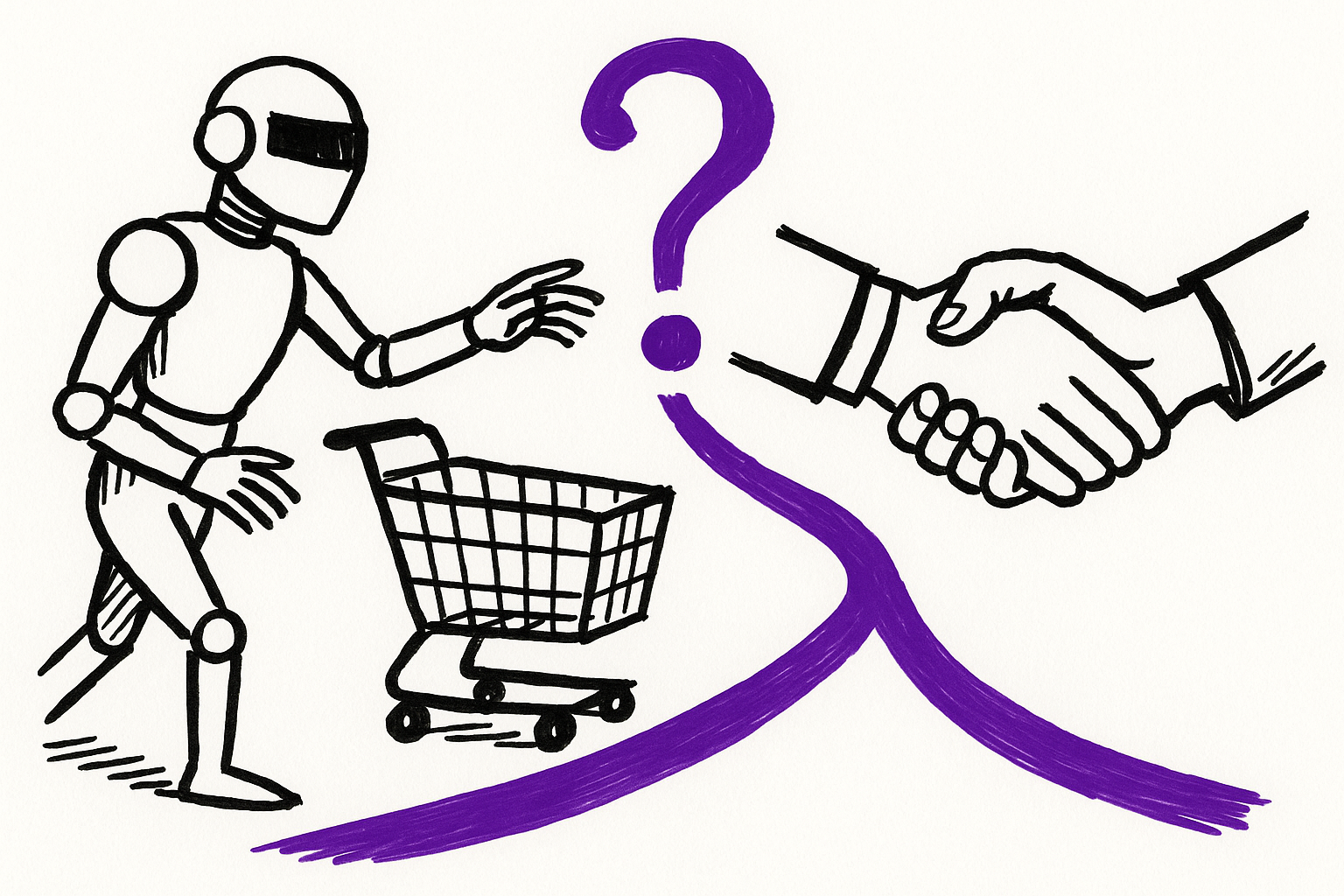
Walmart's Sparky is now running ads. Marriott wants cricket fans in its loyalty program. Starbucks is selling Khloe Kardashian's popcorn. And Lego just turned the Las Vegas Sphere into a Death Star.
These feel like random corporate maneuvers. They're not. They're four different answers to the same question: how do you reach consumers who've learned to ignore you?

The Attention Collapse
The traditional marketing funnel assumed consumers would pay attention. They'd see your ad, consider your product, make a decision. That assumption broke somewhere around 2020, and it's not coming back.
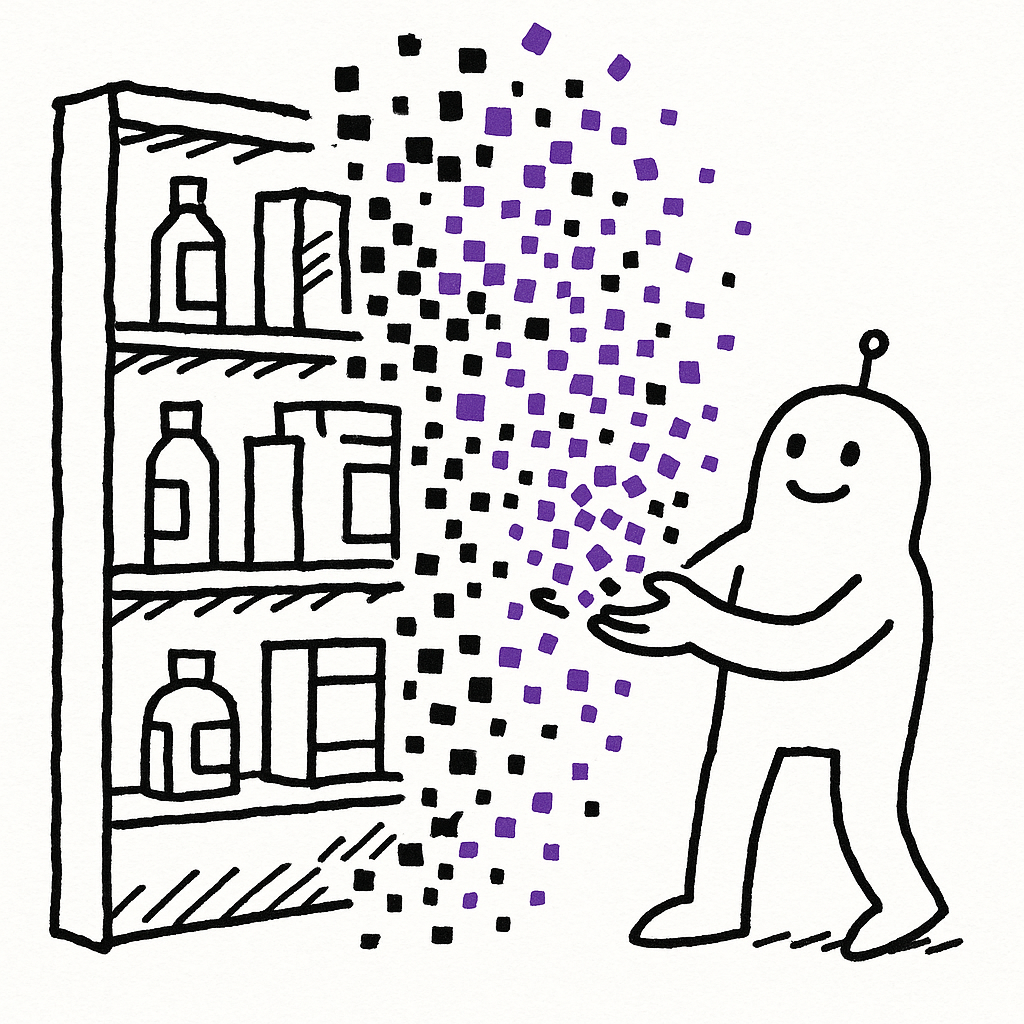
Digital Wave Technologies' Sandy DeFelice put it bluntly in a recent Robin Report interview: "The traditional concept of a 'digital shelf' is becoming obsolete." When a consumer asks an AI agent to "show me the best handbag," they're not browsing. They're outsourcing the decision entirely.
This is the $400 million insight that one retailer learned the hard way - siloed data and static product descriptions don't work when the shopping journey itself has been automated. Agentic AI doesn't just assist; it executes. That's a genuine paradigm shift.
The Two Responses
Brands are splitting into two camps.
Camp One: Automate the Path
Walmart Connect and Amazon are racing to be the AI agent that makes purchase decisions. Walmart's Sparky and Amazon's Rufus aren't just chatbots - they're advertising platforms. When 81% of consumers say they'd use Sparky to check product availability before purchasing, that's not customer service. That's a new ad channel.
The retail media war is now officially between two companies. As one commerce executive summarized: "It's Amazon. It's Walmart. They're the 800-pound gorillas." Everyone else is fighting for scraps.
Walmart Connect generated $4.4 billion in 2024, with Q3 2025 showing 33% growth. But here's what matters: it's all built on first-party data and closed-loop measurement. They know what you bought, in-store and online. That's the moat.
Camp Two: Own the Moment
The opposite response is to create experiences that can't be automated. Marriott's ICC cricket partnership isn't about hotel rooms - it's about being present when fans organize travel around tournaments. Loyalty, they've realized, "can't live only inside a hotel stay anymore."
Starbucks is doing something similar with celebrity partnerships. The Khloud popcorn collaboration isn't random - it's part of CEO Brian Niccol's "Back to Starbucks" strategy to make stores destinations rather than transactions. The protein angle (47 grams in the "secret menu" combination) taps into health trends while the celebrity angle drives foot traffic.
And then there's Lego, which turned the world's largest LED display into an interactive game. The Death Star activation at CES wasn't just marketing - it was a global launch for LEGO SMART Play, their most significant product innovation since introducing the Minifigure in 1978.

The Real Question
Both camps are betting on attention scarcity, but they're making opposite assumptions about where attention will go.
The AI camp assumes consumers will delegate more decisions to agents. If that's true, being the default agent matters more than being the preferred brand. The closed-loop data advantage becomes self-reinforcing.
The experience camp assumes that automated convenience will make human moments more valuable, not less. If everything transactional can be handled by AI, the moments that can't be automated become premium.
Here's what's interesting: both could be right. The same consumer might delegate grocery shopping to Sparky while planning a cricket trip through Marriott Bonvoy. The automated and the experiential might not compete - they might coexist for different categories.

What This Means for Local Partners
For brands thinking about local activation, these trends create opportunity.
Agentic AI is great at optimizing national retail media spend. It's terrible at knowing which coffee shop in Eagle Rock has the right vibe for your target customer. Local partnerships exist precisely in the space that AI can't automate - human relationships, community credibility, physical presence.
As the big brands pour billions into Walmart Connect and Amazon Ads, the local activation gap will widen. That's not a bug. It's where the signal lives when everything else is noise.
The question isn't whether to use AI or pursue partnerships. It's understanding which consumer decisions can be automated, which can't, and what that means for where you invest.
Hass Dhia is Chief Strategy Officer at Smart Technology Investments, where he helps brands find authentic local activation partnerships powered by neuroscience and AI. He holds an MS in Biomedical Sciences from Wayne State University School of Medicine, with thesis research in neuroscience.
Sources
- A Masterclass in Agentic AI - The Robin Report
- Marriott Expands Loyalty Strategy With ICC Cricket Partnership - Skift
- Starbucks is kicking off 2026 with more brand partnerships - Modern Retail
- Walmart Connect takes a play out of the Amazon playbook to make agentic AI the next battleground in retail media - Digiday
- Why Lego turned the Sphere into the Death Star to showcase innovation - Marketing Dive