The Bypass Economy: How AI, Frictionless Payments, and Value-Seeking Consumers Are Rewriting the Rules

There's a particular kind of anxiety running through media executives and brand marketers right now. It's not the familiar fear of declining ad rates or shifting consumer preferences. It's something more fundamental: the growing suspicion that the middlemen are being cut out entirely.
Call it the Bypass Economy.
Three distinct forces - emerging from completely different corners of the business landscape - are converging on the same conclusion: direct relationships matter more than ever, and everything between the brand and the consumer is increasingly optional.
The Browser That Doesn't Need Your Website
Publishers have grown accustomed to existential threats. First it was social platforms algorithmically suppressing content. Then Google's search updates reshaped traffic patterns overnight. Now comes something potentially more disruptive: browsers that read your content so humans don't have to.
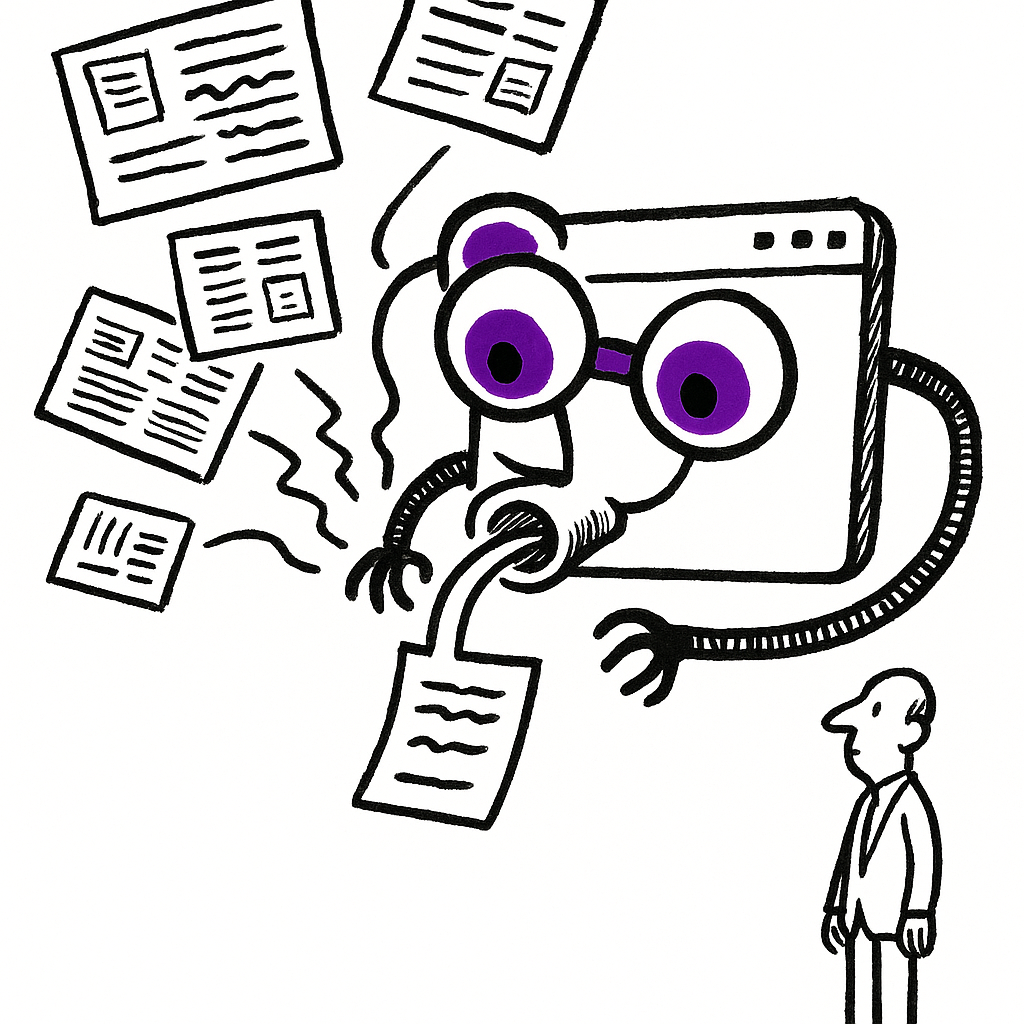
Agentic browsers - tools like Perplexity's Comet, OpenAI's Atlas, and Google's own Chrome experiments - represent a fundamental shift. These aren't passive windows into the web. They're autonomous agents that fetch, summarize, and act on information without ever directing users to the source.
"AI is an accelerator for the decline of browser-based web experiences," warns Amir Malik of Alvarez and Marsal. He describes a shift from destination-based discovery to "prompt-based" consumer behavior. Users won't browse to your site. They'll ask their browser a question and receive a synthesized answer drawn from dozens of sources - yours included, potentially, but invisible.
Publishers currently describe agentic browsers as a "3 percent problem" - the same language they used about AI search six months before it became a 30 percent problem. The IAB Tech Lab's Anthony Katsur cuts to the heart of the concern: these browsers may be "a Trojan horse to crawl" publisher content, extracting value while returning nothing.
The conventional wisdom says publishers need paywalls or licensing deals. But that assumes the question is "how do we get paid for our content?" The more pressing question might be: "If AI can summarize what we publish, what do we actually offer?"
The Payment That Doesn't Hurt
While publishers worry about browsers, a quieter revolution is happening in how consumers part with money.
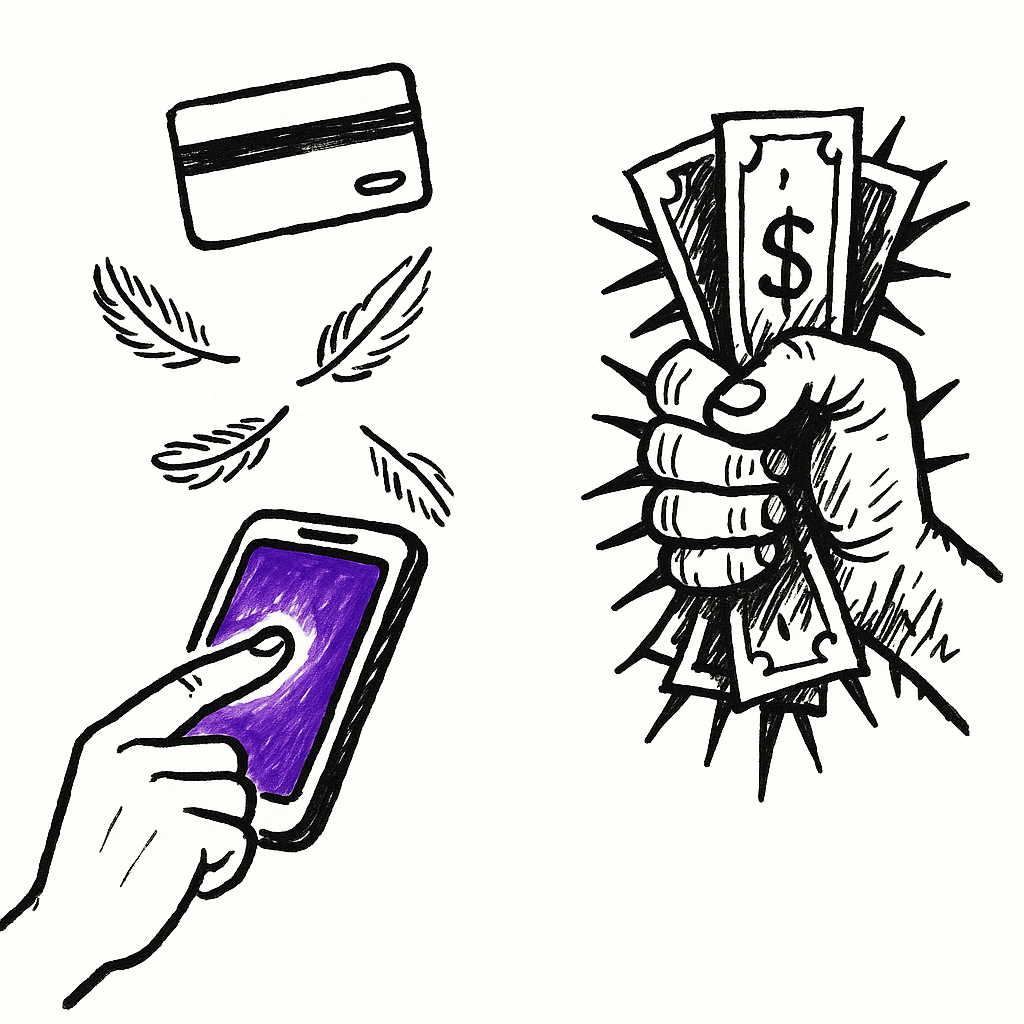
Spending money activates the anterior insula - the same brain region that processes physical pain. This isn't metaphor. A 2007 Stanford-Carnegie Mellon-MIT study used fMRI imaging to demonstrate that excessive prices trigger actual pain responses. The researchers found brain scans predicted purchasing behavior as accurately as people's self-reported intentions. We often don't consciously know why we buy or don't buy.
Cash creates maximum pain. The physical act of counting bills activates our neural braking mechanism. Credit cards reduce it by separating purchase from payment. But modern contactless payments - Apple Pay, one-click ordering, subscription billing - minimize pain to near-zero levels.
A 2024 Dutch study confirmed what retailers already intuited: contactless payments hurt the least of any payment method. Amazon's one-click feature reportedly increased conversion rates 5-10 percent. Subscription services convert individual purchase decisions into automatic monthly fees, eliminating transaction-by-transaction restraint entirely.
U.S. credit card debt now exceeds $1.2 trillion. Over 40 percent of Americans avoid cash entirely. The brain's natural spending guard has been engineered away.
For brands, this seems like good news - remove friction, increase sales. But there's a catch. When everything is frictionless, nothing is memorable. The physical act of paying was also a moment of commitment, a small ritual that marked the exchange as meaningful. Brands that rely solely on reduced friction may win transactions while losing relationships.
The Consumer Who Wants Substance
Enter the value-seeking consumer.

Modern Retail's 2026 predictions cut through the noise: "An increased focus on value and quality will reshape which brands and platforms shoppers gravitate to." The viral trends of 2025 - Dubai chocolate among them - are already fading. What's rising: thrifting, health-conscious products, and AI-driven discovery that helps consumers cut through marketing noise.
This isn't about price sensitivity. It's about hype fatigue. Consumers who can buy anything with zero friction have become selective about what deserves their attention. The scarcity isn't money - it's mental bandwidth.
Travel tells the same story. Skift's year-end analysis reveals that luxury travel is booming among the wealthy, but the experience itself matters more than the purchase. Hotel loyalty programs now emphasize wellness activities, culinary events, and adventure offerings over point accumulation. Live tourism - planning trips around concerts and cultural events - suggests consumers want experiences worth traveling for, not just convenient destinations.
TikTok's Travel Ads feature claims to "convert trip inspiration into bookings" using AI targeting. Accor reports a 54 percent reduction in cost-per-click. But here's what's interesting: the successful campaigns aren't removing friction. They're adding context. They're helping consumers discover experiences they didn't know they wanted.
What Survives the Bypass
India's retail explosion offers a glimpse of what happens when middlemen are stripped out from the start.
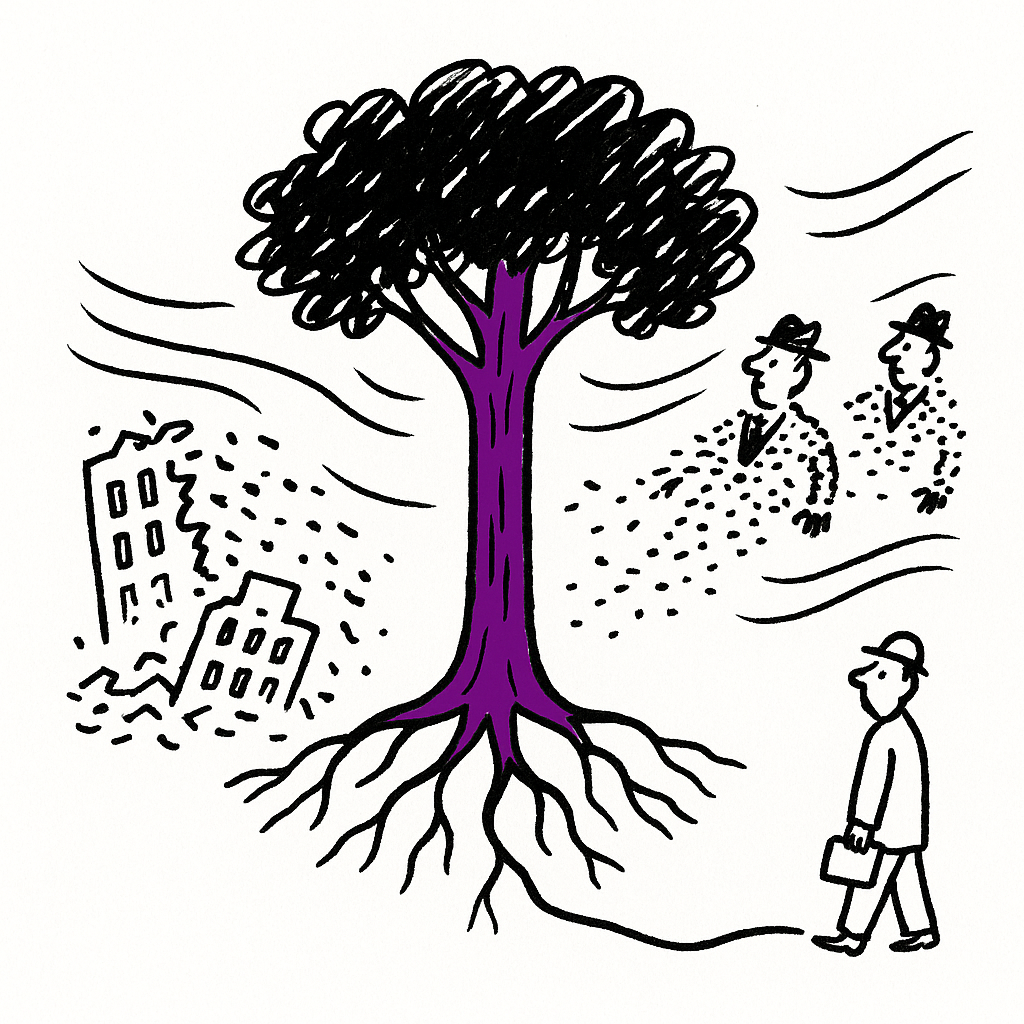
Tier II and III cities - places like Jaipur, Lucknow, and Coimbatore - now account for over 60 percent of India's e-commerce transactions. This isn't about major metros anymore. A young, digitally fluent population with expanding purchasing power is building new consumption patterns without the legacy infrastructure of traditional retail.
They're not bypassing middlemen. They never had them to begin with. And the brands winning in these markets aren't those with the most sophisticated logistics. They're the ones creating products worth seeking out directly.
The pattern holds across industries. Publishers that survive agentic browsers won't be those with the best paywalls - they'll be those creating analysis, perspective, and community that AI can't replicate. Payment experiences that build loyalty won't be those with the least friction - they'll be those that make the transaction feel like participation in something meaningful. Brands that thrive among value-conscious consumers won't be those with the lowest prices - they'll be those offering substance that cuts through the noise.
The Bypass Economy isn't a threat to good brands. It's a threat to brands that existed primarily because friction made switching hard. When AI browsers can summarize your content, when payments happen invisibly, when consumers can compare everything instantly - what remains is your actual value proposition.
That's either terrifying or liberating, depending on whether you have one.
Sources
- No playbook, just pressure: Publishers eye the rise of agentic browsers - Digiday
- Ask Skift's Most Popular Questions for 2025 - Skift
- India's Retail Frontier - The Robin Report
- The Modern Retail guide to what's in and what's out in 2026 - Modern Retail
- The Pain of Paying: Why Spending Money Literally Hurts - Roger Dooley's Neuromarketing
Hass Dhia is Chief Strategy Officer at Smart Technology Investments, where he helps brands find authentic local activation partnerships powered by neuroscience and AI. He holds an MS in Biomedical Sciences from Wayne State University School of Medicine, with thesis research in neuroscience.