When AI Knows What Consumers Want Better Than They Do
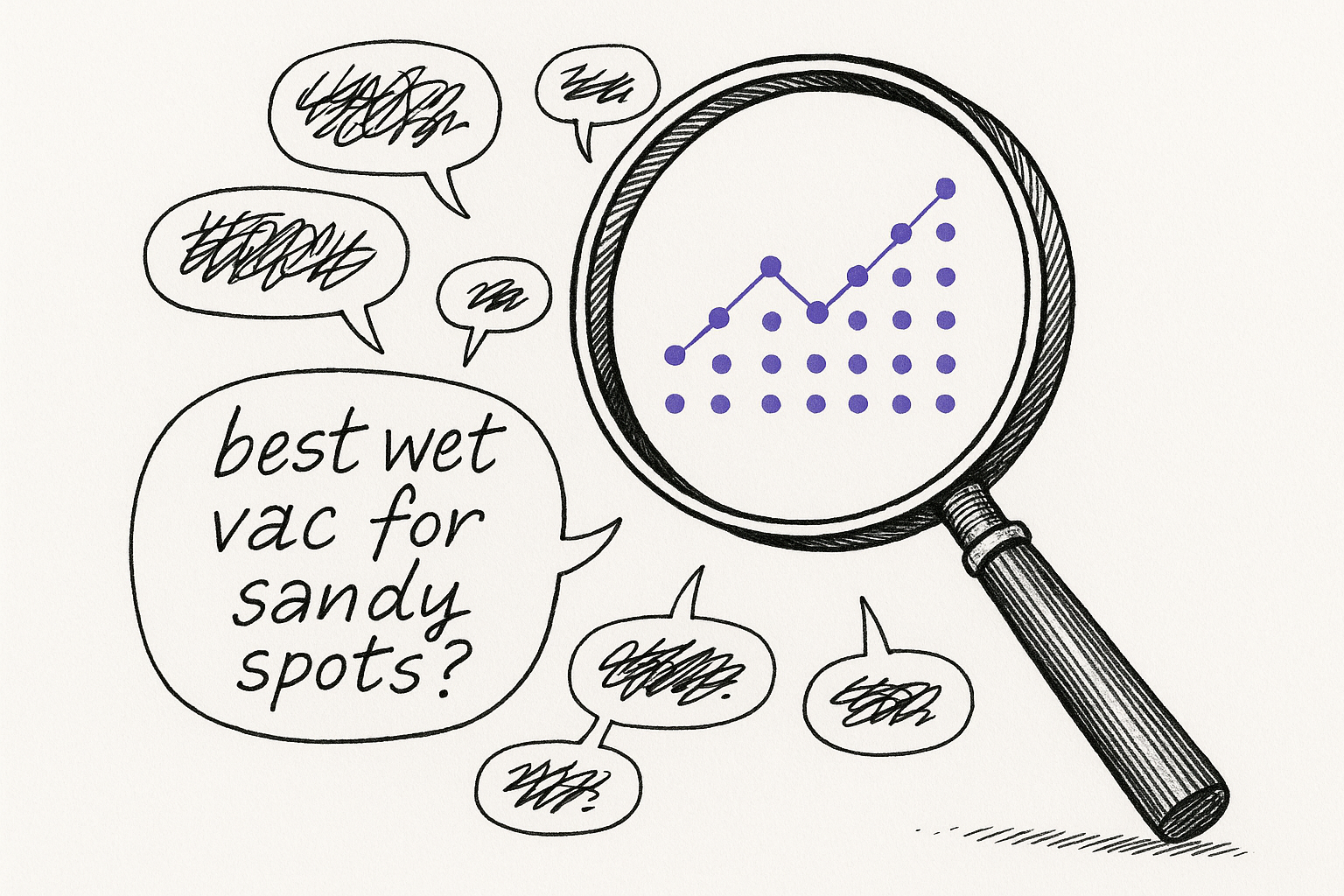
Here's a question that should keep brand marketers awake at night: When a consumer types "what's the best wet vac for cleaning sandy spots," who wins that search?
Not whoever has the best SEO. Not whoever spent the most on Google Ads. The winner is whoever actually solves that specific, weird, deeply human problem.
Omnicom Media's new partnership with Google, announced at CES this week, captures something important. Their "consumer prompt insights tool" aggregates the actual questions people ask, not the sanitized keywords we've been optimizing for years. It's the difference between "vacuum cleaners" and the messy reality of someone's sandy entryway.
The implications go beyond search marketing.
The Intent Gap is Real
For years, brands have operated on abstractions. Demographics. Personas. Journey maps. But Omnicom's tool suggests something different: the actual intent data is now accessible, and it's far more specific than we imagined.
Cox Automotive reports the tool "cut our competitive analysis cycle from weeks to days." That's nice for their media planning team. But the bigger story is what this reveals about consumer behavior itself.
People don't think in keywords. They think in problems. And AI is getting better at capturing those problems before anyone in marketing sees them.
This matters for local activation because community partners solve specific problems. A local gym solves "I need accountability to actually show up." A neighborhood coffee shop solves "I need a third place that isn't my apartment." A specialty retailer solves "I need someone who knows what they're talking about."
These aren't abstract benefits. They're answers to the messy questions people actually have.
The Shopify Signal

Meanwhile, Shopify just wrapped its best year since 2021. Nearly $92 billion in gross merchandise volume during Q3. Nine consecutive quarters of 20%+ growth. Enterprise clients like Estée Lauder, E.l.f. Beauty, and Barnes & Noble signing on.
But the interesting detail isn't the growth. It's what's driving it.
Shopify's September partnership with OpenAI enables direct purchases within ChatGPT. The company reports AI driven traffic to online stores increased sevenfold since January. Purchases from AI powered search grew 11 times over the same period.
Read that again. Consumers are increasingly finding and buying from merchants through conversational AI interfaces.
This creates a fascinating tension. AI is simultaneously making it easier to discover what consumers want (Omnicom's intent data) and easier for consumers to bypass traditional discovery channels entirely (Shopify's ChatGPT integration).
The brands that win aren't the ones with the biggest ad budgets. They're the ones that show up where AI surfaces them. And increasingly, that means being discoverable in contexts that feel authentic, specific, and problem solving.
Local partners have an advantage here. A neighborhood business solving a real problem for a real community generates exactly the kind of signal that AI systems are learning to prioritize.
The Reshoring Wrinkle
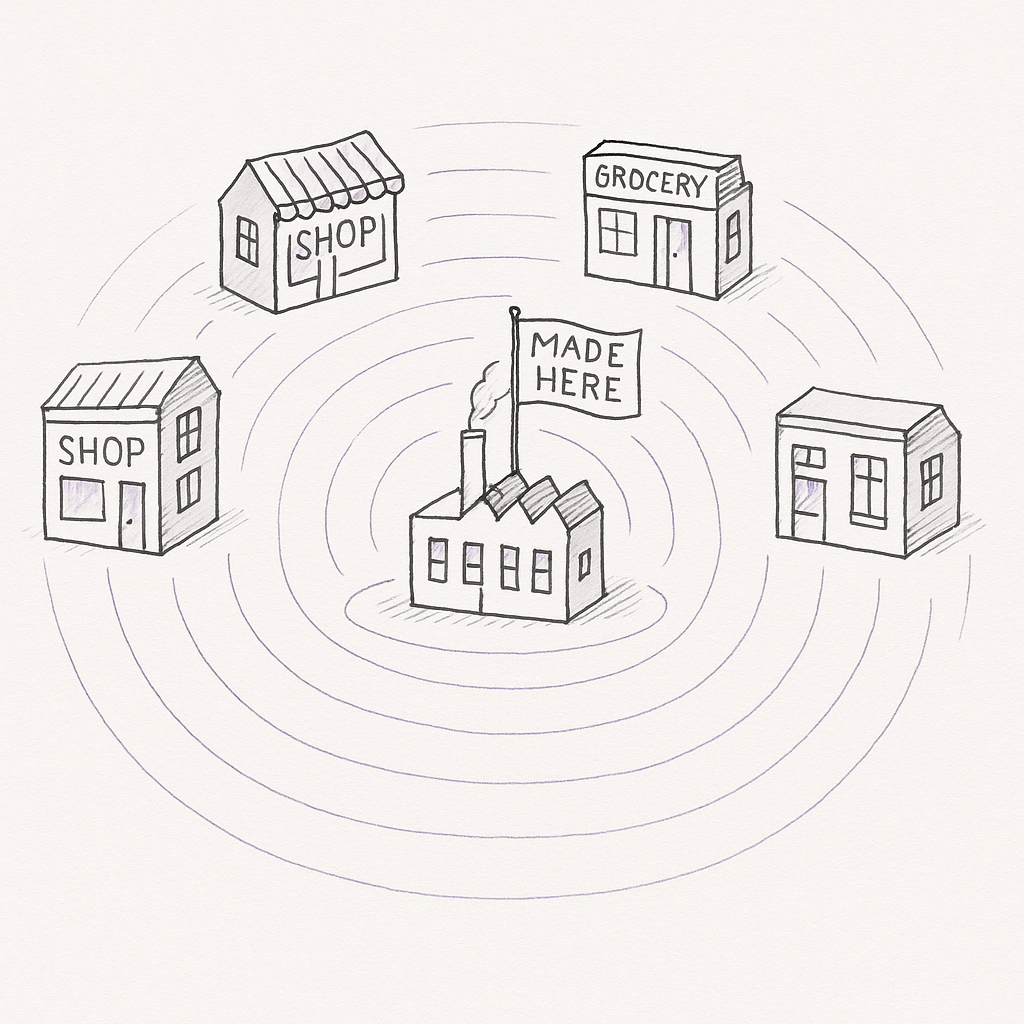
Then there's Lovesac. The furniture company just announced plans to reshore key manufacturing processes, specifically domestic production of core inserts for their primary product line.
On the surface, this is a tariff story. But look deeper.
Direct to consumer brands are discovering that "made here" isn't just a supply chain decision. It's a trust signal. When a consumer asks "where is this actually made?" they're asking something deeper about authenticity and alignment.
Lovesac is betting that consumers will pay attention to the answer.
This connects to local activation in a non obvious way. The same consumers who care about production origin care about community presence. They're asking related questions: Is this brand part of my world? Do they understand my context? Can I trust them?
National brands struggle to answer these questions through traditional channels. But a local partnership with the right operator creates exactly the kind of authentic presence that builds trust.
What Behavioral Science Says About All This

Crystal Hall's work on behavioral science and equity offers a useful frame. She argues the field needs to move beyond individual nudges toward systemic approaches.
The same is true for brand activation.
We've spent years optimizing individual touchpoints. Better ads. Better landing pages. Better retargeting sequences. But the system itself is broken. Consumers are drowning in content they didn't ask for while starving for solutions to problems they actually have.
AI changes the system. Intent data reveals what people want. Conversational interfaces deliver it directly. Authenticity signals determine who gets discovered.
The brands that understand this won't just optimize their media buys. They'll rethink where they show up and who vouches for them.
Local partners aren't a distribution channel. They're a trust infrastructure.
The Honest Assessment
Now, some caveats.
Omnicom's tool is new. Whether it actually delivers better outcomes than traditional search marketing remains to be seen. Early case studies from a single automotive client don't prove much.
Shopify's AI integration is impressive, but we're still early. Consumer behavior in conversational interfaces isn't yet predictable. The brands winning today might not be the ones winning in two years.
And Lovesac's reshoring is at least partly defensive. Tariff avoidance isn't the same as a genuine commitment to domestic production. The jury's out on whether this represents a real shift or a temporary tactic.
But the direction is clear. AI is getting better at understanding what consumers actually want. The brands that can answer those specific, messy, human questions will win. And local partners, who solve real problems for real communities, have an authentic advantage that national media buys can't replicate.
The question isn't whether to invest in local activation. It's whether you can figure out which partners actually solve the problems your consumers are asking about.
Sources
- Omnicom Media kicks off CES with a Google search partnership that drills deeper into intent - Digiday
- Why 2025 was Shopify's best year yet - Modern Retail
- Lovesac reshores key manufacturing process - Retail Dive
- Reimagining Behavioral Science: Reflections on Equity - BehavioralEconomics.com
Hass Dhia is Chief Strategy Officer at Smart Technology Investments, where he helps brands find authentic local activation partnerships powered by neuroscience and AI. He holds an MS in Biomedical Sciences from Wayne State University School of Medicine, with thesis research in neuroscience.