The Loneliness Opportunity: Why Brands Need Local Partners, Not More Ads

Walk into a Wegmans in Manhattan and you'll find something unexpected: an entire floor dedicated to prepared foods, dining areas, and what can only be described as a community gathering space. Sushi bars. Oyster bars. Wine tastings. Cooking classes.
This isn't a grocery store anymore. It's a solution to a problem brands have been trying to solve for years: how do you create genuine connection with consumers in an age of infinite distraction?
The answer, it turns out, isn't another targeted ad. It's creating spaces where lonely people can feel less alone - and doing it authentically.
The Loneliness Business Model
According to The Robin Report, grocery chains aren't just selling groceries anymore. They're monetizing isolation. In-store cafes with community seating. Wine tastings. Full sit-down restaurants embedded in what used to be purely transactional spaces.
This sounds cynical when you put it that way. And maybe it is. But here's what's interesting: it works precisely because it's meeting a genuine human need. People aren't being tricked into community - they're seeking it, and retailers are providing the venue.
The question for brands isn't whether this is manipulative. It's whether they can create similar value without the cynicism. Can you help people connect without just extracting their loneliness for profit?
That's where the neuroscience gets interesting.

The Brain Prefers Feeling Over Logic
Here's a number that should make every CMO rethink their media strategy: emotional advertising campaigns generate a 31% increase in profitability, compared to just 16% for purely rational approaches.
That's not opinion. That's the Institute of Practitioners in Advertising analyzing over 1,400 campaigns in their dataBANK. The mixed emotional-rational campaigns? 26%. Somewhere in between, which is exactly what you'd expect.
Roger Dooley's Neuromarketing research explains why: emotional stimuli bypass cognitive processing. They affect us without conscious awareness and encode more powerfully in memory.
The data on brand recall is equally stark. In one Lithuanian study, 81% of subjects remembered brands from emotional ads versus 69% from rational ones. Nielsen found a 23% sales lift for ads scoring above-average on neuroscience-based copy tests.
But here's the catch nobody talks about: creating genuinely engaging emotional content is hard. Really hard. You can't fake authenticity. Consumers have been trained on decades of manipulative advertising, and their BS detectors are finely calibrated.
This is where local partnerships become interesting. A cooking class at your local grocery store feels authentic because it is authentic. The community is real. The connection is real. The brand just happens to be facilitating it.

The Digital Fragmentation Problem
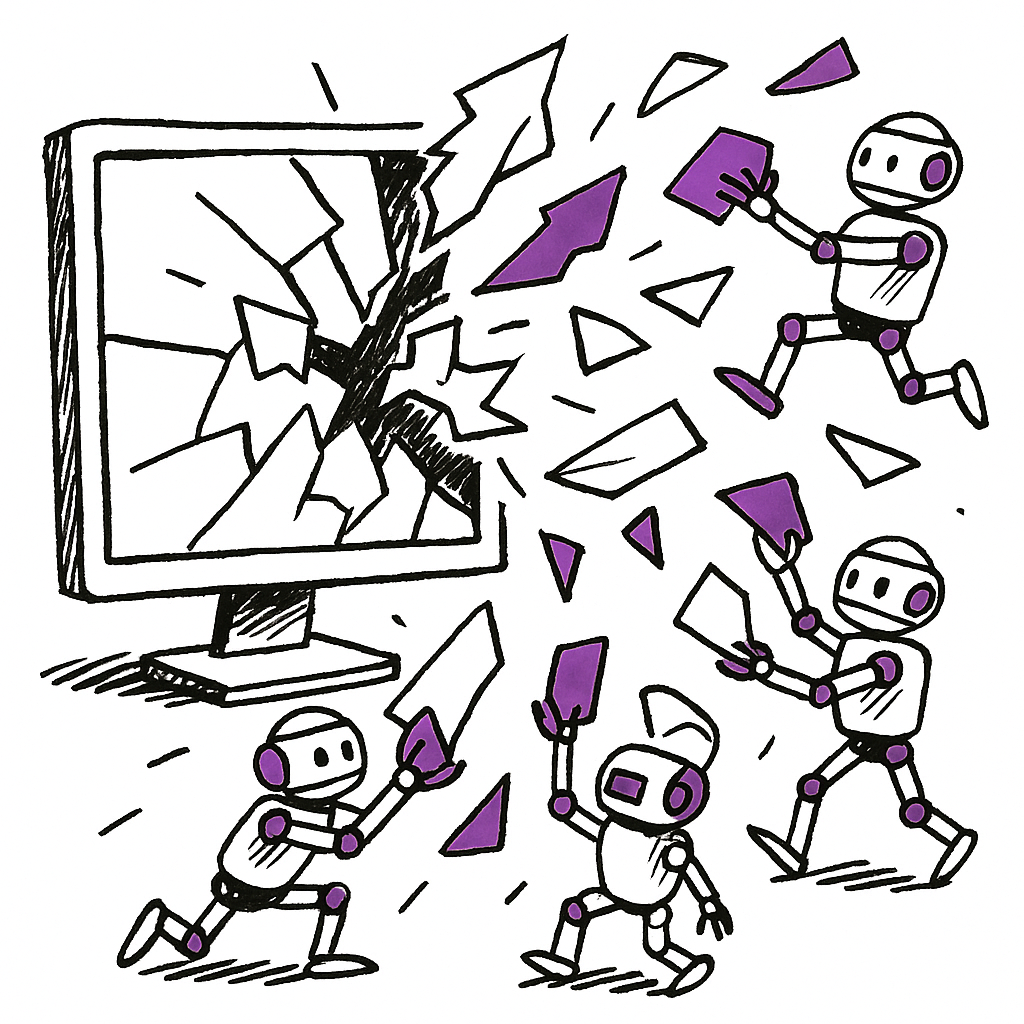
Meanwhile, the channels brands have relied on for the past decade are fragmenting faster than anyone predicted.
According to Digiday's analysis of 2025 SEO trends, the entire model of building audiences through search is collapsing. AI-powered search is rewriting the rules. Publishers are discovering that clicks as a KPI "is just not enough" - they need to think holistically about metrics that actually drive business outcomes.
The Wall Street Journal's SEO director, Ed Hyatt, puts it bluntly: publishers must be "intentional with your content and intentional with your audiences." The spray-and-pray approach of optimizing for search traffic no longer works when AI can summarize your content without sending visitors to your site.
And it gets worse. As Michael King of iPullRank notes, "the whole evergreen play is kind of done." Content that used to generate consistent traffic for years now faces diminishing returns as AI rewards freshness over durability.
For brands, this creates a strategic problem. The digital channels that scaled efficiently - SEO, programmatic display, even social - are becoming less reliable. Agentic AI browsers like Perplexity's Comet can book flights and hotels without ever directing users to brand websites. Brand safety concerns are multiplying as platforms step away from third-party audits.
Where does that leave a marketing director with budget to deploy?
The Case for Local Partners
The answer might be hiding in plain sight: the operators who already have authentic community relationships.
Consider what the grocery stores figured out. They had physical space. They had foot traffic. They had a reason for people to visit. What they lacked was emotional resonance - nobody feels a deep connection to buying milk.
So they added community experiences. Not because it was trendy, but because it worked. The in-store cafe doesn't just sell coffee - it creates a reason for people to linger, to return, to feel something.
Now imagine you're a CPG brand trying to reach health-conscious consumers. You could buy more programmatic ads and watch your CPMs rise while your brand safety controls slip. Or you could partner with the boutique fitness studio down the street that already has the exact community you're trying to reach.
The studio owner knows their members by name. They've built trust over years. Their recommendation carries weight that no influencer can match - because it's not a transaction, it's a relationship.
This is what local activation offers that digital channels can't replicate: genuine social proof embedded in existing community structures.
What This Means for Brands
Let's be clear about what we're not saying: local partnerships are not a silver bullet. They're hard to scale. They require actual relationship-building with operators who may not think like marketers. The ROI is harder to measure than a cost-per-click.
But here's what the data suggests:
-
Emotional connection drives measurably better outcomes - The IPA's 31% vs 16% profitability gap is not small.
-
Digital channels are becoming less reliable - AI search, platform fragmentation, and brand safety concerns are eroding the efficiency that made programmatic attractive.
-
Authentic community spaces exist everywhere - Grocery stores, fitness studios, local retail, hospitality venues. These operators have something valuable: trust.
-
The loneliness epidemic is real - And brands that help solve it - genuinely, not exploitatively - may find themselves building something more durable than awareness.
The question isn't whether local partnerships can replace digital advertising. They can't, and they shouldn't. The question is whether brands are allocating enough attention to channels where authentic connection is still possible.
Right now, most aren't. They're optimizing for efficiency in a landscape that's becoming less efficient by the quarter. They're buying reach when what they need is resonance.
The grocery stores figured this out. They turned transactional spaces into community centers because that's what their customers actually wanted. Brands could learn something from that - if they're willing to do the harder work of building real relationships with local partners.
Whether they will remains to be seen. Change is hard, especially when the existing playbook still sort of works. But the trends are clear: emotional connection beats rational persuasion, digital fragmentation is accelerating, and authentic community is increasingly rare and valuable.
The brands that figure out how to access that community - not through algorithms, but through actual human relationships - might be the ones that thrive in whatever comes next.
Or maybe this is all premature and the AI browsers will figure out how to synthesize community too. Hard to say. But I wouldn't bet on it.
Sources
- Why Your Grocery Store Wants You to Be Lonely - The Robin Report
- Emotional Ads Work Best - Roger Dooley's Neuromarketing
- The Biggest SEO Lessons in 2025 for Publishers - Digiday
- The Brand Safety Balancing Act - AdExchanger
Hass Dhia is Chief Strategy Officer at Smart Technology Investments, where he helps brands find authentic local activation partnerships powered by neuroscience and AI. He holds an MS in Biomedical Sciences from Wayne State University School of Medicine, with thesis research in neuroscience.