The Super Bowl Ground Game: Why Brands Are Betting on Sidewalks Over Screens
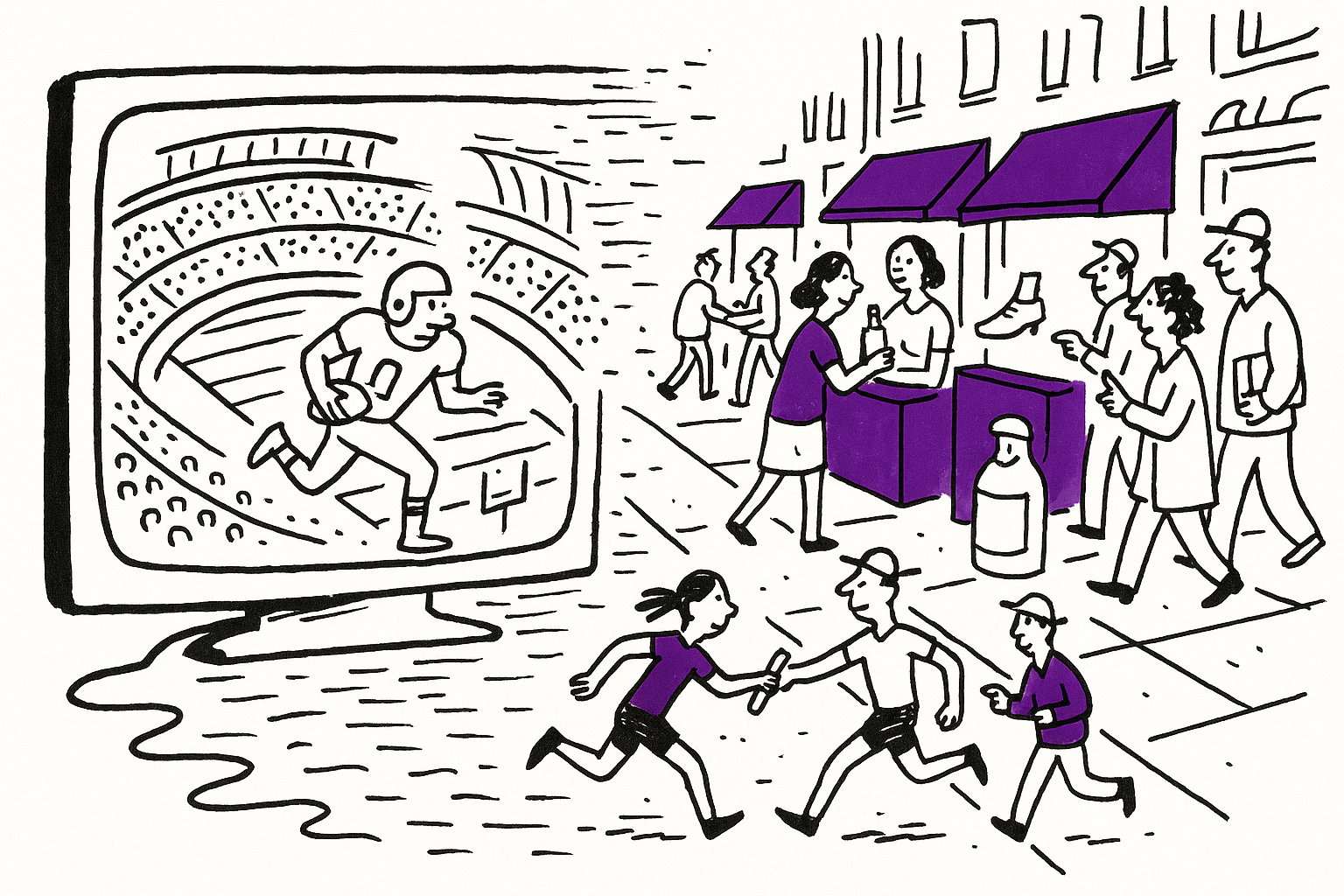
Super Bowl week used to be simple. Buy an ad. Hope it goes viral. Measure impressions. Repeat.
But walk around San Francisco this week and you'll notice something different. The most interesting brand plays aren't happening on screens - they're happening on sidewalks, in Ghirardelli Square, and inside repurposed bars. And a quiet data partnership announced this same week might explain why this shift is accelerating.
The Pop-Up Playbook
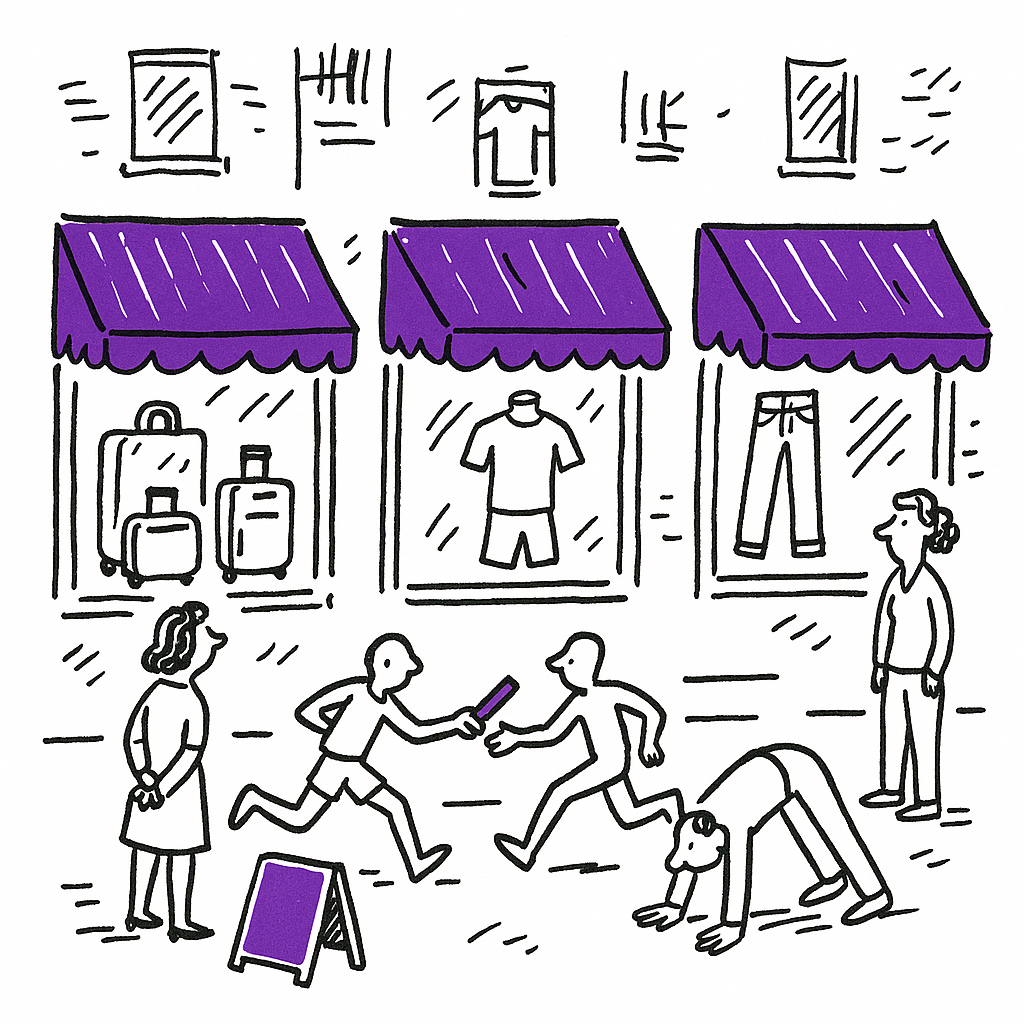
Luggage brand Beis is hosting relay races using their suitcases at Ghirardelli Square. Abercrombie & Fitch - leveraging a new NFL fashion partnership - is staging invite-only fashion shows where athletes walk the runway. While on Earth, a newer athletic brand, partnered with Athletic Brewing for daily workouts and run clubs at the Sport Beach Clubhouse.
These aren't vanity activations. Beis SVP Liz Money told Modern Retail the goal was "reach and engagement" - specifically, expanding beyond their female-majority customer base to men. While on Earth co-founder Todd Meleney put it more bluntly: "There's only so many tickets to the Super Bowl, but there's so much more that fans can experience."
That second quote reveals the real logic. Super Bowl ads cost $8 million for 30 seconds. A pop-up in San Francisco costs a fraction of that and delivers something a TV spot cannot: physical interaction with a product, face-to-face conversations, and the kind of memory formation that neuroscience research consistently shows outperforms passive media exposure.
Levi's is going even bigger with "Home Turf" - an immersive takeover of One Montgomery Street featuring live music curated with Empire Records and local Bay Area artists. They're not selling jeans. They're selling the feeling of being part of San Francisco culture during the biggest week in sports.
The Data That Could Change Everything

While brands are building these physical experiences, WPP Media quietly announced a partnership with Genius Sports that could reshape how we measure them.
The deal integrates Genius Sports' FanGraph platform - which draws insights from 250 million consumers - directly into WPP's planning systems. The headline product is something called a "Brand Sports Momentum Score" that tracks fan acquisition, retention, and spending patterns against brand-specific audiences.
What makes this interesting isn't the score itself. It's what it enables: discovering underutilized sports properties that deliver comparable audiences at lower costs. An advertiser priced out of the World Cup might find equivalent reach in cricket or rugby leagues. WPP Media's head of U.S. sports investment, Marty Blich, described it as building "a real, true sports strategy utilizing first party data" beyond single tentpole events.
But let's be honest about what we don't know yet. Genius Sports' chief revenue officer said "static metrics can't keep up with how fans behave" - and that's true. The question is whether a Brand Sports Momentum Score is genuinely dynamic or just another composite metric dressed in fancier language. We'll need to see actual campaign outcomes before declaring victory.
The $700 Billion Context

This all happens against a backdrop that should concern every brand team focused exclusively on digital: Amazon just crossed $700 billion in annual revenue and is about to surpass Walmart for the first time ever.
Amazon's Q4 showed 12% year-over-year growth, with AWS alone pulling $35.6 billion (up 24%). But the number that matters for brand strategists is this: Prime members received over 8 billion items via same or next-day delivery in 2025 - a 30% increase - with groceries and essentials comprising half of all deliveries.
Translation: Amazon is becoming the default channel for everyday purchases. And when everyday purchases move to a platform where brand differentiation is reduced to a product listing and a star rating, the value of physical brand experiences goes up, not down.
Walmart isn't standing still - their e-commerce is growing faster than Amazon's, and their advertising unit grew 33% last year. Retail analyst Neil Saunders correctly pointed out that comparing Amazon and Walmart revenues isn't apples-to-apples because AWS inflates Amazon's total. Fair enough.
But the directional trend is clear: online commoditization is accelerating. That's exactly why a luggage company is running relay races at Ghirardelli Square instead of buying banner ads.
What Actually Works (And What We're Still Guessing About)

The convergence playing out this week - physical activation getting more creative while sports data gets more granular - points toward a future where brands can design local experiences and actually measure their impact against specific audience segments.
The NFL has already centralized first-party fan data across league and team properties, building profiles on over 70 million active fans. Sportradar is pushing real-time moment activation - using live data and AI to turn individual plays into multi-channel campaigns. The infrastructure for connecting physical and digital brand experiences is being built.
But we're not there yet. The gap between "we can measure fan engagement" and "we can prove this pop-up drove incremental revenue" remains wide. Most experiential marketing still relies on foot traffic counts, social mentions, and vibes. The data partnerships being announced are promising, but promising and proven are different things.
What we can say with confidence: the brands showing up on the ground in San Francisco this week - Beis, While on Earth, Abercrombie, Levi's - are making a bet that physical interaction builds brand memory more effectively than another 30-second spot. The neuroscience supports this. The data infrastructure to prove it is catching up. The question is whether the measurement tools will arrive fast enough to justify the budgets.
For brand leaders watching from the sidelines, the signal is clear: the ground game is where the real competition is moving. The screens are still important. But the sidewalks might matter more.
Sources
- The Super Bowl pop-up playbook: How brands are showing up on the ground in San Francisco - Modern Retail
- WPP Media beefs up its sports insights prowess with new partnership with Genius Sports - Digiday
- Amazon set to pass Walmart in annual revenue for the first time after hitting $700 billion in sales - Modern Retail
- In 2026, real-time moments will become the new marketing currency - Sportradar
- The Modern Peril of the Availability Heuristic - BehavioralEconomics.com
Hass Dhia is Chief Strategy Officer at Smart Technology Investments, where he helps brands find authentic local activation partnerships powered by neuroscience and AI. He holds an MS in Biomedical Sciences from Wayne State University School of Medicine, with thesis research in neuroscience.