The Asset-Light Premium Pivot

Three stories crossed my desk this week that seem unrelated until you squint at them the right way.
Lemon Tree Hotels, one of India's largest hotel chains, just announced it's splitting itself into two companies. One will own the buildings. The other will own the brand, the management contracts, and the customer relationships. Warburg Pincus is investing $106 million - but notably, they're buying into the asset company, not the operating brand.
Meanwhile, Macy's announced another 14 store closures, bringing them closer to shuttering 150 locations total. And L.L. Bean promoted a 20-year company veteran to CEO - someone whose entire career has been about reimagining what "retail" means for an outdoor brand.
These three moves tell the same story: the great unbundling of physical presence from brand value.
The Lemon Tree Split
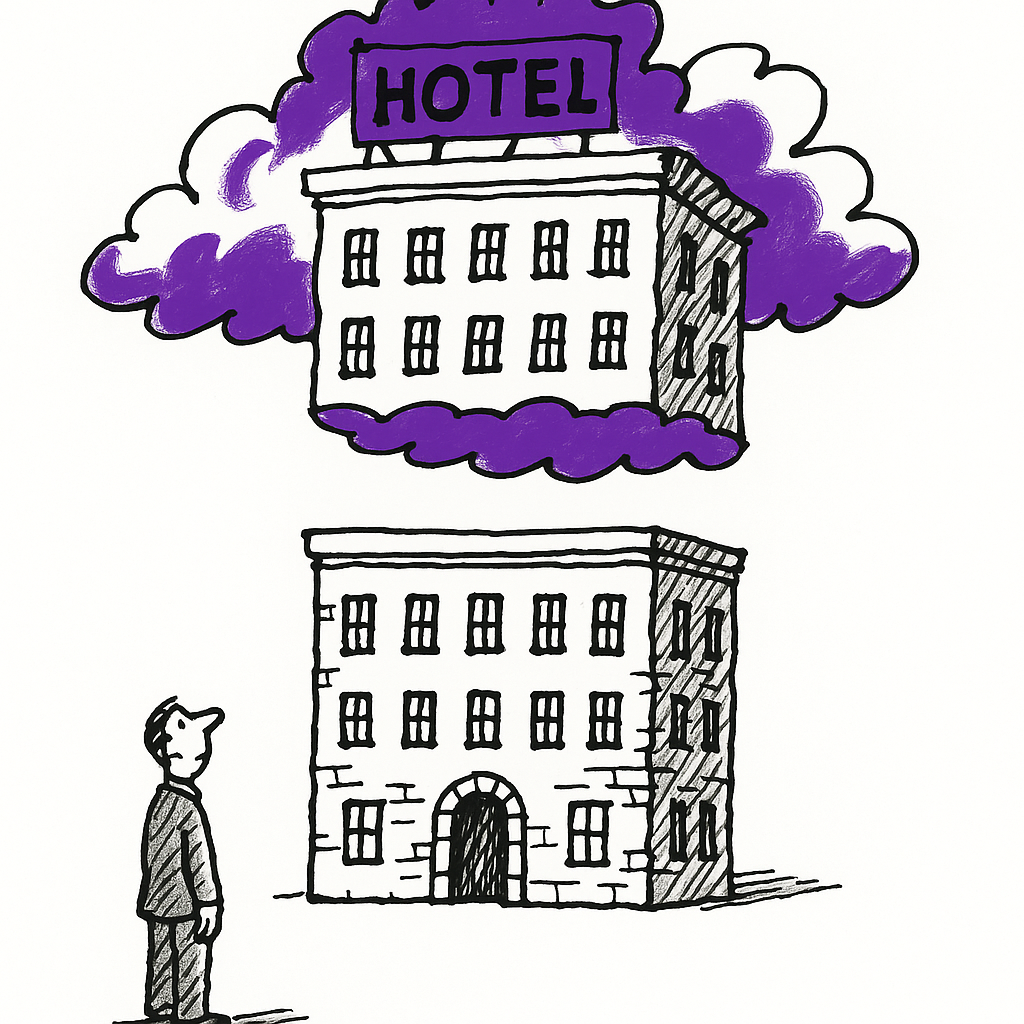
When Lemon Tree initially denied that Warburg Pincus was investing in their company, they were being technically accurate. Warburg wasn't buying into Lemon Tree Hotels - they were buying into Fleur Hotels, the newly separated asset-holding subsidiary.
The distinction matters enormously. Fleur will grow from 24 hotels with 3,993 rooms to 41 properties with 5,813 rooms. It's becoming one of India's largest hotel owners. But Lemon Tree itself is going "asset-light" - focusing exclusively on management, branding, franchising, and digital distribution.
This is the Marriott model taken to its logical conclusion. Own the relationship with the guest. Let someone else own the concrete and steel. The margin profile is completely different - less capital-intensive, more scalable, and theoretically more valuable when interest rates are high and real estate is expensive.
The Premium Traveler Divide

The airline industry is betting heavily on the same bifurcation - except instead of splitting assets from brands, they're splitting customers into premium and budget tiers.
Delta CEO Ed Bastian put it bluntly: "The higher up the income spectrum you go, the better you are." Wealthy travelers kept spending through 2025 despite economic uncertainty. Lower-income households cut back noticeably.
The response has been predictable. Delta and United are doubling down on premium - international routes, first-class cabins, unique destinations like Malta and Sardinia. Southwest is abandoning its populist open-seating model for assigned seats and extra-legroom options, projecting $2 billion in additional annual profit.
And Spirit Airlines? Chapter 11 bankruptcy. Twice. They're currently surviving on a $50 million lifeline while discussing potential liquidation or a Frontier merger.
The middle market for air travel is evaporating. You either serve premium customers with premium experiences, or you compete on rock-bottom price with razor-thin margins. The "good enough" middle ground is a death zone.
The Macy's Contraction
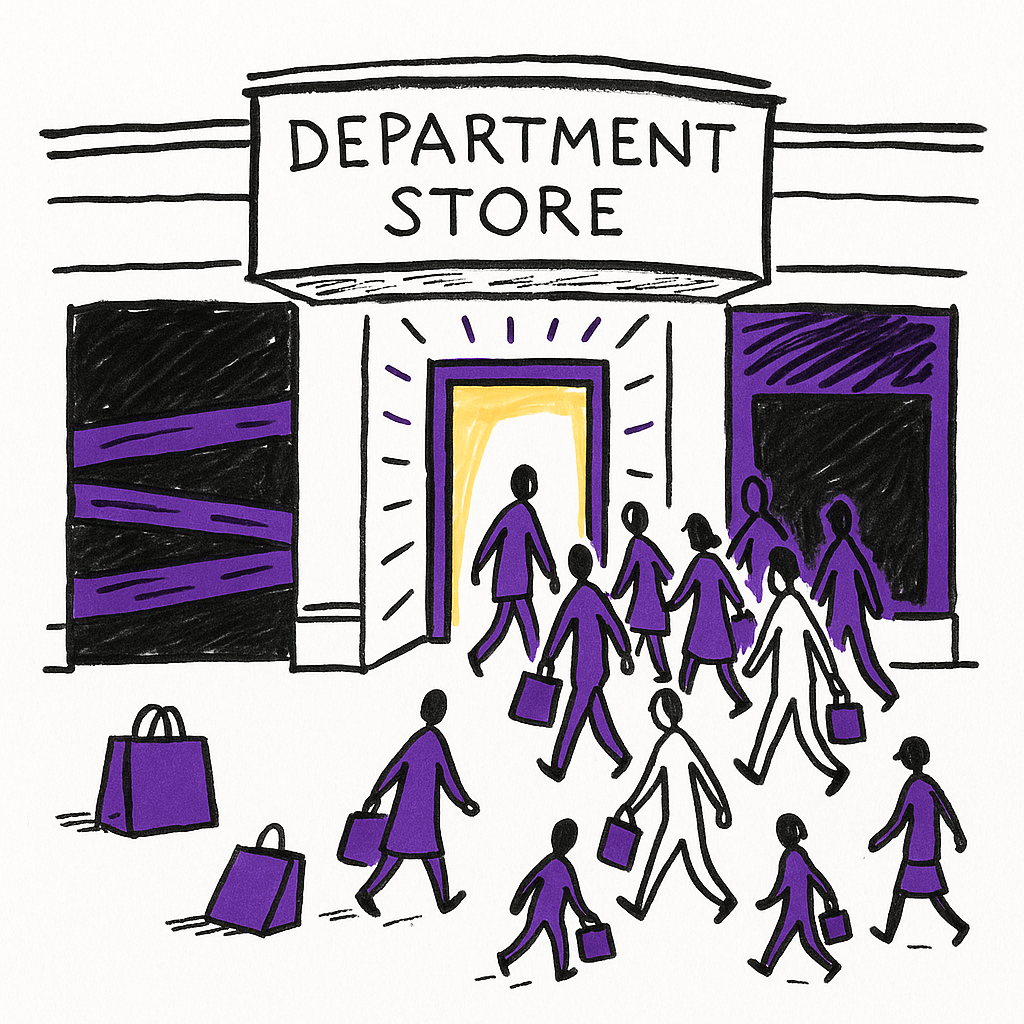
Macy's store closures aren't news anymore - they've been happening for years. What's notable is how explicitly CEO Tony Spring frames the remaining strategy: "reimagining our best stores, enhancing customer service, expanding our luxury business."
The company isn't just shrinking. It's concentrating resources on locations that can deliver premium experiences. The revamped stores posted 2.7% comparable sales growth in Q3 2025, outpacing the chain's 2% overall. The strategy is working where they're actually investing.
The stores being closed span 12 states - anchor locations at major malls that were once the crown jewels of department store retail. Now they're liabilities. The buildings cost money. The staff costs money. If the location can't generate premium traffic with premium margins, it's better to close it and redirect those resources.
What L.L. Bean Signals

L.L. Bean's CEO transition might seem like routine corporate succession, but the choice is revealing. Greg Elder spent nearly 20 years at the company, most recently as Chief Retail Officer overseeing stores, wholesale, and operations.
This isn't a digital-first tech hire. It's not a finance executive focused on cost-cutting. It's someone who understands how physical retail experience translates into brand value - the exact skillset you need when you're trying to make stores worth visiting rather than just existing.
L.L. Bean's challenge is the opposite of Macy's. They have a beloved brand with authentic outdoor credibility. The question is how to monetize that relationship across channels without diluting what makes customers loyal in the first place.
The Brand Journalism Parallel
One piece from Branding Strategy Insider this week makes an interesting companion to these retail stories. The argument: the best brand storytellers write like journalists.
This isn't about content marketing or social media presence. It's about treating the brand story as ongoing reportage rather than one-time advertising. Every touchpoint - packaging, store design, product design, service interactions - contributes different perspectives on a complete narrative.
The phrase that stuck with me: "Telling isn't selling."
This is the same insight driving the asset-light pivot. Owning buildings is just telling. Owning the customer relationship - understanding them, anticipating their needs, delivering experiences they'll pay premium prices for - that's selling.
Lemon Tree isn't abandoning hotels. Macy's isn't abandoning stores. Airlines aren't abandoning planes. They're all trying to own less of the physical infrastructure while owning more of the customer relationship.
What This Means for Local Activation
The implications for brands working with local retail partners are significant. When the premium-experience operators are contracting to their best locations and investing heavily in those remaining spots, the competition for those partnerships intensifies.
The coffee shops, fitness studios, and boutique retailers that survive this bifurcation will be the ones that can deliver what the big operators can't: genuine local authenticity, community connection, and personalized experience. They'll become more valuable as activation partners precisely because they're not trying to be everywhere at once.
The asset-light premium pivot isn't just about hotels and department stores. It's about the entire retail landscape reorganizing around a simple question: What do you actually own, and what do you actually need to own?
The answer, increasingly, is that owning the relationship matters more than owning the building.
Sources
- Warburg Pincus Invests in Lemon Tree's Asset Arm as Hotel Group Splits in Two - Skift
- More International Growth and a Spirit Merger? What to Expect From Airline Earnings - Skift
- Macy's targets another 14 stores for closure - Retail Dive
- L.L. Bean names company veteran next CEO - Retail Dive
- Why The Best Brand Storytellers Write Like Journalists - Branding Strategy Insider