Why Partnership Infrastructure Matters More Than Partnership Announcements

The retail industry is sending mixed signals this week. Macy's is closing distribution centers and cutting over 1,100 jobs in Connecticut. Meanwhile, M&M's and Marvel just announced a collaboration spanning 65 markets with seven collectible product lines. JCPenney is expanding two home partnerships - one with a TikTok chef, another with a heritage British brand.

These stories seem unrelated. But they point to something important that gets overlooked in partnership announcements: the infrastructure gap between brands that can execute complex activations and those that cannot.
The Execution Gap Is Widening
Consider the M&M's x Marvel collaboration. It's not just a logo swap. There are seven distinct products across five flavors in 65 markets, QR codes linking to digital experiences, phased rollouts starting with exclusive channels before broader retail - all coordinated between Mars, Disney, and thousands of retail partners worldwide.
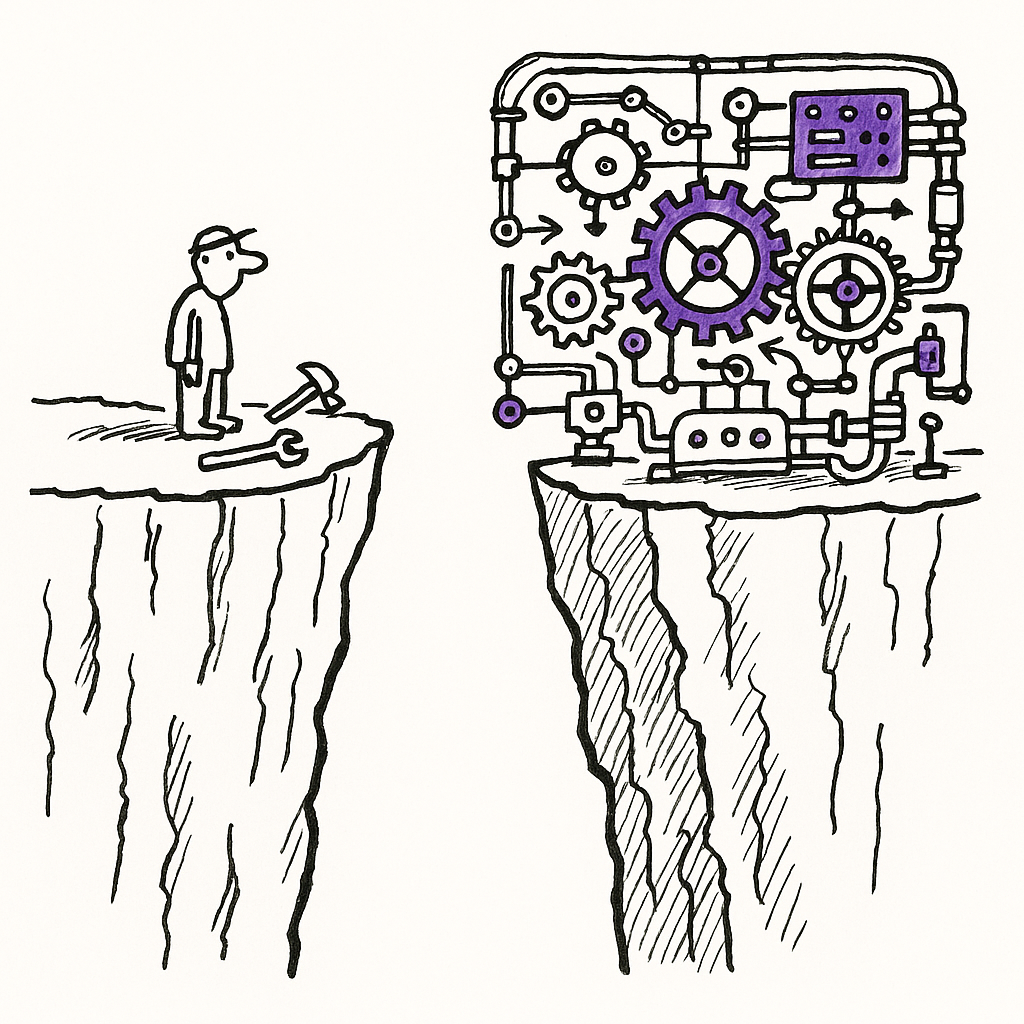
That kind of execution requires something most brands and their agency partners simply don't have: operational depth. The ability to manage simultaneous product development, packaging design, digital experience creation, supply chain coordination, and retail merchandising across dozens of markets.
Meanwhile, Macy's - a company with over 150 years of retail experience - is consolidating distribution because even their infrastructure can't sustain current cost pressures. They're targeting $235 million in savings this year alone. If Macy's needs to rationalize their supply chain, how can smaller brands expect to execute complex multi-market partnerships?
What JCPenney Gets Right
JCPenney's approach offers a different model. Their Jenny Martinez partnership started with cookware and spent two years building an exclusive relationship before expanding to full home goods. The Laura Ashley partnership tested online for "several years" before moving into physical stores this month.

This is smart for a company without infinite resources. Test digitally, prove the concept, then invest in physical distribution. But it also highlights the infrastructure problem - JCPenney needed years to validate what a larger player might execute in months.
The Jenny Martinez angle is particularly interesting. She has 3.7 million TikTok followers, giving JCPenney access to an audience they couldn't reach otherwise. But the collection itself - molcajetes, olla de barro, Chapala-inspired designs - requires cultural knowledge that most retail buyers don't have. JCPenney needed Martinez not just for her audience, but for her expertise in a product category they couldn't develop internally.
This is partnership as capability acquisition. When you lack the infrastructure to develop something yourself, you partner with someone who has it.
The 98% Problem
At NRF's recent trade show, data surfaced that reinforces this infrastructure challenge. Small retailers represent 98% of the retail sector and support over 13 million American jobs. These are the shops, boutiques, gyms, and local businesses that brands increasingly want to partner with for authentic local activations.

But these businesses lack partnership infrastructure almost entirely. They don't have merchandising teams, marketing departments, or supply chain expertise. A national brand wanting to activate through local partners faces a fundamental problem: the very authenticity that makes these businesses attractive also makes them hard to work with at scale.
And conditions are getting harder. Year-over-year import cargo is declining. Trade policy uncertainty is making supply chain planning nearly impossible. NRF surveys show 76% of voters worried about tariff impacts on prices - meaning any partnership that requires imported products carries additional risk.
What Actually Matters
The pattern across these stories suggests what actually differentiates successful brand partnerships from announcements that go nowhere:
Phased validation. JCPenney tested Laura Ashley online before stores. M&M's is releasing through exclusive channels before broad retail. The brands that execute well build infrastructure incrementally rather than launching everything at once.
Capability matching. Jenny Martinez brought product development expertise JCPenney lacked. Marvel brings character IP and storytelling capability that M&M's can amplify but couldn't create. Successful partnerships combine complementary capabilities, not just audiences.
Realistic cost modeling. Macy's didn't close distribution centers because they wanted to - they did it because $235 million in savings mattered more than geographic coverage. Every partnership needs to account for the full cost of execution, not just the marketing spend.
Infrastructure investment. The gap between brands that can execute 65-market launches and brands that struggle with regional activations will keep widening. Some of that is scale. But much of it is deliberate investment in partnership operations - the people, systems, and processes that turn announcements into results.
For brands looking to activate through local partners, this means being honest about what those partners can and cannot do. A coffee shop with perfect community credibility probably can't handle complex merchandising. A gym owner with passionate members probably can't manage inventory allocation. The infrastructure gap isn't a criticism of these businesses - it's a reality that partnership strategies need to address.
The brands that win in this environment won't be the ones making the most partnership announcements. They'll be the ones who invested in the unglamorous work of execution infrastructure while everyone else chased headlines.
Sources
- J.C. Penney expands 2 home collections - Retail Dive
- M&M's spokescandies suit up as Marvel superheroes for global campaign - Marketing Dive
- Macy's closes remaining units at Connecticut distribution center - Retail Dive
- NRF Trade Talks: Four Unique Perspectives - The Robin Report
- CTV Is Stuck In Its Growing Pains. Can AI Save the Day? - AdExchanger
Hass Dhia is Chief Strategy Officer at Smart Technology Investments, where he helps brands find authentic local activation partnerships powered by neuroscience and AI. He holds an MS in Biomedical Sciences from Wayne State University School of Medicine, with thesis research in neuroscience.