The Retail Partnership Playbook Nobody's Talking About
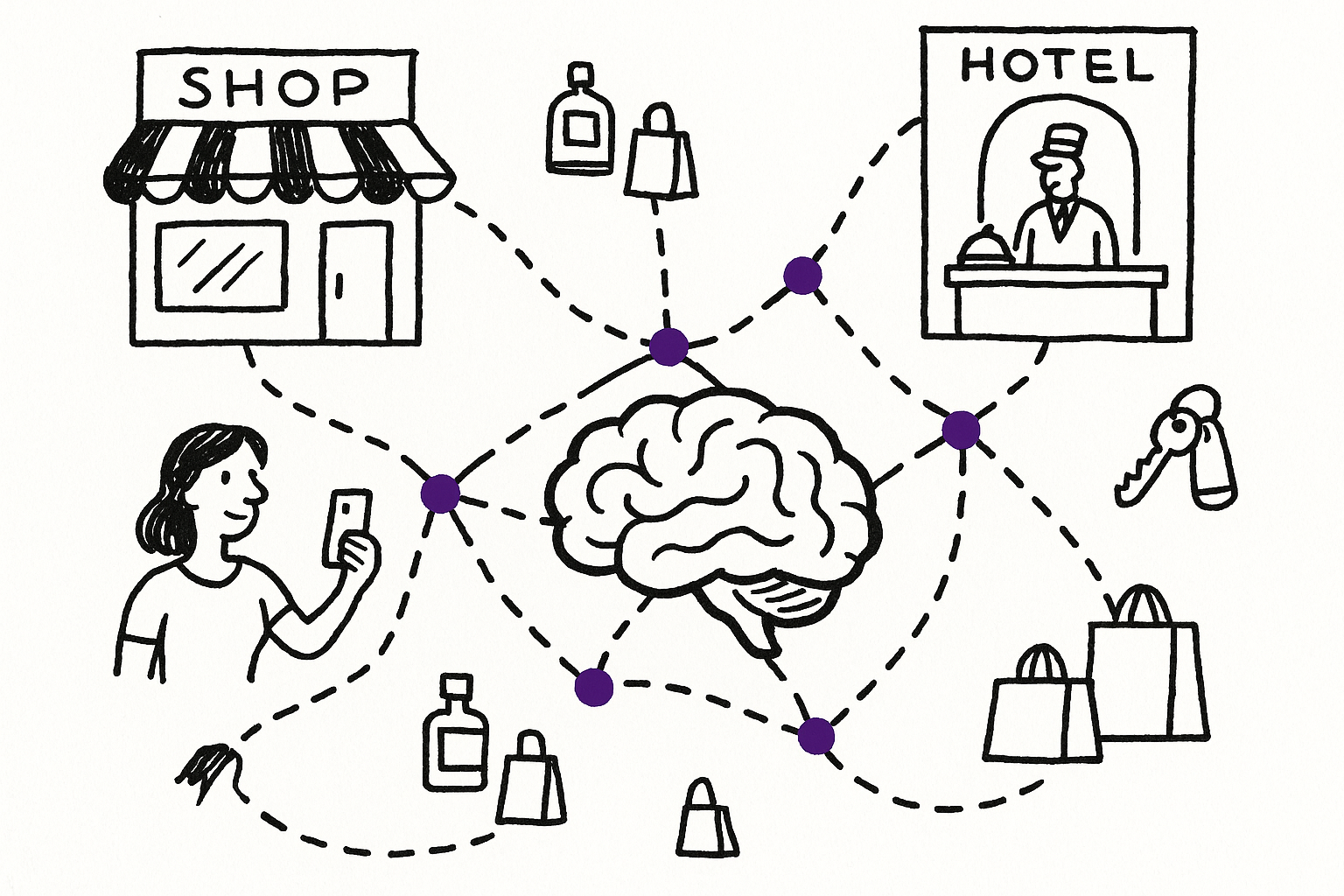
There's something curious happening in retail right now. Macy's just started mailing curated outfit picks from their influencer network to shoppers. Target is ending its partnership with Ulta to go it alone with 60 new beauty brands. Ian Schrager is betting his hotel legacy on "luxury for all." And none of this makes sense until you look at it through the lens of neuroscience.
The common thread? Every one of these moves is a bet on perceived value over actual value - and the science says they might be onto something.
The Price Perception Problem
Here's a finding that should make every brand marketer uncomfortable: Stanford and Caltech researchers put people in fMRI machines, pumped wine into their mouths through tubes, and discovered something troubling. When subjects believed they were drinking $45 wine instead of $5 wine, their brains registered genuinely greater pleasure - even when it was the exact same wine.
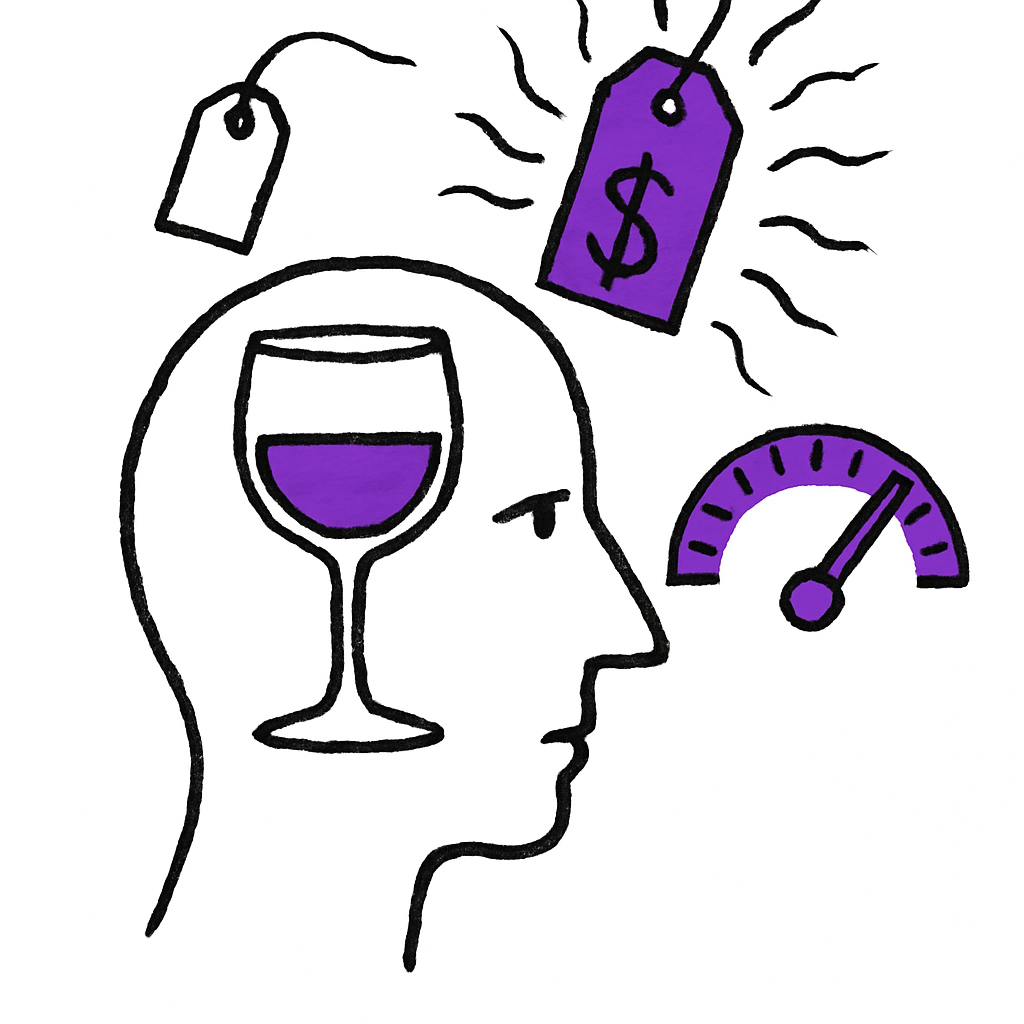
This wasn't mere rationalization. The neural activity in the brain's pleasure centers actually increased. As researcher Baba Shiv noted, "price is not just about inferences of quality, but it can actually affect real quality." The lived experience of consuming something changes based on what we believe about it.
The implications here are uncomfortable. We like to think we're rational consumers evaluating products on their merits. But our brains are wired to enjoy expensive things more - not because they're better, but because we expect them to be better.
A separate large-scale blind tasting confirmed this. When 500 inexperienced tasters couldn't see labels, they actually preferred the cheaper wines. Price perception isn't enhancing judgment. It's overriding it.
Macy's Bet on Influencer Proximity
Macy's is doing something counterintuitive with their Style Crew program. Instead of keeping their 600+ influencers confined to Instagram feeds, they're putting them on direct mailers and in physical stores.

Think about that for a second. Direct mail. The same medium your dentist uses to remind you about cleanings. And Macy's is putting influencer curations there, complete with QR codes.
The early results are striking: 315% revenue boost year-over-year, 327% increase in traffic, and 30-40% conversion growth among top creators. But here's what's really interesting - Macy's isn't measuring this purely on sales. As their CMO put it, "We're not necessarily thinking of it just in terms of sales, we're really looking at the engagement of the community."
What Macy's seems to understand is that influencer trust has a proximity effect. When you see someone's recommendation in your physical mailbox or encounter their curated storefront while shopping in person, the endorsement feels more real than another scroll-past on social media. The context changes the perceived value - just like that wine experiment.
Whether this scales remains to be seen. Holiday pop-ups in three cities is a test, not a transformation. And 600 influencers sending direct mail to millions of consumers could easily become noise. But the underlying insight - that physical presence amplifies perceived authenticity - has real neurological backing.
Target's Independence Gamble
Target just announced they're adding 60 new beauty brands and nearly 3,000 products. Supergoop, Morphe, K-beauty lines, dermatologist-backed skincare. Over 90% priced under $20.

What makes this notable is what they're walking away from. The Ulta partnership - those shop-in-shops that were supposed to bring prestige beauty to Target - never expanded beyond 610 locations. The partnership officially ends in August 2026.
The stated reason is diplomatic ("mutual decision"), but the math tells a different story. There was 74% overlap between Target and Ulta locations. If there's an Ulta standalone nearby, why would shoppers choose the smaller in-store version?
Target's new approach is the opposite of partnership - it's curation. Instead of renting credibility from Ulta, they're building their own beauty destination by aggregating emerging brands that customers can't easily find elsewhere.
The risk is obvious. Without Ulta's curation expertise and brand relationships, Target is betting they can identify trends and stock the right products themselves. Early signs suggest they're betting on accessibility over exclusivity - trend-driven curation at mass-market prices rather than prestige positioning.
Whether this works depends on whether Target's buyers have the taste to identify winners. Given how quickly beauty trends shift on TikTok, that's a significant bet.
The Schrager Paradox
Ian Schrager is 79 years old. He invented boutique hotels with Morgans in 1984. He created lobby culture - the idea that hotel lobbies should be social destinations, not just waiting rooms for guests. He launched Studio 54. The man has nothing left to prove.
And yet he just announced a joint venture with Highgate to scale his PUBLIC hotel brand globally. PUBLIC's entire premise is "Luxury for All" - Schrager's design sensibility at accessible price points, with fast-casual dining instead of celebrity chefs.
This is where the neuroscience gets interesting. Remember that wine study? Higher prices create genuine pleasure through expectation. But PUBLIC is betting on the opposite - that you can create luxury perception without luxury pricing.
Schrager's innovation isn't discounting luxury. It's redesigning what luxury means. If a hotel lobby feels like a place you want to be, if the room design makes you feel sophisticated, if the overall experience exceeds what you expected for the price - your brain might register that gap as pleasure rather than cheapness.
The question is whether expectation anchoring works both ways. Does telling someone they're getting luxury for less enhance their experience? Or does it undermine the very perception of value that makes luxury feel luxurious?
Schrager's track record suggests he understands this tension intuitively. But scaling from two properties to a global chain will test whether the magic translates.
The Weather Connection
There's a related trend worth noting: weather targeting. Advertisers are now using real-time weather data to decide when and what to show you.
The logic is straightforward. Weather affects mood. Mood affects purchasing. If it's unseasonably cold, show coats. If rain is forecast, surface umbrellas. The Weather Company claims this creates "privacy-forward personalization" because they're not tracking you - just your environment.
What's actually happening here is context-based perception manipulation. The same product can feel more relevant, more urgent, more valuable when the context aligns with your current state. Your brain doesn't distinguish between needing a jacket because you're cold and wanting a jacket because an ad reminded you that you're cold.
This is the same principle underlying all these retail moves. Context shapes value perception. Physical mail makes influencer recommendations feel different than social feeds. Building your own beauty destination feels different than hosting a partner's shop. Fast-casual in a designed space feels different than fast-casual in a strip mall.
What This Actually Means
If you're a brand trying to understand these moves, here's the uncomfortable truth: consumers aren't evaluating your partnerships or products rationally. They're responding to contextual cues that shape how they experience your brand.
Macy's is betting that physical presence creates authenticity perception. Target is betting that curated independence creates trust. Schrager is betting that design excellence can substitute for price signaling. Weather targeting is betting that environmental alignment creates relevance.
These are all hypotheses about how brains construct value - and they can't all be right.
What seems clear is that the old playbook - find a partner with credibility, co-brand, split the economics - is losing appeal. Target-Ulta didn't work. Macy's isn't partnering with influencers, they're integrating them. Schrager isn't licensing his brand to hotel operators, he's retaining creative control while outsourcing operations.
The through-line is control over experience. Every one of these moves is an attempt to shape how consumers perceive value, rather than relying on partners or price points to do that work.
Whether that control translates to results remains to be seen. But the underlying bet - that perceived value matters more than actual value - has solid neurological backing.
The wine tastes better when you think it costs more. The influencer recommendation feels more authentic when it arrives in your mailbox. The hotel feels more luxurious when the design signals sophistication. None of these perceptions are rational. All of them are real.
Hass Dhia is Chief Strategy Officer at Smart Technology Investments, where he helps brands find authentic local activation partnerships powered by neuroscience and AI. He holds an MS in Biomedical Sciences from Wayne State University School of Medicine, with thesis research in neuroscience.
Sources
- How Macy's is flexing its Style Crew affiliate program beyond social media - Retail Dive
- Target expands beauty assortment, adds 60 new brands - Retail Dive
- Ian Schrager taps Highgate to take PUBLIC hotel brand global - Hotel Dive
- Why Expensive Wine Tastes Better: The Neuroscience - Neuromarketing
- WTF is weather targeting? A video explainer - Digiday