Plurio's $100M Ad Spend Data Shows Where Agentic Commerce Forces Brand Experience to Shift
Plurio's AI agent executed $20 million in advertising budget changes during its first four months of operation. No human approved those changes in real time. The system watched leading indicators - creative performance, audience quality, funnel behavior - and moved money automatically across Meta, Google, and TikTok.
That's not the interesting part.
The interesting part is what McKinsey published the same week: European consumers are using AI agents to research and discover products, but not yet to execute purchases. The agent influences. The human still pulls the trigger.
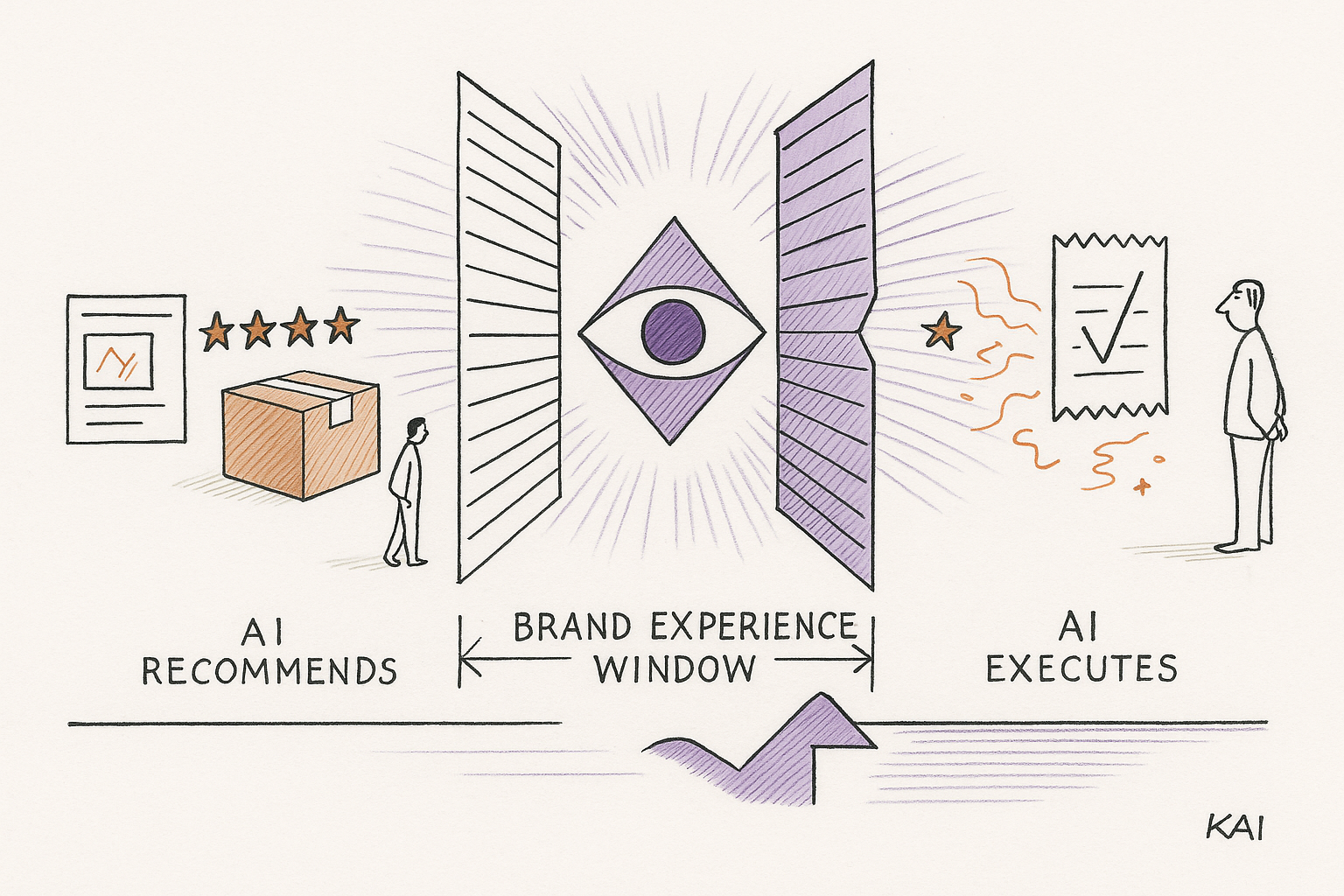
Read these two data points together and a structural problem emerges that most brand strategies haven't caught up with. Plurio is building infrastructure for a world where the execution gap McKinsey identified closes. When it does - when AI agents move from recommendation to transaction - the entire model of how brands earn trust needs to be upstream of where most brands currently invest.
The 90-10 Problem Plurio Exposes
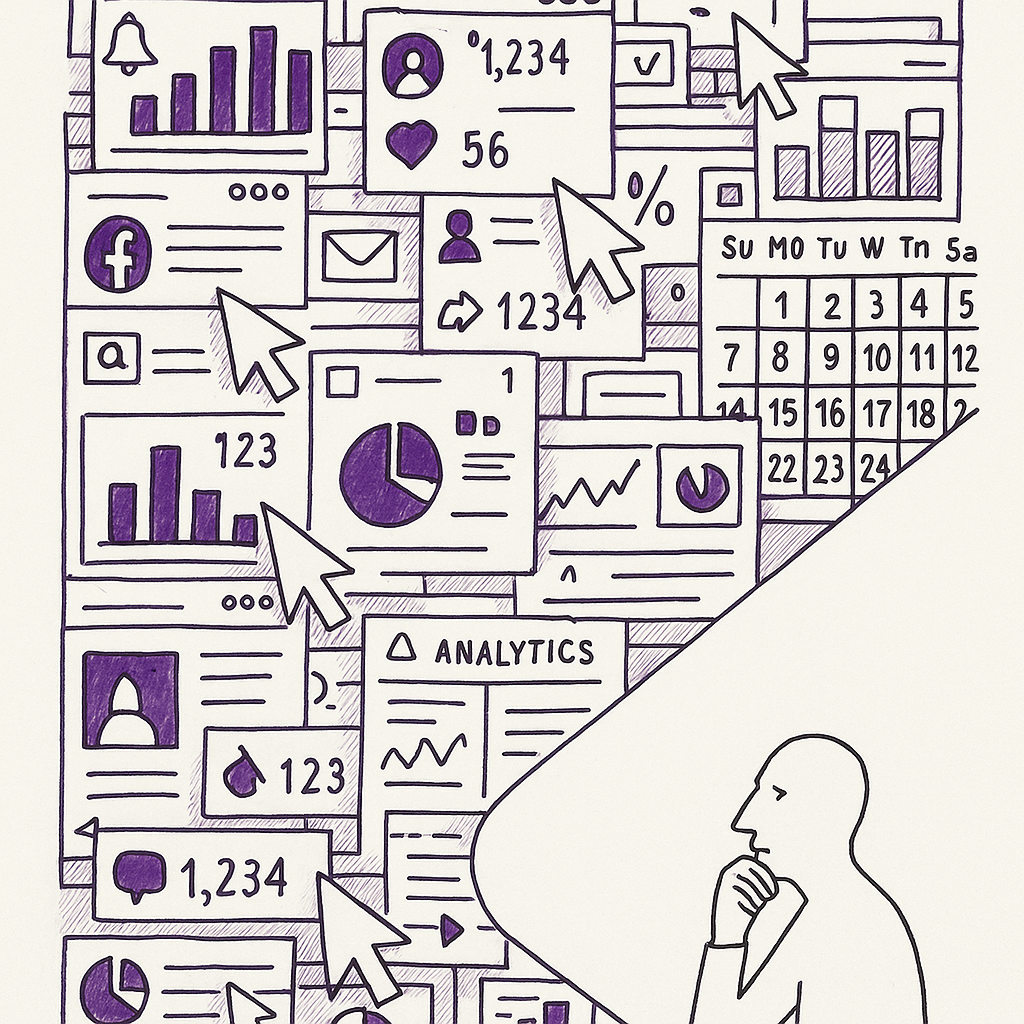
Seva Ustinov, Plurio's CEO, describes the typical performance marketing workflow with unusual honesty: "10% thinking and creating, and 90% clicking through platforms."
That's not a productivity problem. It's a structural one. Performance marketers at most organizations spend the overwhelming majority of their time on operational execution - pulling reports, adjusting bids, reviewing creative rotations, generating decks. The actual judgment work, the part that requires understanding consumer behavior and brand positioning, happens in the margins.
What Plurio built is an AI agent that handles the operational layer. It analyzes campaign data, predicts performance trajectories using early signals, and moves budget automatically. TripleTen, one of their early clients, reduced campaign analysis time from over an hour to 10-15 minutes. The time savings aren't the point. The point is what that recovered time is supposed to be used for.
When the execution layer gets automated, the work that remains is judgment: what does the brand stand for, where should it be present, what signals indicate genuine purchase intent versus noise? This is harder work, and most marketing organizations aren't structured to do it. They're structured to do the 90%.
This is the kind of pattern STI's research tracks systematically - where automation reveals structural gaps in how organizations think about their core competency.
McKinsey's Execution Gap Is Not a Permanent Feature
The McKinsey finding on agentic commerce in Europe reads like stability. Consumers use AI to influence decisions; humans execute them. The gap between recommendation and transaction is where human judgment still lives.
But the framing of "decision influence is here; execution is coming" treats the current state as a phase rather than a permanent architecture. Every pattern in how AI adoption spreads suggests that the execution gap closes faster than the organizations that depend on it expect.
Consider what "execution is coming" actually means for brand strategy. Right now, a consumer might ask an AI agent to research winter outdoor gear. The agent returns a ranked list. The consumer reviews it and decides. Brand positioning, reviews, product descriptions, and price anchoring all factor into that decision in a familiar way.
When AI executes the purchase - when the agent doesn't just recommend but completes the transaction based on preset preferences and trust scores - the decision architecture changes fundamentally. The brand experience window that exists between "AI suggests" and "human decides" collapses. The trust signals that currently inform that human moment need to be established before the agent ever runs the search.
We've written about this trust problem before - how AI agents create a different kind of trust surface than the one brands have traditionally managed. The McKinsey data quantifies how quickly that surface is becoming relevant.
What European Consumer Data Reveals About Timing
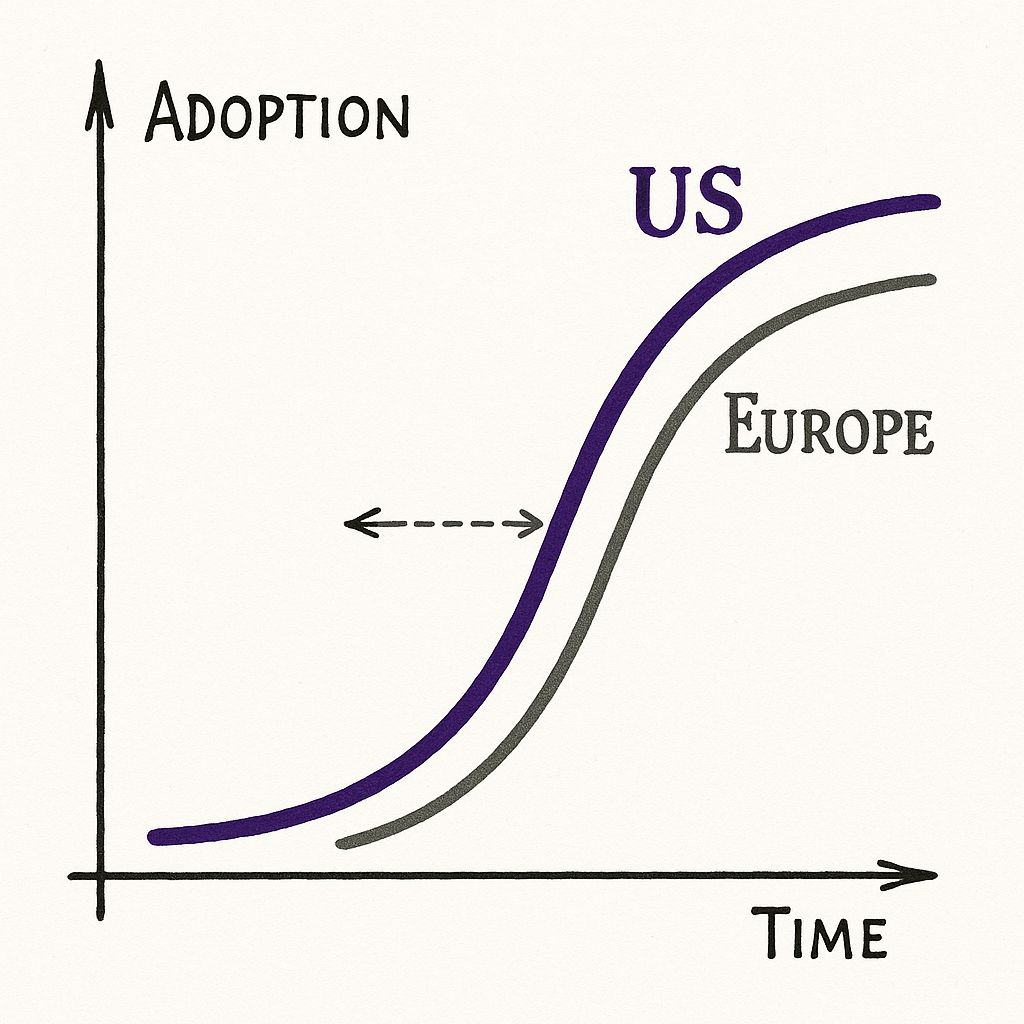
McKinsey surveyed European consumers specifically because European markets tend to lag US adoption by 12-18 months on consumer AI behavior. If European consumers are already using AI agents for discovery, US consumers are past discovery and into more complex research workflows. By the time McKinsey's "execution is coming" arrives in Europe, early-adopter US consumer segments will already be running agent-executed commerce.
The implication: brand strategy built for the current McKinsey phase may already be outdated for 15-20% of high-value US consumer cohorts.
The companies spending to win in the human-mediated discovery window are, in a real sense, competing for an audience that is migrating. Not all at once, and not uniformly across categories - but the migration is directional and the brands with infrastructure already pointed toward the destination will compound their advantage while competitors continue optimizing for a shrinking window.
The agentic advertising reality has consistently been that the headlines arrive before the underlying infrastructure is in place. This time, the infrastructure - Plurio's $100M under autonomous management, McKinsey's documented consumer behavior - suggests the headlines may actually be late.
What Mammut's CMO Already Understood
While the agentic AI conversation tends to focus on technology infrastructure, Mammut CMO Nic Brandenberger articulated something different at the World Economic Forum.
Brandenberger's thesis is that brands need to function as "experience givers" rather than product vendors. Products are a means to an end. The experience - the identity, the context, the feeling of belonging to a category of person who uses this gear - is the actual thing being purchased.
He advocates for ethnographic research over survey data: not "what do you buy" but "what do you experience when you use this." He pushes for breaking organizational silos so that marketing doesn't operate separately from product development and operations. And Mammut maintains a deliberate balance between wholesale (60-65% of revenue, for distribution) and direct-to-consumer (35% and growing, for relationship and first-party data).
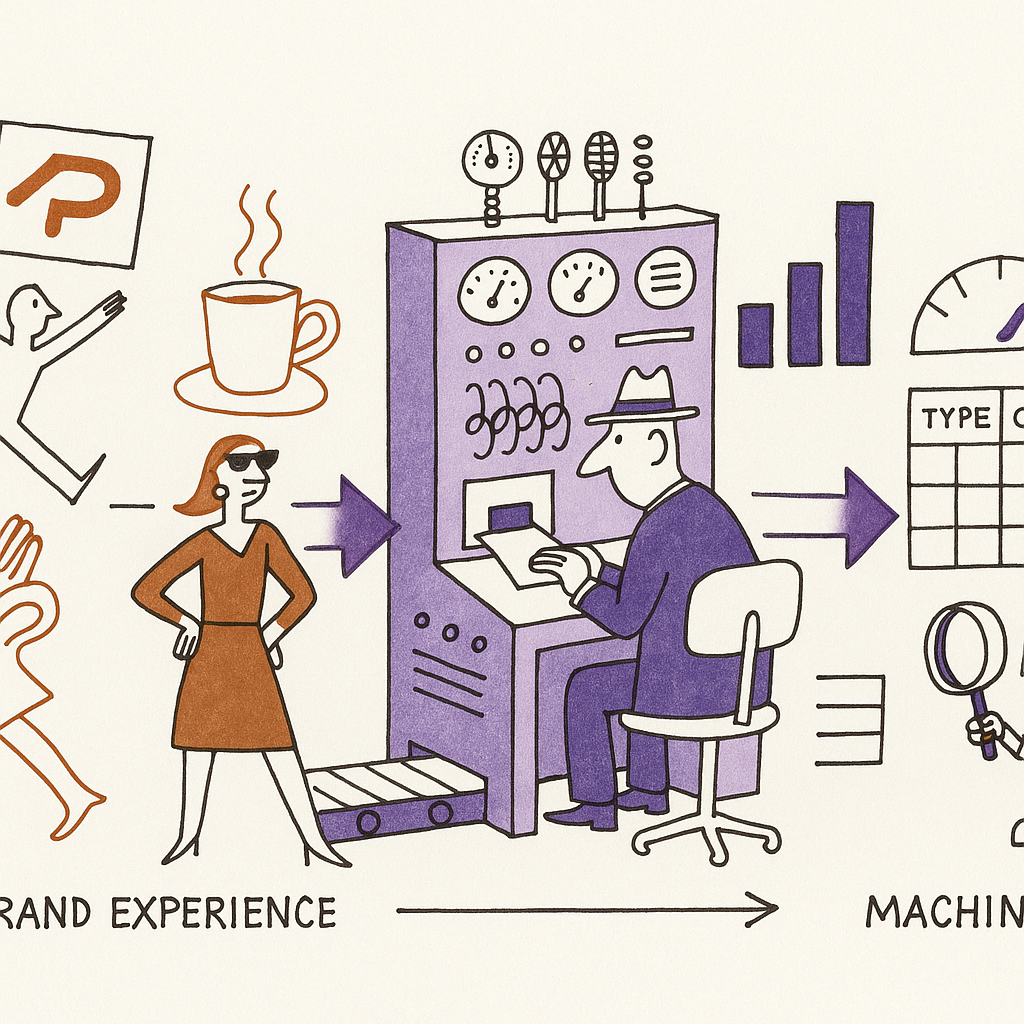
This framework lands differently in the context of agentic commerce. If an AI agent is evaluating Mammut for a customer's winter gear purchase, it's not running ethnographic research. It's processing structured signals: category performance data, review sentiment, price-to-feature ratios, brand trust scores derived from aggregated behavior. The rich identity work that Brandenberger invests in needs to be legible to that evaluation process.
This isn't an argument against deep brand work. It's an argument that deep brand work now needs a translation layer - a way to express the brand's experiential value in signals that agentic systems can process and weight appropriately.
The brands that are doing this translation work now will have a structural advantage when the execution gap closes. The shift from brand promise to brand proof has been underway for several years, but agentic commerce accelerates the timeline considerably.
The Leaf That Leafs Anyway
Of Dollars and Data published a piece this week about intrinsic versus extrinsic motivation, built around a simple image: a perfect autumn leaf in Central Park. The leaf didn't become perfect because someone would notice it. It leafed because that's what it does.
The parallel to brand strategy is uncomfortable because it cuts against optimization logic. Most performance marketing, by design, is extrinsically motivated - every budget decision is justified by the promise of a measurable return. When AI agents automate that execution layer, as Plurio is doing, the optimization becomes more precise and faster. But precision optimization for external metrics can hollow out the thing that makes a brand worth recommending in the first place.
Mammut's Brandenberger is doing something intrinsically motivated when he invests in ethnographic research and C-suite connectivity. The payoff isn't immediate. The first-party data build from a 35% DTC channel takes years to compound. But it produces the kind of brand signal - genuine customer relationship data, real identity alignment - that becomes more valuable, not less, as AI agents get better at evaluating signal quality.
The brands that will fare best in the agentic commerce era aren't the ones that optimize most aggressively for current metrics. They're the ones that have built something worth recommending - brands that leaf anyway, regardless of whether the algorithm is watching.
If you're evaluating your brand's positioning against these criteria, our analysis tools can help surface what the performance dashboards won't.
What This Means for Brand Decision Strategy
Three things are happening simultaneously:
Plurio is automating the operational layer of performance marketing, freeing up time for strategic judgment - but most marketing organizations don't yet have the frameworks to use that time well.
McKinsey has documented that AI is already influencing commerce at scale, with execution capability arriving imminently - but most brand investment is still concentrated in the human decision window that is about to compress.
Mammut is building the kind of brand infrastructure - experiential depth, first-party relationships, organizational integration - that translates well into agentic evaluation criteria. They're probably not thinking about it that way. But the outcome is the same.
The decision for brand leaders isn't whether to adopt agentic AI tools. It's whether to invest now in the kind of brand architecture that remains valuable when AI executes rather than merely recommends. That architecture isn't built in a quarter. It's built through the kind of unglamorous work that Brandenberger describes - ethnographic research, organizational connectivity, genuine customer relationship data - that doesn't show up cleanly in a performance dashboard.
The execution gap McKinsey identified is real and current. The closing of that gap is the structural shift that most brand strategies aren't priced for.
Build for it now, or inherit the consequences of the brands that did.