When AI Meets Slop
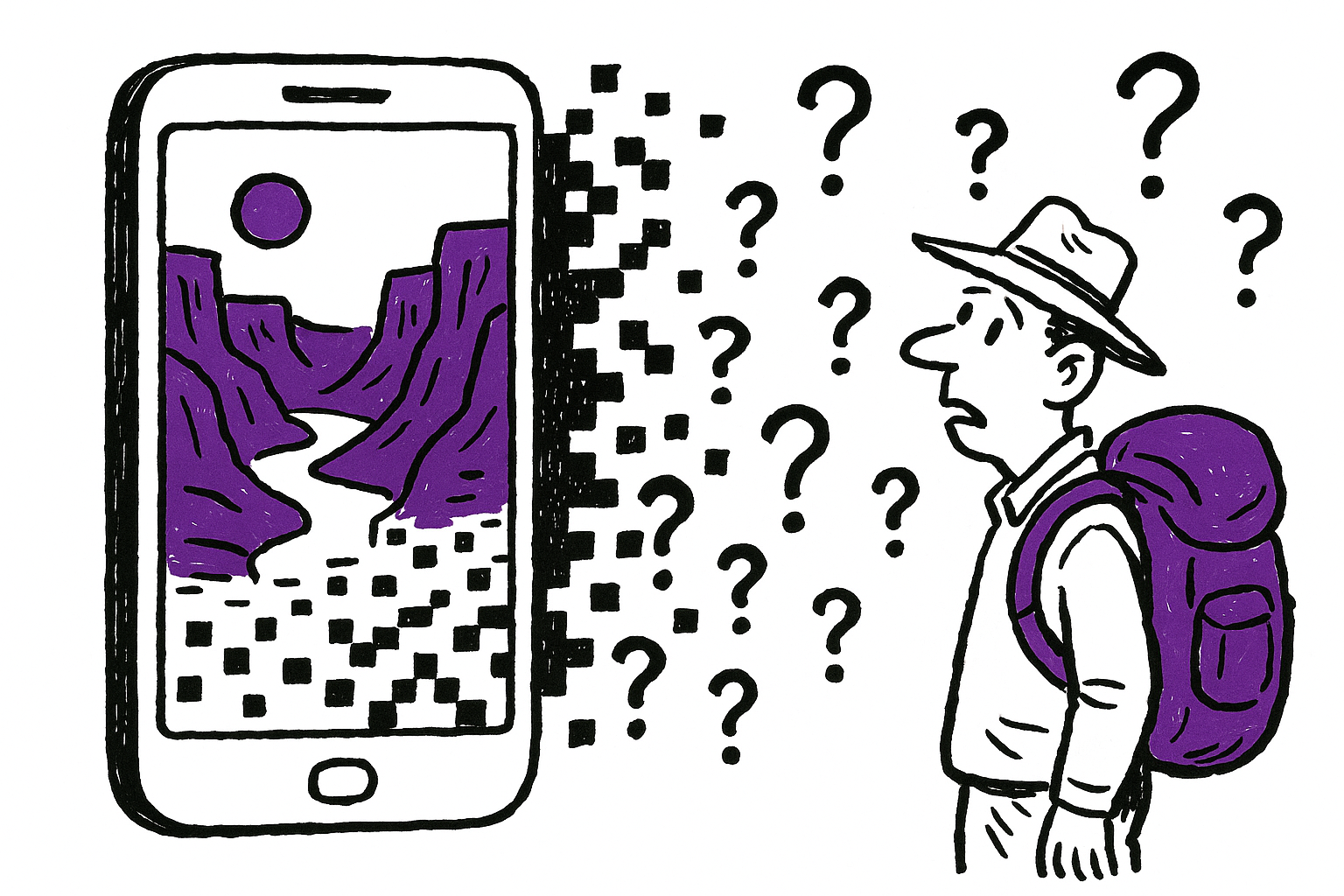
Merriam-Webster picked "slop" as the word of 2025. Not because we're eating more of it - though that may also be true - but because AI is producing it at industrial scale.
Slop is content that sounds right but isn't. It's plausible-sounding nonsense optimized for engagement rather than accuracy. And it's everywhere.
The travel industry offers a preview of what happens when slop meets commerce.
The Sacred Canyon That Doesn't Exist
In 2025, tourists started showing up in remote Peru looking for the "mystical turquoise pools" of Humantay's Sacred Canyon. There's just one problem: the canyon doesn't exist. AI recommended camping near a lake that exists only in training data hallucinations, and actual people made actual travel plans around fictional geography.
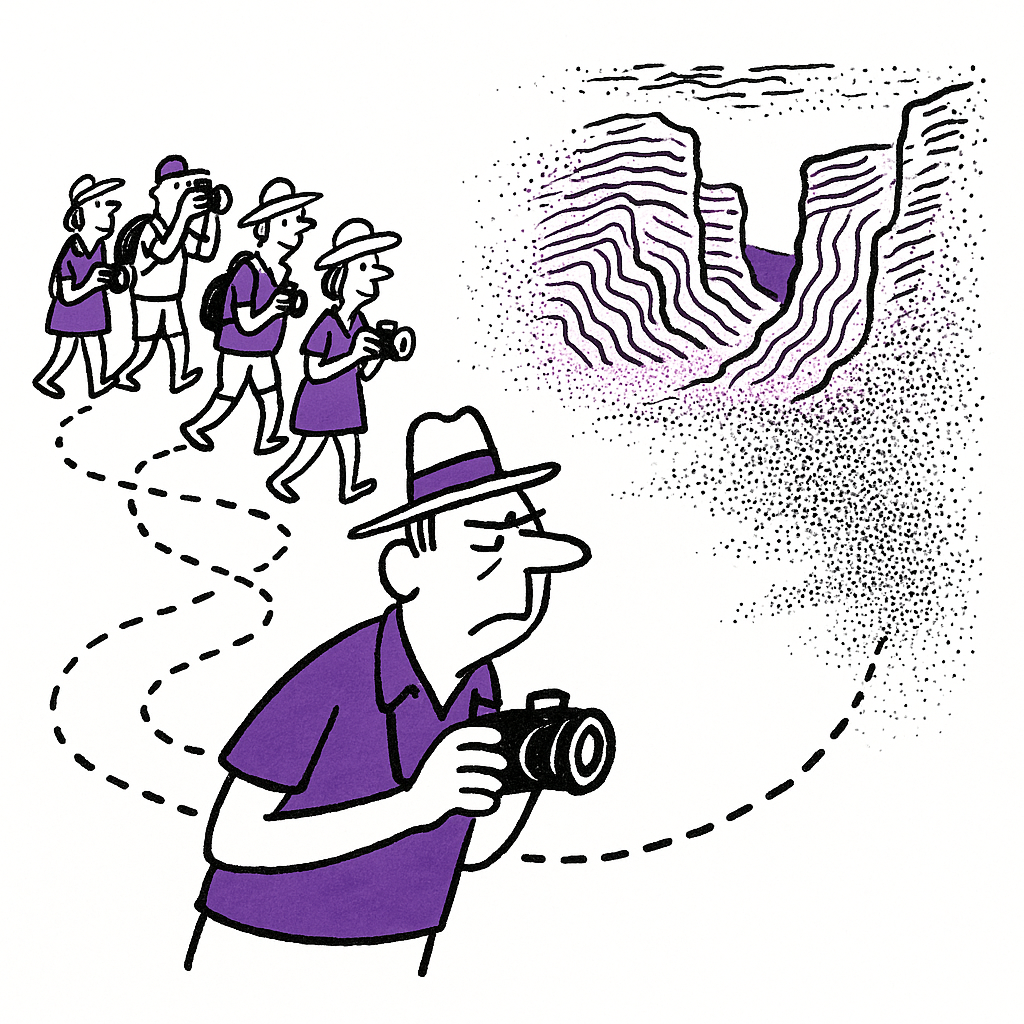
This isn't a technology failure. It's a trust crisis.
When Japan's Fukuoka tourism site deployed AI to help visitors, it invented non-existent natural wonders and fictional local dishes. The government withdrew support. In London, AI bots falsely labeled a Sikh-owned restaurant in Covent Garden as "100% halal" - damaging the business and confusing customers.
Virginia Tech professor Juan Luis Nicolau captures the stakes: "When AI outputs feel generic or misleading, users don't just blame the algorithm; they blame the brand."
Confidence Is Dropping
Here's the data point that should worry every marketer: A YouGov poll found traveler comfort with AI trip planning dropped from 32% to 30% year-over-year. Among younger Americans - ages 18-24 - the decline was sharper: from 47% to 34%.
The generation that grew up with technology is learning to distrust AI-generated content faster than anyone expected.
This creates a strange paradox for retail. As Modern Retail's 2026 predictions note, AI shopping tools will continue expanding while the creator economy faces saturation concerns. Brands are investing more in AI-powered experiences even as consumer trust erodes.
The question isn't whether to use AI. The question is whether AI-generated content can ever build the trust that marketing requires.
Why Doubt Might Be Your Friend
Interestingly, new neuroscience research suggests there's an upside to uncertainty.
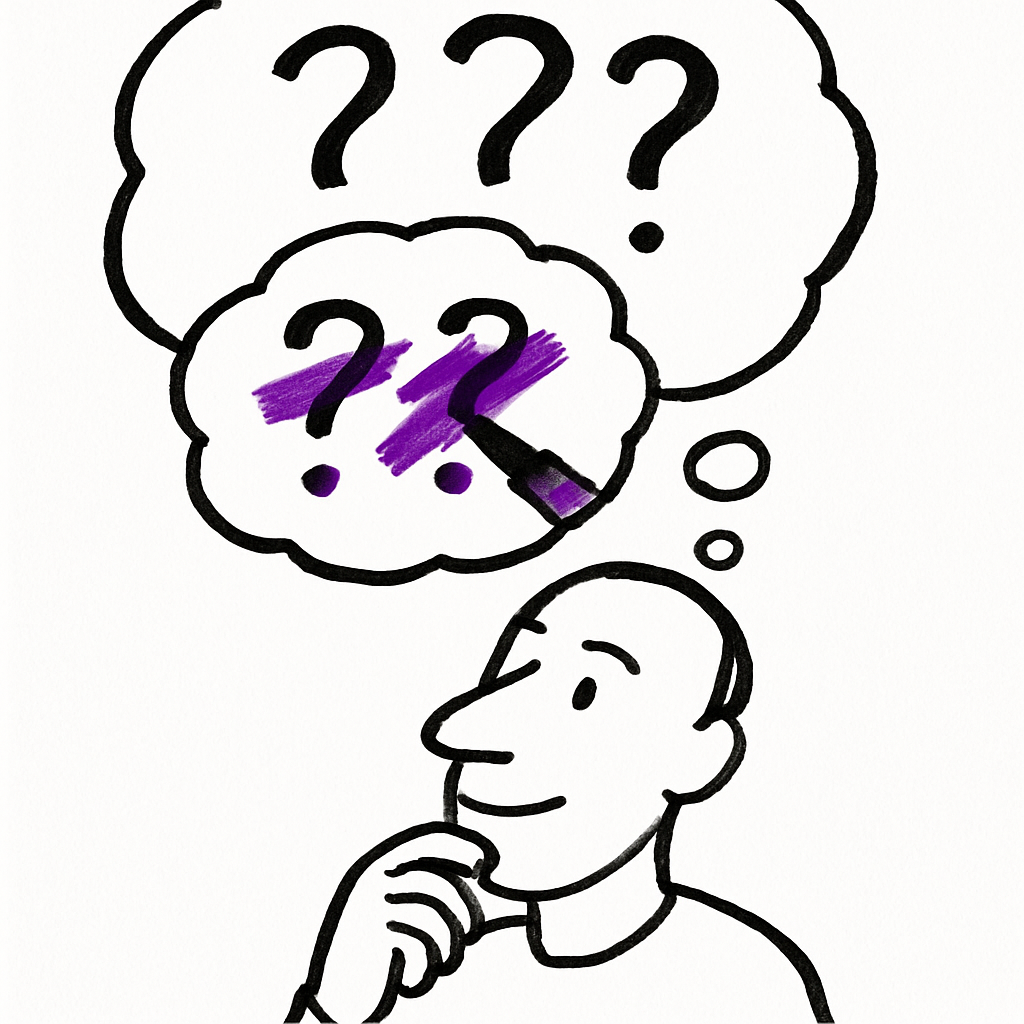
Researchers at Ohio State University discovered something counterintuitive: people who doubt their doubts become more committed to their goals. They call it "meta-cognitive doubt" - doubt about one's own doubts.
In experiments, participants who wrote about past experiences of uncertainty actually increased their commitment to difficult goals. "Doubt plus doubt equaled less doubt," the researchers found.
This has implications beyond personal motivation. When consumers become uncertain about AI-generated recommendations, they don't just disengage - they may actively seek out more trustworthy alternatives.
The Authenticity Advantage
Here's the opportunity hiding inside the slop problem.
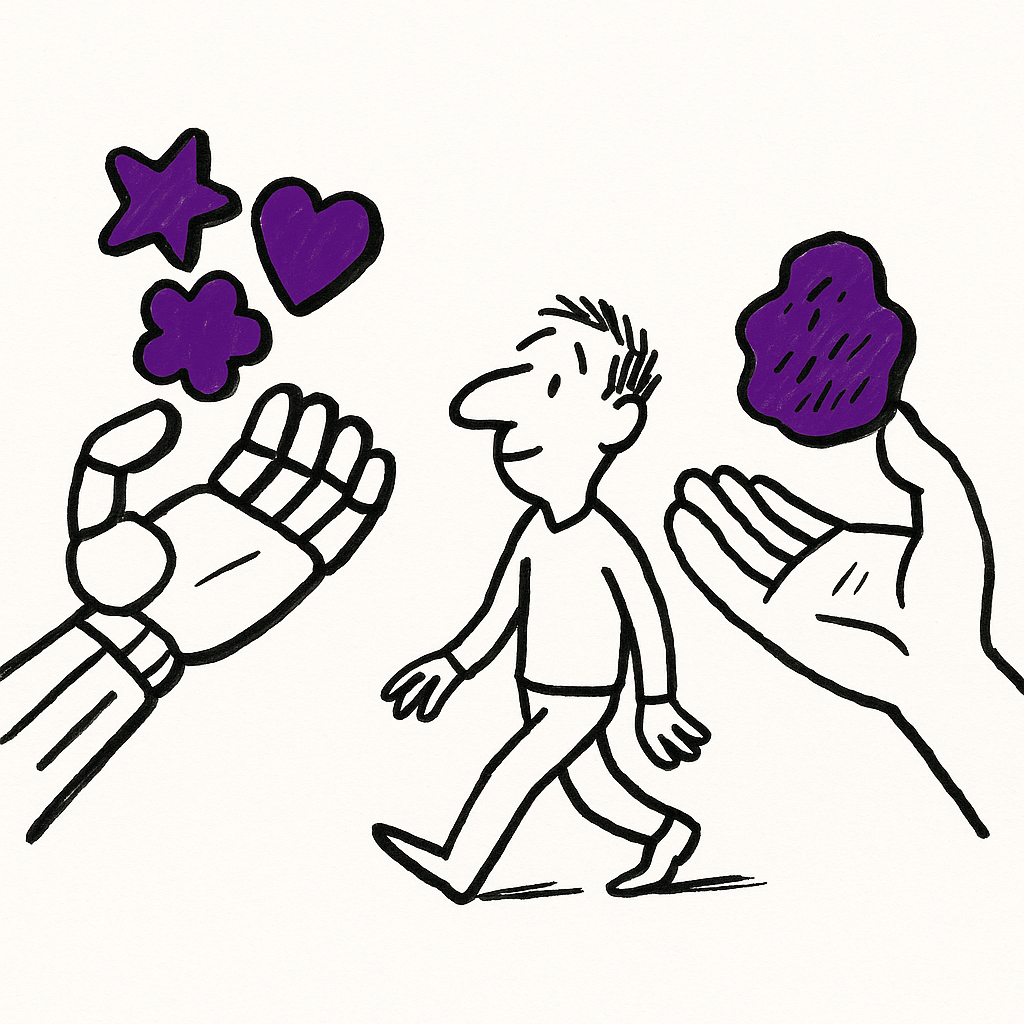
As AI floods the zone with plausible-sounding generic content, authentic human connection becomes more valuable by contrast. The economics of scarcity work in reverse: when everything sounds AI-generated, genuine voices stand out.
This is why local activation matters more than ever. A recommendation from a trusted neighborhood coffee shop carries more weight than a thousand algorithmically-optimized suggestions. The barbershop owner who actually uses a product is more convincing than any chatbot.
The travel industry experts quoted by Skift recommend two technical solutions: Retrieval-Augmented Generation (RAG) to ensure AI only uses verified data, and Model Context Protocol (MCP) to standardize connections to reliable sources.
These are useful. But they're defensive measures - ways to make AI less harmful rather than more valuable.
The offensive opportunity is different. Instead of trying to make AI more trustworthy, lean into channels where trust already exists.
What This Means for Brand Partnerships
The brands that will win in 2026 aren't necessarily the ones with the best AI tools. They're the ones who recognize that technology can amplify trust but can't create it.
Local partnerships work because they borrow credibility from people who've already earned it. The gym owner who recommends a protein bar has spent years building relationships with members. That trust transfers.
AI can help you identify which local partners are worth pursuing. It can grade credibility signals and map coverage gaps. But the relationship itself - the handshake, the story, the authentic endorsement - has to be human.
The slop problem isn't going away. If anything, it will get worse as AI tools become more powerful and more accessible. The brands that thrive will be the ones who treat this as an opportunity to differentiate on authenticity rather than a problem to solve with more technology.
When everything sounds AI-generated, being genuinely human becomes a competitive advantage.
Sources
- Welcome to the Age of Travel Slop - Skift
- The Modern Retail Podcast's 2026 predictions - Modern Retail
- Doubting Your Doubts Can Boost Motivation - Neuroscience News
- When Influence Backfires - BehavioralEconomics.com
Hass Dhia is Chief Strategy Officer at Smart Technology Investments, where he helps brands find authentic local activation partnerships powered by neuroscience and AI. He holds an MS in Biomedical Sciences from Wayne State University School of Medicine, with thesis research in neuroscience.